
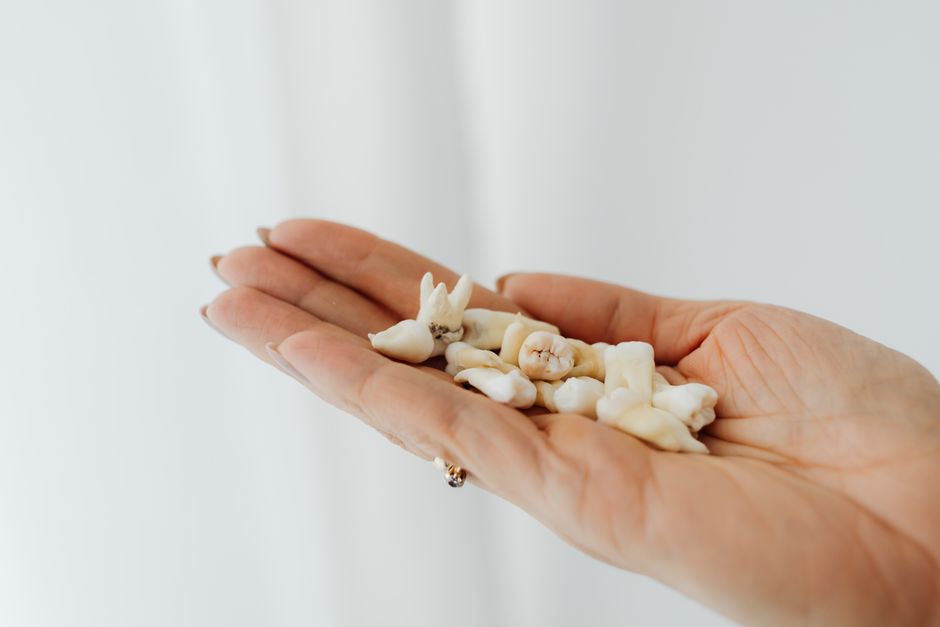
Your teeth are the hardest structures in your body, and they are built from four distinct layers. The outer layer is enamel, the hardest tissue your body makes. Under the enamel sits dentin, a softer and slightly flexible layer, and at the center is the pulp, which holds nerves and blood vessels. A fourth layer called cementum covers the root and anchors the tooth to the jaw.
That basic structure does not change from tooth to tooth. What does change is the mix of minerals, the thickness of each layer, and how much of the tooth sits above or below the gumline.
What Are Human Teeth Made Of?
Each tooth is a layered structure, and every layer has a job. Enamel forms the outer shell of the crown, the part you see. Dentin makes up most of the tooth’s bulk. The pulp sits in the center. Cementum covers the root below the gumline.
By weight, enamel and dentin are mostly mineral. The mineral is a form of calcium phosphate similar to hydroxyapatite, the same family of mineral found in bone. That shared mineral content is why teeth and bones are often grouped together in basic anatomy. But teeth and bone are not the same tissue, and the differences matter.
Enamel: The Outer Shield
Enamel is about 96 percent mineral by weight, which makes it the most mineralized tissue in the human body. The remaining few percent is water and organic material. Enamel is translucent, so the color you see in a tooth comes mostly from the dentin underneath.
Enamel has no living cells once it forms. That single fact explains a lot. Because there are no cells inside it, enamel cannot repair itself after it is lost. It also has no nerve supply, which is why you do not feel pain when enamel wears down until the damage reaches deeper layers.
Enamel is strong against biting force but brittle if it loses support. It sits on top of dentin like a hard shell over a softer core. When dentin underneath is lost to decay, unsupported enamel can crack.
Dentin: The Living Core
Dentin is roughly 70 percent mineral by weight, with the rest made of water and organic material, mostly collagen. It is softer than enamel but far tougher in the sense that it can flex slightly under pressure instead of shattering.
Dentin is living tissue. It contains microscopic tubules, tiny channels that run from the pulp outward toward the enamel. Those tubules carry fluid and, in some cases, nerve endings. This is why exposed dentin can be sensitive to cold, heat, or sweet foods. The stimulus moves fluid in the tubules, and that movement triggers nerve signals in the pulp.
Unlike enamel, dentin can respond to stress over time. It can lay down new layers in response to slow wear or injury, which is one reason older teeth often have thicker dentin and smaller pulp chambers.
Pulp: The Nerve and Blood Supply
The pulp is the soft tissue at the center of the tooth. It contains blood vessels, nerves, and connective tissue. The pulp keeps the tooth alive by supplying nutrients and removing waste.
The pulp also produces dentin. Specialized cells called odontoblasts line the pulp and build dentin throughout life. When a cavity or injury threatens the tooth, those cells can form new dentin as a protective response.
When the pulp becomes infected or inflamed, the result is usually pain. This is the tissue that becomes the problem in a deep cavity or after a serious injury. Once the pulp dies, a tooth can still function for a while, but it loses its internal blood supply and becomes more brittle over time.
Cementum: The Root’s Anchor
Cementum covers the root of the tooth below the gumline. It is softer than enamel and closer to bone in composition. Its main job is to attach the tooth to the periodontal ligament, the band of tissue that holds the tooth in its socket.
Cementum is not exposed in a healthy mouth. If the gums recede, cementum can become exposed, and it wears away faster than enamel. This is one reason gum recession can lead to sensitivity and root decay.
How Do Teeth and Bones Differ?
Teeth and bones share mineral content, but they behave very differently. The most important difference is repair. Bone constantly remodels. Old bone is broken down and new bone is built, which is how a fracture heals.
Enamel does not remodel. Once it is gone, it does not grow back. This is why dental care focuses on prevention rather than regrowth.
Dentin is a middle case. It can add new layers slowly, but it cannot rebuild itself the way bone can after a break. Cementum can also add layers over time, but it does not restore lost structure.
| Tissue | Approximate mineral content | Can it repair itself? |
|---|---|---|
| Enamel | About 96% by weight | No |
| Dentin | About 70% by weight | Limited, slow addition of new layers |
| Cementum | Lower than dentin | Limited |
| Bone | Roughly 60-70% by weight | Yes, through remodeling |
That table is the practical takeaway. Teeth are not bones with a different shape. They are a separate tissue system with a different repair capacity.
Why Does Enamel Not Grow Back?
Enamel is made by cells called ameloblasts before the tooth erupts. Once the tooth comes through the gum, those cells are gone. No ameloblasts remain to build new enamel.
This is why a cavity that reaches the enamel does not heal on its own. Early mineral loss can sometimes be reversed before a true cavity forms, because minerals from saliva and fluoride can move back into the enamel surface. But once the structure is physically lost, it does not regenerate.
This distinction matters. Early demineralization and a formed cavity are not the same thing. The first can sometimes be stopped or reversed. The second cannot.





What Are Teeth Made Of Beyond the Hard Layers?
The hard layers get most of the attention, but the supporting structures are just as important. A tooth is only as stable as the tissues holding it in place.
- The periodontal ligament connects the root to the surrounding bone and acts as a cushion during chewing.
- Alveolar bone is the part of the jawbone that surrounds and supports the tooth roots.
- The gums seal the tooth at the gumline and help keep bacteria away from the root.
When these supporting tissues break down, the tooth itself may be perfectly intact and still be lost. This is what happens in advanced gum disease. The tooth is not the failing part. The support is.
Does the Composition of Teeth Change With Age?
Yes, and mostly in the dentin and pulp. Over time, dentin tends to thicken, and the pulp chamber tends to shrink. This is a normal part of aging, not a sign of disease.
Older teeth often look slightly darker or more yellow. That is usually because the dentin underneath has thickened and the enamel has thinned or picked up stains over the years. It is not a sign that the tooth is unhealthy by itself.
Enamel, by contrast, does not change its basic composition with age. What changes is how much of it is left. Wear, erosion, and fracture accumulate over a lifetime, and none of it is replaced.
What This Means for Daily Care
The structure of teeth explains why prevention carries so much weight. A tissue that cannot rebuild itself has to be protected, not repaired after the fact.
Fluoride helps because it supports the movement of minerals back into enamel and makes the surface more resistant to acid. Saliva matters because it delivers minerals and buffers acid throughout the day. Regular dental care matters because problems in the supporting tissues often develop quietly before they cause pain.
None of this is a guarantee against tooth loss. It is a reflection of how the tissue is built. Enamel does not remodel, dentin repairs slowly and only in limited ways, and the pulp can only tolerate so much injury before it dies. Understanding that structure is the most honest starting point for taking care of it.
Frequently Asked Questions
What are human teeth made of?
Human teeth are made of four layers: enamel on the outside, dentin underneath, pulp at the center, and cementum covering the root. Each layer has a different mineral content and a different role.
Are teeth made of bone?
No. Teeth and bone share a similar mineral, but bone constantly remodels and can heal after a fracture, while enamel cannot regrow once it is lost. Dentin can add new layers slowly, but it does not rebuild itself like bone.
Is enamel the hardest substance in the human body?
Yes. Enamel is the most mineralized tissue in the body, at roughly 96 percent mineral by weight. It is harder than bone, but it is also brittle and cannot repair itself.
Can teeth grow back or repair themselves?
Lost enamel does not grow back, because the cells that form it are gone once the tooth erupts. Dentin can add new layers slowly in response to wear or injury, and very early mineral loss in enamel can sometimes be reversed, but a formed cavity does not heal on its own.
