
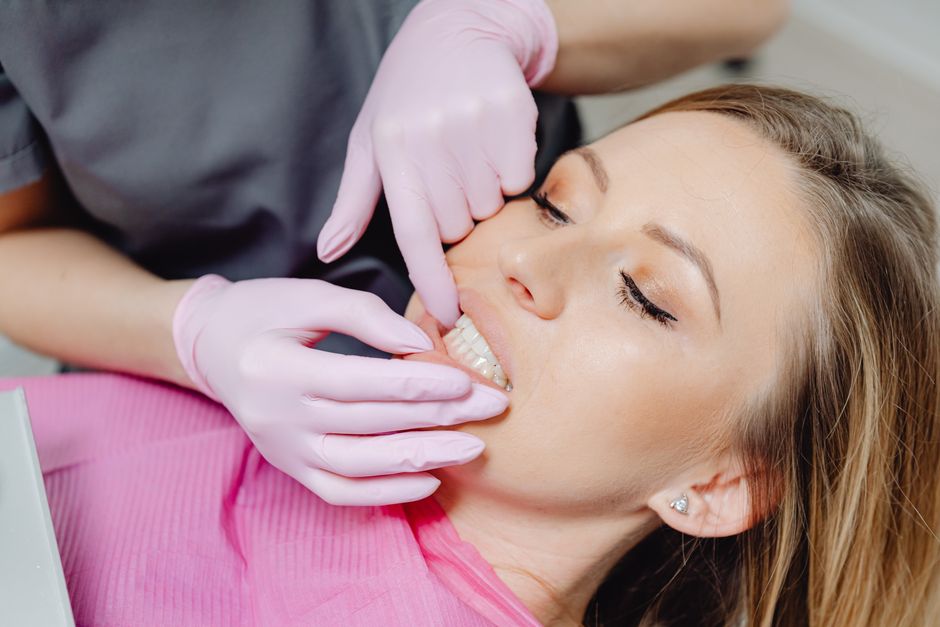
Whitening strips work through a chemical reaction, not a coating or a stain-masking trick. The active ingredient in most strips is hydrogen peroxide or carbamide peroxide. When it contacts the tooth surface, it breaks apart into unstable molecules called free radicals. Those radicals attack the long, dark pigment molecules trapped inside the enamel and break them into smaller, lighter pieces. The color change is real. It is also temporary, and how much you get depends on concentration, contact time, and what your teeth are actually stained by.
How Do Whitening Strips Work Chemistry Results?
The chemistry is well understood. Peroxide compounds are oxidizing agents. When hydrogen peroxide meets the organic pigment molecules in your teeth, it donates oxygen and disrupts the double bonds that give those molecules their color. Break enough of those bonds and the pigment stops absorbing visible light the way it did before. Your eye reads that as a lighter tooth.
Carbamide peroxide works the same way once it breaks down. It releases hydrogen peroxide in the mouth, which then does the actual oxidizing. That is why the two ingredients are often compared by their equivalent hydrogen peroxide strength rather than by the label name.
The reaction happens in the enamel and the layer just beneath it, called dentin. It does not happen on the surface alone. This matters because it explains why strips can lighten stains that sit deeper than a toothbrush can reach, and also why results fade as new pigment accumulates over time.
What Stains Do Whitening Strips Actually Remove?
Strips work best on extrinsic and intrinsic stains caused by pigment molecules, not on physical discoloration from the tooth’s structure.
Common targets include stains from coffee, tea, red wine, and tobacco. These leave pigment deposits that peroxide can oxidize. Some studies suggest these respond reasonably well to at-home peroxide products, though results vary widely between people.
Things strips generally do not fix:
- Genetically dark teeth. If your dentin is naturally more yellow or gray, oxidizing agents have less pigment to break down.
- Tetracycline staining. This discoloration is bound into the tooth structure during development. It tends to respond poorly to peroxide and often needs in-office treatment or restorations.
- Dead or root-treated teeth. A single dark tooth usually has a different cause, and whitening it from the outside rarely works well.
- Surface debris. Plaque and tartar are not pigments. A cleaning removes them, not a strip.
This distinction is the single biggest reason two people can use the same product and get very different results.
How Much Whiter Do Teeth Get, and How Long Does It Last?
Most people see some lightening after a full course of strips. The change is usually measured in shades, not in dramatic jumps, and it is rarely uniform across every tooth.
The honest position on timelines: results typically last weeks to a few months, not indefinitely. Every time you drink coffee or smoke, new pigment deposits form. The whitening does not “wear off” so much as get slowly covered over by new staining.
Several factors shift how long results hold:
- How much staining your diet and habits cause
- Whether you smoke
- How well you keep up with brushing and dental cleanings
- Your starting shade
No clinical guideline sets a standard “expected duration” because the range between individuals is too wide. Anyone promising a fixed number of months is guessing.





Are Whitening Strips Safe for Your Teeth and Gums?
Peroxide whitening is widely used and has a long safety record when directions are followed. The most common side effects are temporary and predictable.
Tooth sensitivity is the main one. Peroxide can reach the nerve through microscopic pathways in the tooth, and that triggers short, sharp sensations. It usually fades after you stop. Gum irritation is the other common issue, and it almost always comes from strips that overlap the gums or from leaving them on longer than directed.
Some important cautions:
- Do not use strips on broken, cracked, or decayed teeth without a dentist’s input.
- Do not use them on crowns, veneers, or bonding and expect a color match. Peroxide does not lighten most dental restoratives, so restored teeth can end up looking darker than the surrounding natural teeth.
- If you have gum disease or exposed roots, check with a dentist first. Exposed root surfaces are more permeable and often more sensitive.
There is no strong evidence that properly used peroxide strips damage enamel. That said, “no evidence of harm in normal use” is not the same as “safe under any conditions.” Overuse, extended wear, and using multiple peroxide products at once are where problems tend to show up.
Do Whitening Strips Damage Enamel?
Research generally does not show that peroxide whitening strips erode or weaken enamel when used as directed. Enamel is the hardest tissue in the body, and the peroxide concentrations in consumer strips are low compared to professional products.
What peroxide can do is cause temporary changes in the enamel surface that make it slightly more porous in the short term. This is part of why sensitivity happens. It also helps explain why some clinicians suggest waiting a bit before eating heavily staining foods right after whitening.
The bigger real-world risk is not enamel damage from a normal course. It is damage from misuse — wearing strips far longer than labeled, using them far more often than recommended, or stacking them with other whitening products without guidance.
Whitening Strips vs. Other Whitening Methods
Strips are one option among several. They differ mainly in peroxide concentration, contact time, and how evenly the product reaches the teeth.
| Method | Typical approach | What to expect |
|---|---|---|
| Whitening strips | Low-concentration peroxide, worn at home for a set time | Gradual lightening over multiple uses; results fade over weeks to months |
| Whitening toothpaste | Abrasives plus very low or no peroxide | Mainly removes surface stain; minimal change to deeper color |
| Tray-based at-home kits | Higher-concentration peroxide in custom or stock trays | More even coverage; often more sensitivity |
| In-office professional whitening | Higher-concentration peroxide applied by a clinician | Larger, faster change; typically the most expensive option |
Comparative effectiveness between these methods is not fully settled in the research. In-office and tray-based approaches generally produce greater color change than strips, but strips cost less and are easier to use. Which one is “better” depends on your goal, budget, and sensitivity.
Why Do Some People Get Poor Results?
When strips seem to do nothing, the cause is usually one of a few things rather than the product being fake.
First, the stain type. As covered above, structural discoloration does not oxidize the way dietary pigment does. Second, contact time and consistency. Strips need repeated, regular use to build a cumulative effect. Skipping days slows the process. Third, the starting shade. Teeth that are already fairly light have less room to move, so the change looks smaller.
There is also a practical limit to how light teeth can get. Peroxide cannot make a tooth whiter than its natural structural color allows. Once the oxidizable pigment is gone, more product does not help.
One non-obvious point: whitening does not change the color of fillings, crowns, or veneers. If you have visible restorations on front teeth, whitening the natural teeth around them can make the mismatch more noticeable, not less.
Frequently Asked Questions
How do whitening strips chemically change tooth color?
Hydrogen or carbamide peroxide releases free radicals that oxidize the pigment molecules inside your teeth, breaking them into smaller, lighter compounds. This changes how the tooth absorbs light, which your eye reads as a whiter shade.
How long do whitening strip results last?
Results typically last from a few weeks to a few months, depending on your diet, smoking, and oral care habits. There is no fixed duration because the range between people is wide.
Do whitening strips weaken or damage enamel?
Research generally does not show enamel damage from strips used as directed. The main risks are temporary sensitivity and gum irritation, which are more common with overuse or extended wear.
Why don’t whitening strips work on my teeth?
Strips work poorly on structural discoloration like tetracycline staining or naturally dark dentin, because there is less oxidizable pigment to break down. They also do not lighten crowns, veneers, or fillings.
