
A vaccine works by showing your immune system a harmless preview of a pathogen — a virus or bacterium — so your body can build defenses without you ever getting sick. That preview triggers a chain of events: your innate immune system reacts within hours, specialized cells carry pieces of the pathogen to lymph nodes, and B cells and T cells learn to recognize and remember it. If you meet the real pathogen later, that memory lets your body respond fast enough to stop the infection before it takes hold.
How Do Vaccines Work From Injection To Immunity?
The moment a vaccine enters your arm, your body treats it as a threat to investigate. Nothing about the injection is passive. The immune system starts working within minutes.
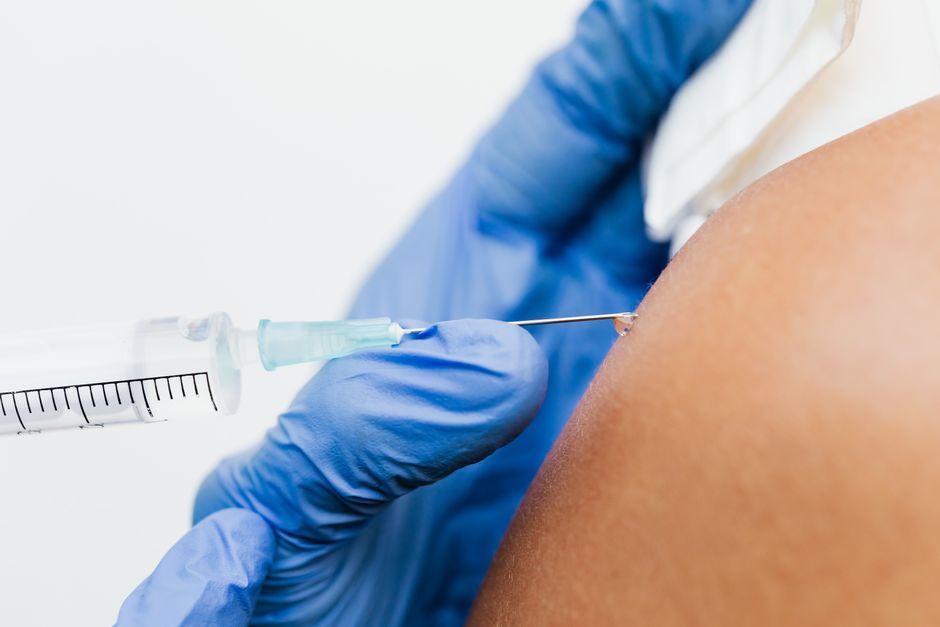
Most vaccines are injected into the deltoid muscle of the upper arm. Muscle tissue contains a rich network of blood vessels and immune cells, which makes it an efficient place to start an immune response. Once the vaccine liquid enters the muscle, its ingredients — the antigen plus helper substances called adjuvants — begin interacting with the cells living there.
The antigen is the key ingredient. It is a piece of the pathogen or a blueprint for making one. It might be a protein from a virus, a weakened or inactivated whole virus, or genetic instructions your cells use to build a viral protein. It cannot cause the disease it protects against. That distinction matters: an antigen trains the immune system, but it does not replicate the way a real infection does.
Adjuvants are added to some vaccines to strengthen the response. They do this by triggering mild local inflammation, which signals to the immune system that something worth paying attention to has arrived. Aluminum salts are the most widely used adjuvants and have been in vaccines for decades.
From the muscle, the antigen and the cells that have captured it travel through lymphatic vessels to nearby lymph nodes — the immune system’s command centers. This journey takes hours, not days. What happens next is where the real learning begins.
What Happens Inside Your Body After the Shot?
Two arms of the immune system respond, and they respond on different timelines.
The innate immune system reacts first. This is your body’s built-in, non-specific defense. Within hours, cells like macrophages and dendritic cells at the injection site recognize the antigen as foreign and begin engulfing it. Dendritic cells are especially important — they act as messengers. They grab pieces of the antigen, break it into fragments, and carry those fragments to the lymph nodes.
In the lymph nodes, the second arm — the adaptive immune system — gets to work. This system is slower to start but far more precise. Dendritic cells present antigen fragments to T cells, which are the coordinators of the immune response.
Two main types of T cells matter here:
- Helper T cells recognize the presented antigen and release chemical signals that activate other immune cells, including B cells.
- Cytotoxic T cells are trained to kill cells that have been infected by a virus. They are especially important for vaccines that use genetic instructions, because those vaccines cause your own cells to briefly display a viral protein.
Meanwhile, B cells in the lymph node recognize the antigen directly through receptors on their surface. When a B cell finds its match and receives the right signals from helper T cells, it activates. It then undergoes a process of rapid division and mutation to produce antibodies that bind the antigen more and more tightly — a kind of natural quality control.
The result is two things: antibodies that circulate in your blood and can neutralize the pathogen if you encounter it, and memory cells that stay in your body long after the vaccine. Memory B cells and memory T cells are the foundation of long-term protection.
How Long Does It Take to Build Immunity After Vaccination?
Protection does not arrive with the injection. It builds over days and weeks, and the timeline varies by vaccine.
Antibody levels typically begin rising within the first week or two. For many vaccines, meaningful protection develops over the course of a few weeks. This is why some vaccines require a second dose — the first dose lays the groundwork, and the second strengthens and broadens the response. The interval between doses is set based on how the immune system responds, and it differs from one vaccine to another.
This timing has a practical consequence. If you are vaccinated during an outbreak, you are not protected immediately. Your body needs time to complete the response. That gap is one reason public health officials sometimes recommend additional precautions in the days and weeks after vaccination.
Some vaccines also require periodic booster doses because antibody levels naturally decline over time. How quickly they decline depends on the vaccine and the pathogen. For some diseases, memory B cells and T cells can provide protection even when circulating antibodies have dropped, because those memory cells can rapidly produce new antibodies upon re-exposure. For others, antibody levels are the main correlate of protection, and boosters restore them.





What Is the Difference Between Antibodies and Memory Cells?
Antibodies and memory cells do different jobs, and understanding the difference explains a lot about how vaccines protect you.
Antibodies are proteins that circulate in your blood and other fluids. They bind to a pathogen and can block it from entering your cells — a process called neutralization. They can also tag pathogens for destruction by other immune cells. Antibodies are your first line of defense when you encounter a pathogen after vaccination. But their levels can fade.
Memory B cells are long-lived cells that stay in your lymph nodes and spleen. They do not produce antibodies all the time. Instead, they wait. If the same pathogen appears again, memory B cells recognize it quickly and start producing antibodies — faster and in greater quantity than the first time.
Memory T cells do something similar but for the cellular side of immunity. They can rapidly expand and either help B cells make antibodies or kill infected cells directly. This matters because some pathogens hide inside cells where antibodies cannot reach them.
The practical upshot: even if your antibody levels have dropped, you may still be protected because your memory cells can mount a fast response. This is why measuring antibodies alone does not always tell the full story of immunity.
Why Do Some Vaccines Need More Than One Dose?
A single dose does not always produce a strong enough or broad enough response. Multiple doses are used for a few reasons.
The first dose primes the immune system. The second dose, given weeks or months later, acts as a reminder. By the time of the second exposure, your memory B cells and T cells are already in place. The result is a faster, larger, and more durable response. Antibodies produced after a second dose often bind the pathogen more tightly and last longer.
Some vaccines also need multiple doses to cover different strains of a pathogen. The human papillomavirus (HPV) vaccine, for example, protects against several strains linked to cancer, and the dosing schedule is designed to build broad coverage. Others, like the hepatitis B vaccine, require a series to achieve reliable protection in most people.
Boosters work on the same principle. They re-expose the immune system to the antigen, pushing antibody levels back up and refreshing the memory response. Whether you need a booster depends on the vaccine, your age, your health status, and how much the pathogen is circulating.
Why Do Vaccines Cause Side Effects?
Side effects are not a sign that something went wrong. They are a sign that your immune system is responding.
The most common side effects — soreness at the injection site, fatigue, headache, muscle aches, low-grade fever — are caused by the innate immune response. When immune cells release signaling molecules called cytokines, those molecules can produce feelings of tiredness and discomfort. This is the same process that makes you feel achy when you have a real infection, just milder and shorter.
These reactions usually appear within a day of vaccination and resolve within a few days. They are more common after some vaccines than others, and they tend to be stronger after a second dose in a series. That pattern reflects a more active immune response, not a problem with the vaccine.
Serious adverse events are rare. When they occur, they are typically immune-mediated reactions that are not predicted by the mild side effects most people experience. This is why monitoring systems exist — to track patterns and detect rare events that individual trials might miss. The evidence base for vaccine safety is built on large clinical trials before approval and continued surveillance afterward.
What Makes a Vaccine Work Against Different Pathogens?
Vaccines are not one-size-fits-all. The type of vaccine and the pathogen it targets both shape how immunity develops.
There are several main types:
- Live attenuated vaccines use a weakened form of the pathogen. They tend to produce strong, long-lasting immunity because they mimic natural infection more closely. Examples include the measles, mumps, and rubella (MMR) vaccine and the varicella vaccine.
- Inactivated vaccines use a killed version of the pathogen. They are safer for people with weakened immune systems but often require multiple doses and boosters. The flu shot is one example.
- Subunit, recombinant, polysaccharide, and conjugate vaccines use specific pieces of the pathogen — like a protein or a sugar coat. They can be very precise but may need adjuvants to provoke a strong enough response.
- mRNA vaccines deliver genetic instructions that tell your cells to make a viral protein. Your immune system then responds to that protein. The mRNA does not enter the cell nucleus and does not alter your DNA.
- Viral vector vaccines use a modified virus to deliver genetic instructions. The vector virus is altered so it cannot replicate or cause disease.
Each approach has trade-offs. Live vaccines tend to produce durable immunity but are not suitable for everyone. Inactivated and subunit vaccines are safer for immunocompromised people but may need boosters. The choice depends on the pathogen, the population, and the goal of the vaccination program.
How Does Herd Immunity Fit In?
When enough people in a community are immune, a pathogen has fewer opportunities to spread. This is called herd immunity, or community immunity. It protects people who cannot be vaccinated — infants too young for certain vaccines, people with certain immune conditions, and those receiving treatments that suppress the immune system.
The threshold for herd immunity varies by disease. Measles is highly contagious, so a very high proportion of the population needs to be immune to stop its spread. Other diseases spread less easily and require lower thresholds. These thresholds are established through epidemiological modeling and outbreak data.
Herd immunity is not a reason to skip vaccination. It is a consequence of widespread vaccination. When vaccination rates drop, outbreaks can follow, even in communities that had been protected for years.
Frequently Asked Questions
How long does it take for a vaccine to work?
Most vaccines take about two weeks after the final dose to produce full protection. Some vaccines require multiple doses spaced weeks or months apart, so the timeline depends on the specific vaccine.
Can a vaccine give you the disease it prevents?
No. Vaccines cannot cause the disease they protect against because the antigen cannot replicate and cause illness. Some people may feel mild symptoms like a low fever or fatigue, but that is the immune response, not the disease.
Do vaccines change your DNA?
No. mRNA vaccines deliver instructions that are read by the cell’s protein-making machinery and then broken down. The mRNA does not enter the cell nucleus and cannot alter your DNA.
Why do some vaccines need boosters?
Antibody levels naturally decline over time, and boosters restore them. Some pathogens also change over time, so boosters help maintain protection against new strains.
