
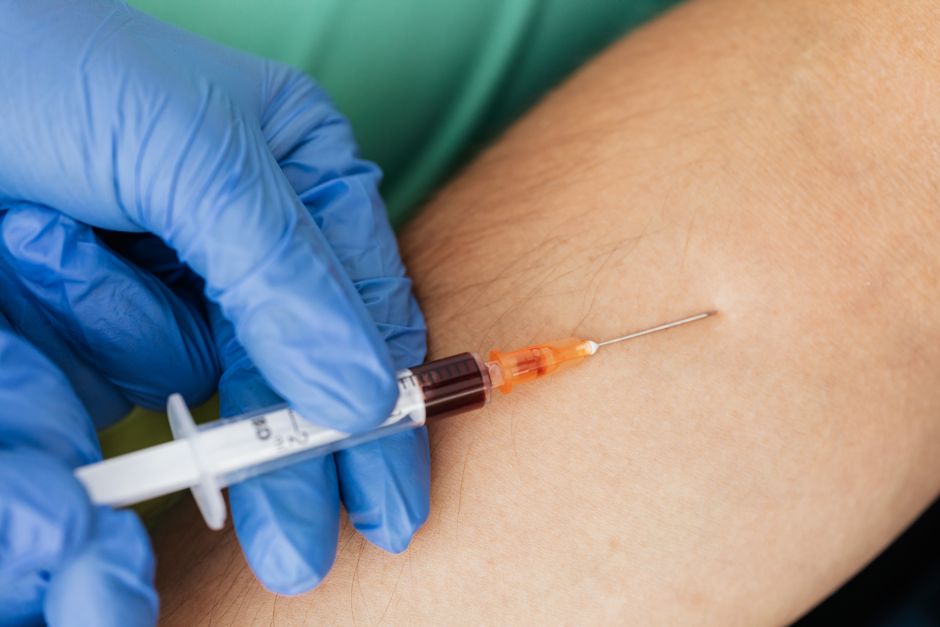
Tuberculosis testing starts with a simple question: has your immune system ever met the TB bacteria? The two main tests answer this in different ways. A skin test places a small amount of fluid under your skin and watches for a reaction. A blood test measures how your immune cells respond to TB proteins in a lab sample. Both tests check for infection, not active disease. Here is what each one actually involves, how they differ, and what your results mean.
What Is the TB Skin Test and How Is It Done?
The TB skin test is also called the Mantoux tuberculin skin test. A healthcare worker injects a tiny amount of fluid called tuberculin into the top layer of your skin, usually on your forearm. The injection raises a small pale bump. This is not the reaction itself — it just means the fluid went in correctly.
You must return 48 to 72 hours later to have the test read. A trained professional measures the bump with a ruler. The size of the hard swelling, not the redness, is what matters. Redness alone does not count as a positive result.
If you do not return within the window, that test is invalid. You would need to start over with a new injection.
What Does a Positive TB Skin Test Mean?
A positive skin test means your immune system has been sensitized to TB bacteria at some point. This could mean you have a latent TB infection, where the bacteria live in your body but are inactive. It does not mean you have active TB disease, which makes you sick and can spread to others.
The size of the reaction that counts as positive depends on your risk factors. For most healthy people without known exposure, a reaction of 15 millimeters or more is positive. For people with certain medical conditions or recent exposure, a reaction of 10 millimeters is positive. For people with weakened immune systems, even 5 millimeters can be positive.
Your clinician determines which threshold applies to you. Do not try to interpret the number yourself.
How Does the TB Blood Test Work?
TB blood tests are called interferon-gamma release assays, or IGRAs. Two versions are available in the United States: QuantiFERON-TB Gold Plus and T-SPOT.TB. Both are simple blood draws from your arm.
In the lab, your blood is mixed with TB-specific proteins. If your immune cells recognize these proteins, they release a substance called interferon-gamma. The lab measures this release. A positive result means your immune system has encountered TB bacteria before.
The blood test has one major advantage: you only need one visit. There is no second appointment to read the result. Results typically come back within 24 hours.


Skin Test vs Blood Test: Which One Should You Get?
Your doctor will choose based on your situation, not your preference. Both tests are considered reliable, but they work in different situations.
Blood tests are generally preferred for people who have received the BCG vaccine. This vaccine is common in many countries outside the United States. It can cause a false positive on the skin test because the vaccine triggers a similar immune response. Blood tests are not affected by BCG in the same way.
Blood tests also avoid the problem of people not returning for the skin test reading. This makes them more practical in many settings.
Skin tests are still widely used because they are inexpensive and require no lab equipment. They are also the standard approach in many public health clinics and for testing children under age 5, where blood test data is more limited.
| Feature | TB Skin Test | TB Blood Test |
|---|---|---|
| Number of visits | Two (injection and reading) | One (blood draw) |
| Time to result | 48–72 hours | Usually 24 hours |
| Affected by BCG vaccine | Yes, can cause false positive | No |
| Requires lab equipment | No | Yes |
| Cost | Lower | Higher |
What Happens If Your TB Test Is Positive?
A positive test — whether skin or blood — is not a diagnosis of active TB. It only tells you that infection has occurred. The next step is determining whether the infection is latent or active.
Your doctor will order a chest X-ray and ask about symptoms. Symptoms of active TB include a cough lasting more than three weeks, coughing up blood, chest pain, fever, night sweats, and unexplained weight loss. If you have none of these and your chest X-ray is clear, you likely have latent TB infection.
Latent TB is not contagious. You cannot spread it to others. However, without treatment, latent TB can become active later in life. Treatment for latent TB usually involves taking medication for several months to eliminate the bacteria.
If your chest X-ray or symptoms suggest active disease, further testing will confirm it. This may include a sputum sample, where you cough up mucus for laboratory analysis.
Can a TB Test Give a False Result?
Yes, both tests can produce false results, but for different reasons.
False positives on the skin test can happen in people who received the BCG vaccine. False negatives can happen if your immune system is weakened, such as from HIV, severe illness, or certain medications. In these cases, your body may not mount a visible reaction even if you are infected.
Blood tests have their own limitations. A small number of people have indeterminate results, meaning the test could not give a clear answer. This happens more often in people with weakened immune systems or those taking immunosuppressive drugs.
Neither test is perfect. Clinical judgment, risk factors, and follow-up testing are always part of the picture.
Can You Have TB and Test Negative?
Yes, this is possible but uncommon. If you were infected very recently, your immune system may not have had time to develop a detectable response. This is called the window period. It typically takes 2 to 8 weeks after exposure for a test to turn positive.
If you had a known exposure, your doctor may recommend a second test later to confirm the first result was not a false negative. This is standard practice in many settings.
Severe active TB can also suppress the immune response. Some people with advanced disease test negative because their immune system is overwhelmed.
How Do They Do a TB Test for Children?
Children can receive either test, but the approach differs slightly. The skin test is well studied in children and is often the preferred option for those under age 5. Blood tests are increasingly used but have less established data in very young children.
The procedure is the same. A child receives the skin injection and must return for reading, or a blood sample is drawn. The main challenge is follow-through. Children are more likely to miss the skin test reading window, so blood testing is sometimes chosen for practical reasons.
If a child tests positive, the next steps are the same as for adults: chest X-ray, symptom review, and a decision about treatment.
Frequently Asked Questions
How long does a TB skin test take?
The injection itself takes seconds. The test must be read 48 to 72 hours later, so the full process spans two to three days.
Can I shower with a TB skin test?
Yes, you can shower and bathe normally. Do not cover the site with a bandage, and do not scratch or rub the area.
Is a TB blood test more accurate than a skin test?
Both tests are highly reliable. Blood tests avoid BCG-related false positives and do not require a second visit, but skin tests are equally valid in the right circumstances.
Can a TB test make you sick?
No. The skin test contains inactive TB proteins that cannot cause infection. The blood test simply draws blood. Neither test can give you TB.
