
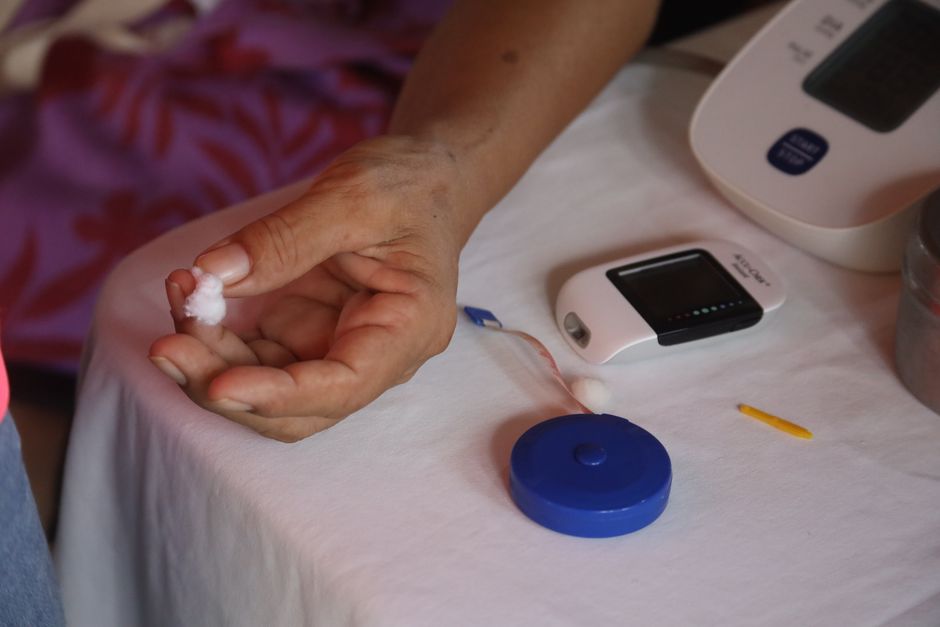
Testing your blood sugar at home takes about two minutes once you know the steps. Wash your hands, insert a test strip into your meter, prick the side of a fingertip with a lancet, touch the drop of blood to the strip, and read the number. If you use a continuous glucose monitor, you skip the fingerstick and scan a sensor instead.
That is the short version. The details matter more than most people realize. A wet finger, a squeezed fingertip, or an expired strip can all produce a reading that is wrong by enough to change what you do next. This guide walks through the full process, the equipment involved, the timing that makes results useful, and the mistakes that quietly skew numbers.
How To Test Your Blood Sugar Steps And Methods
The standard fingerstick method has been used for decades and remains the reference point against which other methods are compared. Here is the sequence in order.
- Wash your hands with warm soap and water, then dry them completely. Warm water improves blood flow to the fingers. Soap removes sugar residue from food, which can falsely raise a reading.
- Prepare your meter. Insert a fresh test strip into the meter and confirm the meter is on and ready. Check that the strip has not expired.
- Load the lancet device. Use a new lancet each time. Reusing lancets dulls the tip, which makes the stick more painful and can affect the size of the blood drop.
- Choose a spot on the side of a fingertip. The side of the finger has more blood vessels and fewer nerve endings than the center of the pad. The center of the pad hurts more.
- Prick the skin. Hold the lancet device against the side of the finger and press the release button.
- Get a drop of blood. Let the blood well up on its own. If it does not, lower your hand below heart level and gently massage the finger from base to tip.
- Touch the strip to the blood. Most meters draw the sample in by capillary action. Do not smear the blood onto the strip.
- Wait for the reading. Most meters return a result in about 5 seconds, though this varies by device.
- Record the number. Log it in the meter’s memory, an app, or a paper log along with the date and time.
One detail people often miss: do not squeeze the fingertip hard to force blood out. Milking the finger pushes fluid from surrounding tissue into the sample and dilutes it. That can lower the reading. A gentle massage from the base of the finger toward the tip is the better move.
What Equipment Do You Need To Test Blood Sugar?
A basic setup includes four items: a glucose meter, test strips matched to that meter, a lancing device, and lancets. Strips are specific to the meter brand and model. A strip from one manufacturer will not work in another company’s meter.
Test strips are the most expensive recurring cost and the most common source of error. They are sensitive to heat, moisture, and expiration. Store them in their original vial with the cap closed. Do not transfer them to a pill organizer or leave them in a hot car.
Control solution is a liquid with a known glucose concentration that comes with many meters. Testing with control solution checks whether the meter and strips are working within their stated range. It is not a test of your blood sugar. Some clinicians recommend using it when you open a new vial of strips or when a reading seems off. It is widely available but not always used in practice.
Lancets come in different gauges. A higher gauge number means a thinner needle, which generally means less discomfort. Depth settings on the lancing device let you adjust how far the needle goes in. Thinner skin needs a shallower setting.
How Do Continuous Glucose Monitors Differ From Fingersticks?
A continuous glucose monitor, or CGM, uses a small sensor worn on the skin. A thin filament sits just under the skin and measures glucose in the fluid between cells, called interstitial fluid. The sensor transmits readings to a receiver or phone, often every few minutes.
The key difference is what is being measured. A fingerstick measures glucose in blood. A CGM measures glucose in interstitial fluid. Glucose moves from blood into interstitial fluid, so the two values track closely but are not identical. During times when glucose is changing quickly — after a meal, during exercise, or when correcting a low — the CGM reading can lag behind the blood reading. This lag is a well-documented characteristic of the technology, not a defect.
For this reason, most CGM manufacturers instruct users to confirm with a fingerstick when a reading does not match how they feel, or when making treatment decisions during rapid changes. CGMs still require fingerstick calibration in some models, though many newer devices do not.
CGMs do not eliminate fingersticks entirely, but they reduce how many are needed. They also show patterns across a full day that isolated fingersticks cannot capture. Whether a CGM is appropriate depends on the person, the type of diabetes, and insurance coverage.



When Should You Test Your Blood Sugar?
Timing depends on why you are testing and what your care team has recommended. There is no single schedule that fits everyone.
Common testing points include:
- Before meals, to guide mealtime decisions
- Two hours after the start of a meal, to see how food affected glucose
- Before and after exercise, since activity can raise or lower glucose
- Before bed, to reduce the risk of overnight lows
- When you feel symptoms of high or low blood sugar
- Before driving, if you take insulin or medications that can cause lows
People with type 1 diabetes typically test more often than people with type 2 diabetes managed by diet and oral medication. Someone using insulin generally needs more frequent testing than someone who is not. The right frequency is a clinical decision, not a fixed rule.
For people with type 2 diabetes who are not on insulin, professional guidelines have shifted over the years toward less routine fingerstick testing and more reliance on A1C and, in some cases, CGM. If you are unsure how often to test, that is a conversation to have with your clinician rather than a number to guess at.
What Do Blood Sugar Numbers Mean?
For adults without diabetes, fasting glucose generally falls between 70 and 99 mg/dL. A fasting level of 100 to 125 mg/dL is classified as prediabetes, and 126 mg/dL or higher on two separate tests is consistent with diabetes. These thresholds come from standard diagnostic criteria used in clinical practice.
For people with diabetes, target ranges are individualized. They depend on age, how long you have had diabetes, other health conditions, and your risk of low blood sugar. A common general range discussed in clinical settings is roughly 80 to 130 mg/dL before meals, though your clinician may set different targets for you.
Two things are worth keeping separate in your mind. Diagnostic thresholds are standardized and apply to the general population. Personal targets are not standardized and are set for you specifically. A number that looks high against a diagnostic cutoff may be an acceptable target for one person and a concern for another.
What Causes Inaccurate Blood Sugar Readings?
Most errors trace back to technique or storage, not to the meter itself.
- Unwashed hands. Fruit juice, soda, or food residue on a fingertip can raise a reading substantially.
- Wet hands. Water left on the skin dilutes the sample.
- Squeezing the fingertip. This adds tissue fluid and can lower the reading.
- Expired or heat-damaged strips. Strips lose accuracy past their expiration date or after exposure to heat and humidity.
- Too small a blood sample. An insufficient drop can trigger an error code or produce a low result.
- Anemia or dehydration. Both can affect readings, though the direction and size of the effect vary.
- Certain medications. Some drugs can interfere with specific meters. Your pharmacist can check this.
Home glucose meters are not held to the same accuracy standard as laboratory testing. Regulatory bodies allow a margin of error for home devices, so a reading that is slightly off from a lab value is expected rather than a sign of a broken meter. If a reading does not match how you feel, wash your hands and retest before acting on it.
How Accurate Are Home Blood Sugar Tests?
Home meters are accurate enough for daily management but are not diagnostic-grade instruments. Regulatory standards in the United States allow a certain percentage of results to fall outside the true value, which is why a single reading should not be treated as exact.
Accuracy improves when technique is consistent. Using the same meter, storing strips correctly, and washing hands every time all reduce variation. If you get a reading that seems impossible — very high or very low with no matching symptoms — retest before reacting. Persistent unexplained readings are worth mentioning to your clinician.
Laboratory testing remains the standard for diagnosis. A home meter can tell you how you are doing day to day. It is not the tool used to confirm whether you have diabetes.
Frequently Asked Questions
Can I test my blood sugar without pricking my finger?
Yes, with a continuous glucose monitor, which measures glucose in interstitial fluid rather than blood. It still requires a sensor inserted under the skin, and some situations call for a fingerstick to confirm the reading.
Should I wipe away the first drop of blood?
Current guidance generally supports using the first drop if your hands are washed and dry. If you cannot wash your hands, wiping the first drop and using the second is a reasonable precaution.
How often should I test my blood sugar?
Frequency depends on your type of diabetes, your medications, and your clinician’s recommendations. There is no single schedule that applies to everyone.
Why is my meter reading different from my lab result?
Home meters are allowed a margin of error that lab equipment is not, so small differences are expected. Larger differences may point to technique or strip storage problems worth reviewing.
