
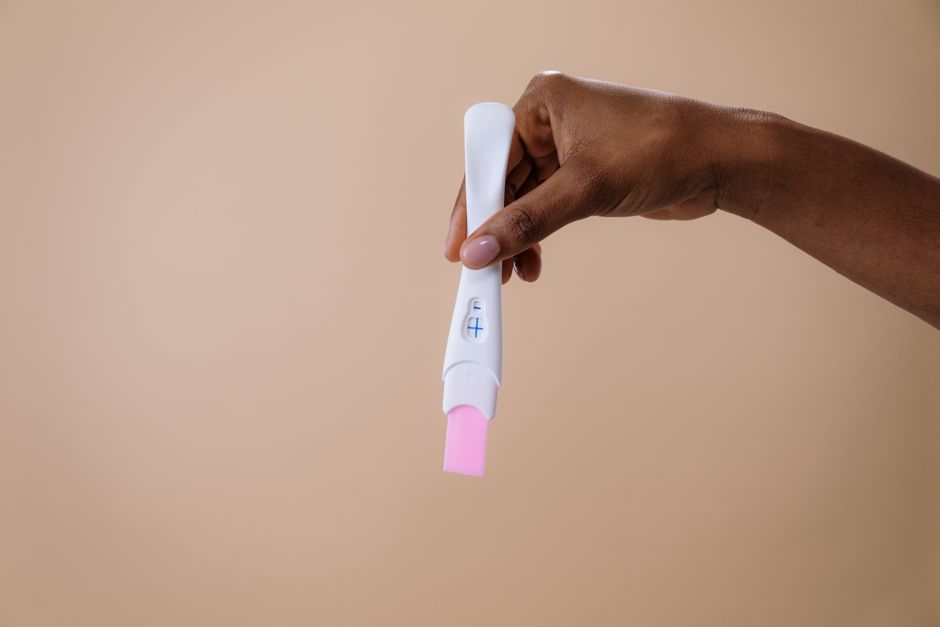
Pregnancy test strips detect a hormone called human chorionic gonadotropin, or hCG, in your urine. When a fertilized egg implants in the uterus, the developing placenta starts making this hormone. The strip contains antibodies that bind to hCG, and if it is present, a colored line appears on the test. The results are straightforward: two lines mean pregnant, one line means not pregnant, and the intensity of the test line reflects the amount of hCG in your urine.
How Do Pregnancy Strips Work HCG Lines And Results?
Pregnancy strips are lateral flow immunoassays. That sounds technical, but the principle is simple. The strip has a test line and a control line. The control line always appears if the test worked correctly. The test line only appears when hCG is present in your urine.
When you dip the strip in urine, the liquid travels up the absorbent pad. It passes through a zone containing antibodies that are labeled with a dye. These antibodies grab onto any hCG molecules in the urine. The liquid continues moving and reaches the test line, which contains a second set of antibodies. If hCG is attached to the dye-labeled antibodies, they get captured here. This creates the visible colored line.
Any urine containing hCG will produce a test line. The amount of hCG determines how dark that line becomes. Higher levels of hCG produce darker, more obvious lines. Lower levels produce faint lines.
This mechanism is identical across most home pregnancy tests. The plastic casings and digital displays are just packaging. The underlying strip does the same job in every case.
When Should You Take a Pregnancy Test?
Timing matters more than any other factor in getting an accurate result. hCG levels start near zero and rise rapidly after implantation. Implantation typically happens 6 to 10 days after ovulation. After implantation, hCG doubles roughly every 48 to 72 hours in early pregnancy.
Most test manufacturers recommend testing on the first day of a missed period. At that point, hCG levels are usually high enough to detect. Some sensitive tests claim to detect pregnancy earlier, up to 5 days before a missed period. These early results are less reliable because hCG may still be too low to register.
Testing too early is the most common cause of false negative results. If you test before implantation has occurred, there is simply no hCG in your urine yet. The test is working correctly, but there is nothing for it to detect.
For the most reliable result, wait until the first day of your missed period. If your cycles are irregular, wait at least 21 days after unprotected sex. This gives your body enough time to produce detectable hCG if you are pregnant.
How to Read the Lines Correctly
Reading the results is simple once you understand what each line means. The control line is your quality check. It should always appear, regardless of whether you are pregnant. If the control line does not show, the test is invalid and you should use a new one.
The test line indicates pregnancy. Any visible test line, even a faint one, means hCG is present. A faint line is not a weak positive. It is a positive result. The amount of hCG in your urine varies throughout the day, so line intensity can differ between tests taken hours apart.
Two lines of any intensity mean the test detected hCG. This indicates pregnancy. One line in the control position means no hCG was detected. This indicates you are not pregnant, assuming you tested at the right time.
No line in the control position means the test failed. Discard it and try again with a new strip. This can happen if you used too little urine, left the strip in urine too long, or used an expired test.





What Does a Faint Line Mean?
A faint test line still indicates pregnancy. The line appears whenever hCG binds to the antibodies, regardless of the hormone concentration. Very early in pregnancy, hCG levels are low, so the line may be light. As hCG rises, the line typically darkens.
Some women see a faint line and wonder if it is an evaporation line. Evaporation lines can appear on some tests after the urine has dried. They are usually colorless or gray and appear outside the recommended reading window. A true positive line usually has color, even when faint.
Read your test within the time frame specified in the instructions, usually 3 to 5 minutes. Results read after 10 minutes may not be reliable. A line that appears after the reading window has passed should not be considered a positive result.
If you get a faint positive, the next step is to repeat the test in 48 hours. In a healthy early pregnancy, hCG levels should roughly double in that time. A darker line on the second test is reassuring. A lighter line or no line may indicate a problem, but one test cannot tell you what is happening.
Can Medications or Medical Conditions Affect Results?
Most common medications do not interfere with pregnancy test results. Pain relievers, antibiotics, and birth control pills do not affect hCG detection. Fertility medications are the exception.
Medications containing hCG can cause false positives. These include some fertility treatments like injections used to trigger ovulation. If you are taking these medications, a positive test may not mean you are pregnant. Your doctor can advise you on when to test after these injections.
Certain rare medical conditions can also produce hCG. Some ovarian tumors and other cancers can secrete the hormone. This is uncommon, but it means a positive test is not always due to pregnancy. A chemical pregnancy, where the embryo implants but stops developing, can also produce a positive result followed by a negative one.
Recent pregnancy, including miscarriage or abortion, leaves hCG in your system for weeks. Testing during this time can produce a positive result even though you are no longer pregnant. hCG levels typically return to zero within 2 to 4 weeks after pregnancy loss.
How Accurate Are Pregnancy Strips?
When used correctly, pregnancy test strips are highly accurate. Most claim over 99% accuracy when tested on the first day of a missed period. This accuracy depends on following the instructions exactly and testing at the right time.
False positives are rare. They occur in less than 1% of tests. False negatives are more common and usually result from testing too early. Diluted urine can also cause false negatives. Testing first thing in the morning, when urine is most concentrated, gives the best chance of detection.
Expired tests may produce inaccurate results. The antibodies on the strip degrade over time, so they may not bind to hCG effectively. Check the expiration date before use. Store strips in a cool, dry place, as heat and moisture can damage them.
No home test can tell you how far along you are or whether the pregnancy is viable. A positive test should be confirmed by a healthcare provider, especially if you have symptoms like severe pain or heavy bleeding.
What to Do After You Get Your Results
A positive result means you should contact a healthcare provider. They can confirm the pregnancy with a blood test or another urine test and discuss next steps. Blood tests can measure exact hCG levels, which is useful in early pregnancy.
A negative result on the first day of a missed period does not always mean you are not pregnant. If your period does not start within a few days, test again. Your ovulation date may have been later than you calculated, meaning your hCG levels were still too low to detect.
If you get conflicting results from different tests, wait 48 hours and test again. Use the same brand for consistency. Different brands have different sensitivity levels, which can cause variation in results.
Whatever your result, remember that home pregnancy tests are screening tools, not diagnostic tests. They detect a hormone, not a pregnancy outcome. A healthcare provider can give you more complete information about what your results mean for your specific situation.
Frequently Asked Questions
How long should I wait before reading a pregnancy test strip?
Read the test within the time window stated in the instructions, usually 3 to 5 minutes. Results read after 10 minutes may not be reliable because evaporation lines can appear.
Can a faint line mean I am not pregnant?
No, any visible test line means hCG was detected and indicates pregnancy. The line intensity reflects hCG concentration, not whether you are pregnant.
Why did I get a negative test but miss my period?
You may have tested too early, or your ovulation date may have been later than you thought. Wait a few days and test again with morning urine.
Can birth control pills cause a false positive pregnancy test?
No, birth control pills do not contain hCG and do not affect pregnancy test results. Only medications containing hCG, like some fertility treatments, can cause false positives.
