
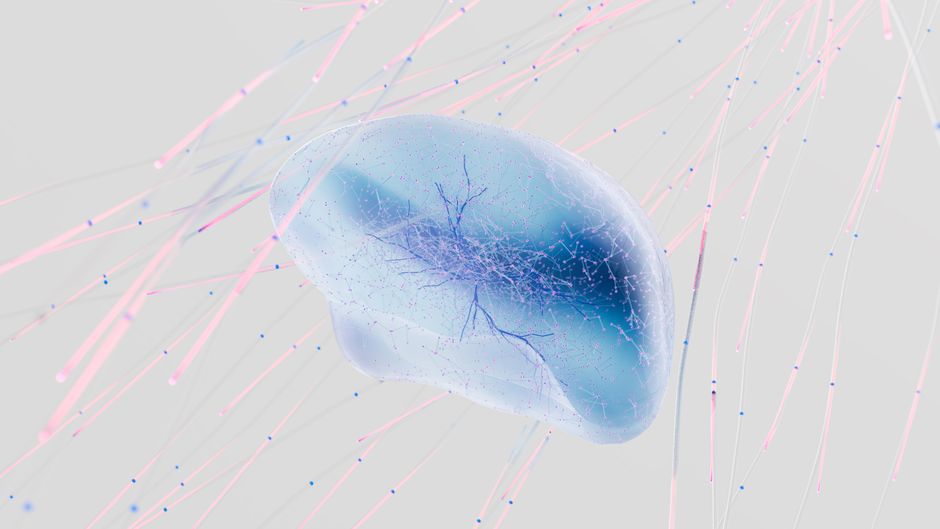
Your brain is built from around 86 billion nerve cells called neurons. These cells are the hardware of thought, memory, movement, and sensation. But the hardware alone does nothing. The magic happens in the communication—the rapid-fire messages that travel between neurons. This communication is the foundation of every feeling you have, every decision you make, and every breath you take. Neurons transmit information through a two-part process: an electrical signal travels down the neuron, and a chemical signal carries the message across the tiny gap to the next neuron.
What Is the Structure of a Neuron?
To understand how neurons talk, you first need to know their anatomy. A neuron has three main parts: the cell body, dendrites, and an axon. The cell body, or soma, contains the nucleus and keeps the cell alive. Dendrites are branch-like extensions that receive incoming signals from other neurons. The axon is a long, cable-like fiber that sends signals away from the cell body toward other neurons.
Most axons are wrapped in a fatty layer called the myelin sheath. Myelin acts like insulation on an electrical wire. It helps signals travel faster and prevents the signal from weakening as it moves down the axon. When myelin is damaged, as in multiple sclerosis, signal transmission slows down or stops completely, which causes the symptoms of the disease.
At the very end of the axon are terminal buttons, also called axon terminals. These are the release points for chemical messengers. The space between one neuron’s terminal button and the next neuron’s dendrite is called the synapse.
How Does an Electrical Signal Travel Along a Neuron?
The signal that travels down the axon is called an action potential. It is a brief, rapid change in the electrical charge across the neuron’s membrane. At rest, the inside of a neuron is negatively charged compared to the outside. This resting state is maintained by ion pumps that move sodium and potassium ions across the cell membrane.
When a signal arrives, ion channels open and sodium rushes into the cell. This makes the inside of the neuron positively charged. That shift in charge triggers the next segment of the axon to open its channels, and the wave of depolarization moves down the axon like a line of falling dominoes. After the wave passes, potassium flows out to restore the negative charge inside the cell.
This process is all-or-nothing. A neuron either fires a full action potential or it does not fire at all. There is no partial signal. The strength of a message is not determined by the size of the action potential but by the frequency of firing. A neuron can fire a few times per second for a weak signal, or dozens of times per second for a strong one.
How Do Neurons Transmit Information To Each Other?
The electrical signal does not jump across the synapse. The gap between neurons is too wide for the charge to leap across. Instead, the neuron converts the electrical signal into a chemical one. When the action potential reaches the terminal buttons, it triggers tiny sacs called synaptic vesicles to move to the edge of the cell. These vesicles are filled with chemical messengers called neurotransmitters.
The vesicles fuse with the cell membrane and release their contents into the synapse. The neurotransmitters drift across the narrow gap and bind to receptor proteins on the dendrite of the next neuron. This binding is highly specific. Each neurotransmitter fits its receptor like a key fits a lock. Dopamine binds to dopamine receptors. Serotonin binds to serotonin receptors.
Once the neurotransmitter binds, it causes ion channels on the receiving neuron to open. This creates a new electrical change in that neuron. If the change is strong enough to reach the threshold, the receiving neuron fires its own action potential, and the message continues down the line. This entire process, from electrical signal to chemical release to new electrical signal, happens in about one millisecond.





What Are Excitatory and Inhibitory Signals?
Not all neurotransmitter signals tell the receiving neuron to fire. Some signals are excitatory, meaning they push the neuron closer to firing. Others are inhibitory, meaning they pull the neuron further away from firing. Whether a neuron fires depends on the balance of these opposing signals at any given moment.
Glutamate is the main excitatory neurotransmitter in the brain. It opens sodium channels and depolarizes the receiving neuron. GABA is the main inhibitory neurotransmitter. It opens chloride channels, which make the inside of the neuron more negative and harder to excite. This push-and-pull system is how the brain prevents runaway activity. When the balance shifts, problems occur. Too much excitation can trigger seizures. Too much inhibition can cause sedation or unconsciousness.
A single neuron receives input from thousands of other neurons. Some of those inputs are excitatory and some are inhibitory. The neuron sums all of these signals in a process called summation. If the total excitatory input exceeds the inhibitory input enough to cross the threshold, the neuron fires. This integration of inputs is a fundamental part of how the brain processes information.
How Are Neurotransmitters Removed After Release?
After a neurotransmitter binds to a receptor, the signal must be stopped. If the neurotransmitter stayed in the synapse, the receiving neuron would keep getting stimulated. The brain uses three main methods to clear neurotransmitters from the synapse.
The first method is reuptake. The sending neuron pumps the neurotransmitter back into its terminal buttons to be reused. Many antidepressant medications work by blocking this reuptake process. Selective serotonin reuptake inhibitors, or SSRIs, keep more serotonin in the synapse by blocking its reuptake, which increases serotonin signaling.
The second method is enzymatic degradation. Enzymes in the synapse break down neurotransmitters into inactive fragments. For example, the enzyme acetylcholinesterase breaks down acetylcholine after it has done its job. This is how nerve gas works—it blocks this enzyme, causing acetylcholine to accumulate and overstimulate muscles.
The third method is diffusion. Some neurotransmitters simply drift away from the synapse and are eventually absorbed by other cells. This is a slower, less precise method of clearance, but it still helps regulate signaling.
What Happens When Neuron Communication Fails?
When any step in this communication process fails, symptoms appear. Neurodegenerative diseases often involve specific neurotransmitter systems. Parkinson’s disease is caused by the death of dopamine-producing neurons in a region of the brain called the substantia nigra. Without enough dopamine, movement becomes slow and rigid.
Alzheimer’s disease involves the loss of acetylcholine-producing neurons in areas critical for memory. This is why some Alzheimer’s medications work by inhibiting acetylcholinesterase, the enzyme that breaks down acetylcholine. By slowing the breakdown, the medication tries to keep more acetylcholine available for signaling.
Mental health conditions also involve neurotransmitter systems, though the relationship is more complex than a simple deficiency model. Depression is not simply a lack of serotonin, despite what many marketing campaigns suggest. The reality is that neurotransmitter systems work in complex networks, and altering one part of the system can have widespread effects.
Frequently Asked Questions
How fast do neurons transmit signals?
The speed varies by neuron type. Some myelinated neurons transmit signals at up to 120 meters per second, while unmyelinated fibers are much slower at around 1 meter per second.
What is the gap between neurons called?
The gap is called the synapse. It is roughly 20 to 40 nanometers wide, which is why chemical messengers are needed to carry the signal across.
Can neurons regenerate after damage?
Neurons in the brain and spinal cord generally cannot regenerate after damage. Some neurons in other parts of the body, such as peripheral nerves, can regrow slowly under the right conditions.
Do all neurons use the same neurotransmitters?
No. Different neurons use different neurotransmitters. Common ones include glutamate, GABA, dopamine, serotonin, and acetylcholine, each with specific functions and receptor types.
