
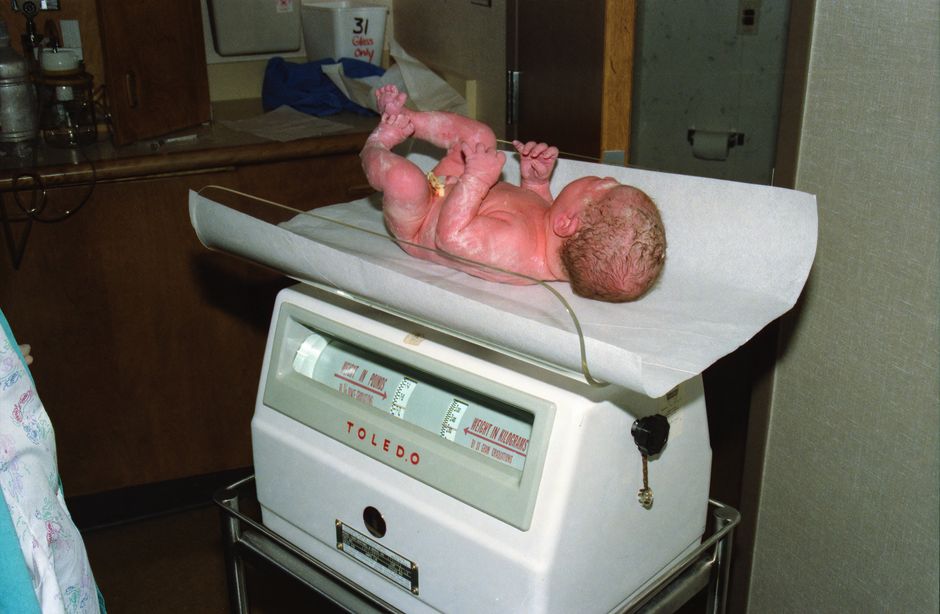
Newborns typically gain about 5 to 7 ounces per week during the first few months of life. That works out to roughly 1 to 1.5 pounds each month. Most babies lose a small amount of weight in the first few days after birth, usually 5 to 7 percent of their birth weight, and then regain it by the time they are about two weeks old.
How Much Weight Should A Newborn Gain Each Week
During the first three months, the average newborn gains about 5 to 7 ounces per week. After the third month, the pace slows down slightly. From three to six months, babies often gain about 3.5 to 4.5 ounces per week. Growth is not a straight line, so some weeks will show more gain than others.
Pediatricians track weight on standard growth charts. These charts compare your baby to other healthy babies of the same age and sex. The goal is not a specific number but a steady pattern of growth along a consistent curve. A baby who drops across two major percentile lines may need a closer look.
Why Do Newborns Lose Weight Right After Birth
All babies are born with extra fluid in their tissues. In the first days of life, they release that fluid through urine and stool. At the same time, they are just starting to feed, and their milk intake is still small. This combination causes the early weight dip.
Breastfed babies tend to lose slightly more weight than formula-fed babies in those first days. This is normal. The key is that the baby starts gaining steadily once the mother’s milk comes in, usually between day two and day five. A baby who continues losing weight after day five or who has not returned to birth weight by day fourteen should be evaluated by a healthcare provider.
How Feeding Affects Weekly Weight Gain
Weight gain depends on getting enough calories. For breastfed babies, that means effective nursing that transfers milk well. For formula-fed babies, it means taking in an appropriate volume for their age.
In the first month, a breastfed baby typically nurses 8 to 12 times in 24 hours. Watching diaper output is a practical way to check intake. After the first week, a baby should have at least six wet diapers and several stools per day. This suggests the baby is getting enough milk.
Formula-fed babies usually take about 1.5 to 3 ounces per feeding in the first month, feeding on demand. By the second month, that often increases to 3 to 4 ounces per feeding. The amount varies, and babies are good at signaling when they are full.



What If Your Baby Gains Too Slowly
Slow weight gain is called failure to thrive when it falls significantly below expected patterns. That diagnosis is not made lightly. It requires weight that consistently drops across growth chart percentiles or remains below the third percentile for an extended period.
Common causes include low milk supply, poor latch, tongue-tie, or an underlying medical issue. Less common causes include metabolic conditions or heart problems. A pediatrician will look at the whole picture, not just the scale.
If weight gain is slow, your doctor may recommend more frequent feedings, a weighted feeding to measure milk transfer, or supplementation with expressed milk or formula. Do not start supplementing on your own without a medical reason. Extra formula can reduce a baby’s demand at the breast and lower milk supply over time.
What If Your Baby Gains Too Quickly
Rapid weight gain in the first months is less commonly discussed, but it happens. Some babies simply have a large frame or parents who are large. Others are overfed, particularly with formula.
Formula-fed babies cannot self-regulate intake as precisely as breastfed babies. A bottle that is always finished to the last drop teaches a baby to ignore fullness cues. Using paced bottle feeding, where the baby controls the pace, can help. Offer the bottle, let the baby pause, and do not push the last ounce.
Most pediatricians do not worry about a chubby baby in the first six months. Rapid weight gain in infancy is not the same as obesity in childhood. The pattern over the first two years matters more than any single month.
How Growth Charts Work
Growth charts are percentile curves based on large populations of healthy children. A baby at the 50th percentile is exactly average. A baby at the 5th percentile is smaller than 95 percent of babies the same age. A baby at the 95th percentile is larger than 95 percent.
What matters is not the percentile itself but the trajectory. A baby who stays at the 25th percentile from birth to six months is growing exactly as expected. A baby who drops from the 50th to the 5th percentile in two months is a different situation entirely.
The World Health Organization growth standards are used for breastfed babies in the first two years. These standards reflect how breastfed infants grow under optimal conditions. The CDC growth charts are based on a mixed feeding population and are used for older children.
When to Call the Doctor
You do not need to weigh your baby daily at home. Weekly weighing is enough for the first month, and your pediatrician’s office visits provide the most reliable measurements. Home scales vary, and small differences can cause unnecessary worry.
Call your pediatrician if your baby has not regained birth weight by two weeks of age. Call if your baby is gaining less than the expected weekly range across multiple weeks. Call if your baby seems lethargic, has fewer wet diapers than expected, or refuses feeds.
Trust your instincts. You see your baby every day, and a doctor sees them briefly. If something feels off, ask for a weight check. It is a simple, quick, and harmless way to get reassurance or catch a problem early.
Frequently Asked Questions
How much weight should a newborn gain in the first month?
Most newborns gain about 1 to 1.5 pounds in the first month. This assumes they have regained their birth weight by two weeks and then gain steadily afterward.
Is it normal for a breastfed baby to gain weight slower than a formula-fed baby?
Yes, breastfed babies often gain weight slightly faster in the first two months and then slow down compared to formula-fed babies. Both patterns are normal when the baby follows a consistent growth curve.
What is the minimum weight gain per week for a newborn?
Most healthy newborns gain at least 4 ounces per week in the first three months. Consistently gaining less than that warrants a call to your pediatrician.
When should a newborn regain their birth weight?
Most babies regain their birth weight by 10 to 14 days after birth. If your baby has not regained birth weight by two weeks, your pediatrician should evaluate feeding and weight gain.
