
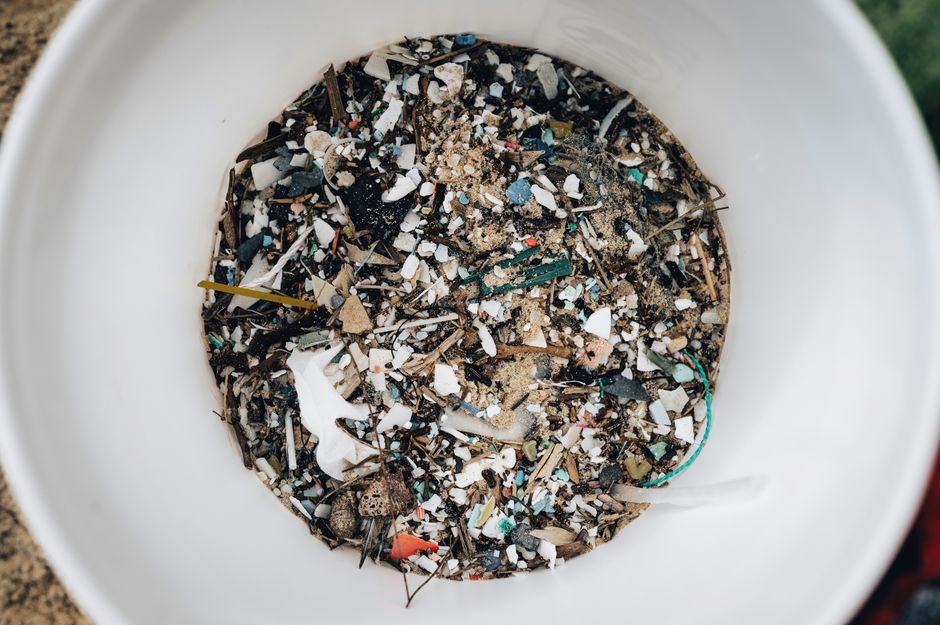
Microplastics are tiny plastic particles smaller than 5 millimeters that have been found in human blood, lungs, liver tissue, and even placentas. Research suggests these particles can trigger inflammation, carry toxic chemicals into the body, and may contribute to a range of health problems, though the full picture is still emerging. Scientists are studying how these particles move through the body and what they do once they get there.
What Are Microplastics and Where Do They Come From?
Microplastics are fragments of plastic smaller than a grain of rice. Some are manufactured small, like the beads once used in face scrubs. Others form when larger plastic items break down over time — water bottles, food containers, synthetic clothing, and tires all shed tiny particles.
These particles are everywhere. They have been found in drinking water, sea salt, honey, beer, and even the air we breathe. A 2019 study estimated that the average person ingests about 5 grams of plastic per week — roughly the weight of a credit card. That estimate has been widely cited, though some researchers argue the real number could be higher or lower depending on diet and environment.
What matters most is not just how much plastic enters the body, but what happens once it gets there.
How Do Microplastics Affect Humans Health Risks?
Microplastics enter the human body through three main routes: eating, drinking, and breathing. Once inside, particles can pass through the intestinal wall and enter the bloodstream. From there, they can travel to organs and tissues throughout the body.
Studies have detected microplastics in human blood, deep lung tissue, liver, kidney, and placenta samples. This confirms that plastic particles do not simply pass through the digestive tract — some are absorbed and distributed internally.
The size of the particle matters. Larger particles are more likely to be excreted. Very small particles, especially those under 10 micrometers, are more likely to cross biological barriers. Nanoparticles — particles under 1 micrometer — are the most concerning because they can enter individual cells.
Research in this area is still young. Most studies have been done in animals or in laboratory cell cultures. Human studies are limited but growing. The evidence so far points to three main mechanisms of harm: physical irritation, chemical exposure, and disruption of the gut microbiome.
Can Microplastics Carry Harmful Chemicals Into the Body?
Plastics are not inert. They contain additives — chemicals added during manufacturing to make plastic flexible, flame-resistant, or durable. Common additives include phthalates, bisphenol A (BPA), and flame retardants. Many of these are known endocrine disruptors, meaning they can interfere with hormones.
Microplastics can also absorb environmental pollutants. In the ocean, plastic particles attract heavy metals, pesticides, and persistent organic pollutants. When humans consume seafood or salt containing these particles, they may also consume the chemicals attached to them.
This is called the “Trojan horse” effect. The plastic particle serves as a vehicle, delivering chemicals into the body that might not otherwise be absorbed. Some research suggests that the chemicals carried by microplastics may pose a greater risk than the plastic itself.
However, the actual amount of chemical exposure from microplastics is still being debated. Some researchers argue that the level of additives and pollutants delivered through microplastics is small compared to other dietary sources. Others point out that the combination of physical particle and chemical load may have effects that neither factor alone would produce.





What Health Conditions Are Linked to Microplastic Exposure?
No large human trial has confirmed that microplastics cause a specific disease. That standard of evidence does not exist yet. What the research does show is a pattern of biological effects that could contribute to illness over time.
Animal studies have linked microplastic exposure to inflammation in the gut, liver damage, and changes in metabolism. Laboratory studies on human cells have shown that plastic particles can trigger oxidative stress — a state where the body produces too many free radicals and cannot neutralize them. Oxidative stress is a known driver of many chronic conditions, including cardiovascular disease and cancer.
Some studies have found microplastics in atherosclerotic plaques — the fatty deposits that narrow arteries. One 2024 study published in the New England Journal of Medicine found that people with microplastics in their arterial plaques had a higher risk of heart attack, stroke, and death over a 34-month follow-up period. This was an observational study, meaning it shows an association but does not prove causation. Still, it is one of the strongest human studies to date.
Microplastics have also been found in lung tissue, including in people without occupational plastic exposure. This raises questions about whether inhaled particles contribute to respiratory conditions like asthma or chronic obstructive pulmonary disease. The evidence here is preliminary.
For reproductive health, studies have detected microplastics in human testicular tissue and in placentas. Some animal research suggests that plastic particles can cross the placental barrier and affect fetal development. Human data is too limited to draw firm conclusions.
Do Microplastics Disrupt the Gut Microbiome?
The gut microbiome — the community of bacteria living in the digestive tract — is sensitive to environmental stressors. Some animal studies show that microplastics can alter the balance of gut bacteria, reducing beneficial species and allowing harmful ones to proliferate.
This matters because the gut microbiome influences digestion, immune function, and even mental health. A disrupted microbiome has been linked to inflammatory bowel disease, obesity, and metabolic disorders.
Laboratory studies suggest that microplastics may also physically damage the intestinal lining. This could increase intestinal permeability — sometimes called “leaky gut” — allowing bacteria and toxins to enter the bloodstream. Again, most of this evidence comes from animal models and cell cultures. Human studies are needed to confirm whether the same effects occur in people.
How Can You Reduce Your Exposure to Microplastics?
You cannot completely avoid microplastics. They are in the air, water, and soil. But you can take steps to reduce your daily exposure.
- Filter your drinking water. A high-quality filter with a pore size small enough to capture microplastics can reduce what you drink. Reverse osmosis systems are most effective, though carbon filters with a one-micron rating also help.
- Do not heat food in plastic. Heat causes plastic to release more particles and chemicals. Use glass or ceramic containers for microwaving.
- Reduce bottled water use. Bottled water contains more microplastic particles on average than tap water, according to several studies. This is partly from the bottle itself and partly from the bottling process.
- Avoid plastic cutting boards. Chopping food on plastic boards releases particles into your food. Wood or bamboo boards are better options.
- Choose natural fibers for clothing. Synthetic fabrics like polyester and nylon shed microfibers during washing. Clothing made from cotton, wool, or linen sheds far fewer.
- Do not store food in plastic containers. Glass and stainless steel are safer for food storage, especially for acidic or oily foods that can break down plastic over time.
These steps will not eliminate exposure, but they can meaningfully reduce it. The dose matters. Lower exposure over a lifetime likely means lower cumulative risk.
Are Microplastics Harmful Enough to Worry About?
This is the question most people want answered, and the honest answer is: we do not know yet.
The evidence shows that microplastics are present in human tissues and that they can cause biological effects in laboratory and animal studies. What we lack is long-term human data showing that these effects translate into disease at the population level.
Some researchers argue that the current levels of exposure are too low to cause significant harm. Others point to the rising rates of certain cancers, metabolic disorders, and fertility problems as circumstantial evidence that environmental contaminants like microplastics play a role. Neither position is fully supported by evidence yet.
What is clear is that plastic production continues to increase globally. If microplastics do prove harmful, exposure levels will only rise. The precautionary principle — reducing exposure where feasible without waiting for absolute proof — is a reasonable approach for individuals and policymakers alike.
Frequently Asked Questions
Can microplastics be removed from the body?
Some microplastics pass through the digestive system and are excreted in feces. Particles that enter the bloodstream or organs may remain in the body for extended periods, and no method currently exists to remove them.
Does boiling water remove microplastics?
Boiling water does not remove microplastics, but it can reduce some chemical contaminants. A study found that boiling hard water caused calcium carbonate to encrust microplastics, making them settle out and allowing them to be filtered away.
Are microplastics in bottled water dangerous?
Bottled water contains more microplastic particles than tap water on average, but the health risk at current levels is not established. Switching to filtered tap water is a simple way to reduce exposure.
Do microplastics cause cancer?
No study has proven that microplastics cause cancer in humans. Laboratory research shows that plastic particles can trigger oxidative stress and inflammation, which are linked to cancer development, but direct causation has not been demonstrated.
