
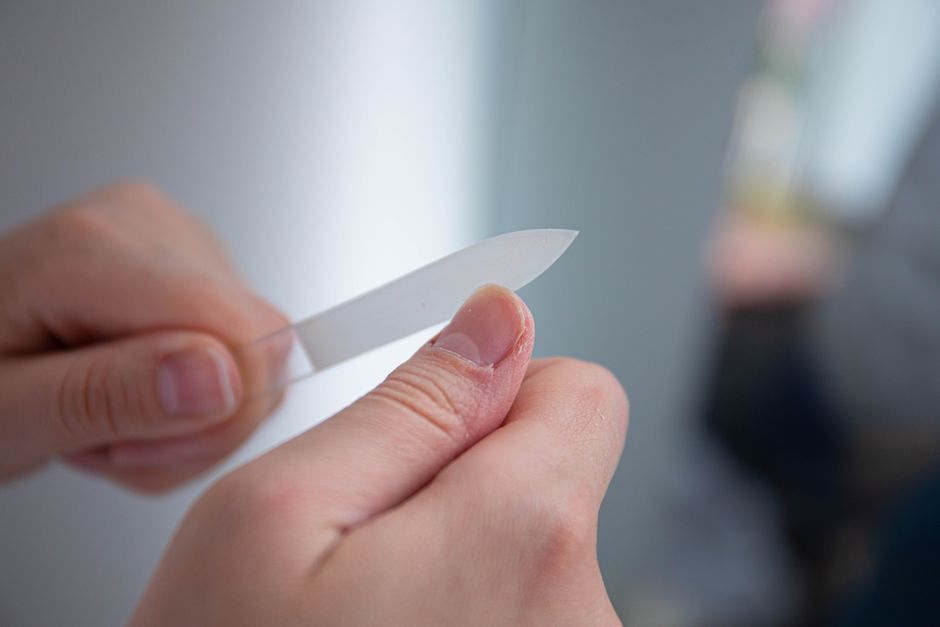
An ingrown fingernail happens when the edge or corner of a nail grows into the soft skin beside it instead of growing straight out. That skin responds with pain, redness, and swelling, and sometimes with infection. The cause is usually a combination of how the nail was cut, pressure on the fingertip, or the natural curve of the nail itself.
Most people think of ingrown nails as a toe problem. They happen on fingers too, and the reasons overlap but are not identical. Fingers face different pressures than toes. They get bitten, picked, slammed in doors, and trimmed with whatever clipper is closest at hand.
How Do Ingrown Fingernails Happen Causes Explained
The nail grows from a structure called the nail matrix, which sits under the skin at the base of the nail. New cells push older ones forward. The nail plate slides along a groove on each side called the lateral nail fold. When the nail edge presses into that fold instead of gliding past it, the skin reacts like it would to any splinter: inflammation, then pain.
Several things push a nail off its normal track.
- Improper trimming. Cutting nails too short, or rounding the corners down into the sides, leaves a sharp edge positioned to dig into the fold as it grows forward.
- Tearing instead of cutting. Nail biting and picking leave jagged edges. A torn corner is more likely to catch skin than a clean cut.
- Nail shape. Naturally curved or fan-shaped nails press outward into the side folds more than flat nails do.
- Pressure and trauma. Repeated typing, gripping tools, or a single injury like a slammed drawer can deform the nail or push skin over the nail edge.
- Genetics. Nail curvature and the width of the nail folds run in families. Some people are simply built for this problem.
One clarification worth making: an ingrown fingernail is not the same as an infection, though the two often travel together. The ingrowth comes first. Bacteria getting into the irritated, broken skin comes second. That distinction matters for treatment.
Is an Ingrown Fingernail the Same as a Paronychia?
No. They are related but distinct problems, and confusing them leads people to treat the wrong thing.
An ingrown nail is a mechanical problem. The nail edge is physically embedded in the skin. Paronychia is an infection of the tissue around the nail, and it can develop with or without an ingrown nail. Acute paronychia usually involves bacteria, often staphylococcus, and shows up as a painful, red, swollen fold that may form pus. Chronic paronychia tends to involve different organisms and develops more slowly, often in people whose hands are frequently wet.
The practical difference: if there is pus, spreading redness, or throbbing pain, infection is likely part of the picture and needs medical attention. If the pain is sharp and localized to one nail edge with no pus, it is more likely simple ingrowth.
Some clinicians recommend warm soaks and elevation for mild inflammation around a nail. That is common practice. The evidence that soaks alone resolve a true ingrown nail is limited, because soaking does not change the nail’s position.
What Makes Some People More Prone to Ingrown Fingernails?
Certain factors raise the odds, and most of them are not about hygiene.
Diabetes and conditions that affect circulation can slow healing and make any break in the skin around the nail more likely to become infected. People taking medications that suppress the immune system face similar risk. So do people with inflammatory joint conditions affecting the hands.
Age matters too, but not in the direction most people expect. Nails thicken and change shape over decades. A thicker, more curved nail presses harder against the side folds. This is one reason ingrown nails become more common in middle age and later.
Medications can play a role. Some drugs, including certain acne treatments and chemotherapy agents, affect how quickly nail cells divide. When growth rate changes, the nail can become thinner, more brittle, or more curved. If a nail problem started after a new medication, that timing is worth mentioning to a clinician.
Fungal nail infections also change nail shape. A nail that has thickened and distorted from fungus is more likely to dig into surrounding skin. Treating the fungus does not always fix the ingrowth, but it removes one ongoing cause.





Can You Treat an Ingrown Fingernail at Home?
Mild cases often improve with simple measures, but the evidence for most home remedies is thin. It is worth being honest about that.
What generally helps:
- Stop trimming the nail short. Let it grow past the point where the edge sits in the fold.
- Soak the finger in warm water for short periods to soften skin and reduce discomfort.
- Keep the area clean and dry between soaks.
- Avoid picking, biting, or digging at the edge with tools.
What is commonly done but not well supported: placing a small piece of cotton or dental floss under the nail edge to lift it. This is a widely repeated technique. It can introduce bacteria and irritate the skin further, and no strong clinical evidence shows it reliably corrects the problem. Some clinicians still suggest it. Others advise against it.
What not to do: cutting a V-shaped notch in the center of the nail. This is a persistent folk remedy based on the idea that the nail will grow toward the center. The nail does not grow that way. The notch does nothing to change the edge that is causing the problem.
If pain is worsening after a few days of home care, if there is pus, or if redness is spreading up the finger, see a clinician. Do not try to dig the nail out yourself.
When Does an Ingrown Fingernail Need Medical Treatment?
Medical care is warranted when the problem is not resolving, when infection is present, or when it keeps coming back.
Signs that point toward needing care:
- Pus or a visible collection of fluid beside the nail
- Redness spreading beyond the nail fold
- Fever
- Pain that interferes with sleep or normal use of the hand
- No improvement after several days of home care
- Any of this in someone with diabetes or a weakened immune system
For an infected nail fold, a clinician may drain pus and prescribe antibiotics. For a nail that keeps growing into the skin, options include removing a portion of the nail, treating the nail matrix so that section does not regrow, or in some cases full nail removal. These are clinical decisions, not something to attempt at home.
One point that gets lost: an ingrown fingernail that becomes infected and is not treated can spread. The fingers connect to the hand, and hand infections are taken seriously for good reason.
How Do You Prevent Ingrown Fingernails From Coming Back?
Prevention comes down to how the nail is cut and how much stress the fingertip takes.
Cut nails straight across with a clean clipper. Leave the corners slightly square rather than rounding them down. Do not cut below the point where the nail separates from the skin underneath, which is called the hyponychium. If a corner snags, file it smooth instead of cutting deeper.
Stop biting and picking. This is easier said than done, but it is one of the most direct causes. Jagged edges from biting are a common trigger.
Wear gloves for tasks that put repeated pressure on the fingertips, especially if you have had this problem before. If a specific activity, like gripping a tool or playing an instrument, seems to bring it on, that is worth noticing.
If you have diabetes, keep an eye on your nails as part of routine foot and hand care. Small problems in the hands and feet can escalate faster when circulation or sensation is reduced.
If ingrown nails keep returning on the same finger despite good nail care, the issue may be the nail’s shape rather than anything you are doing. That is a conversation to have with a clinician, not a reason to keep trimming in the same way.
Frequently Asked Questions
Can an ingrown fingernail heal on its own?
Mild cases often improve if you stop trimming the nail short and let it grow past the skin fold. If there is pus, spreading redness, or worsening pain, it will not resolve on its own and needs medical care.
Should I cut a V in my nail to stop it growing in?
No. The V-notch remedy is a folk treatment with no supporting evidence, because nails grow forward from the base and do not redirect toward the center. It does not change the edge causing the problem.
Is an ingrown fingernail the same as an infection?
No, they are different problems that often occur together. The ingrowth is mechanical, while infection involves bacteria entering the irritated skin, and only the infection responds to antibiotics.
When should I see a doctor for an ingrown fingernail?
See a clinician if there is pus, spreading redness, fever, or no improvement after several days of home care. Anyone with diabetes or a weakened immune system should seek care sooner rather than waiting.
