
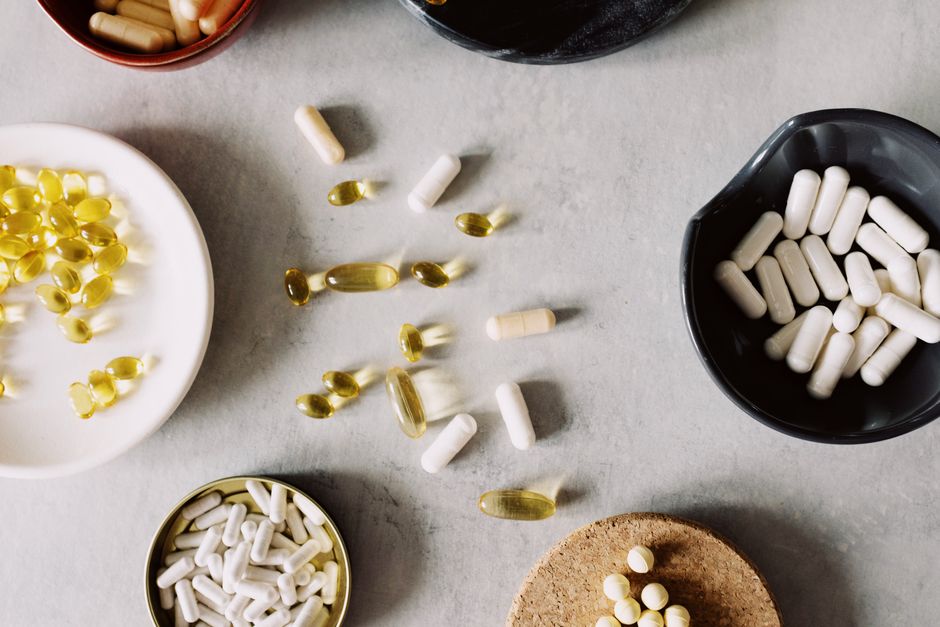
Phenylalanine is an amino acid — one of the building blocks your body uses to make proteins. It is classified as an essential amino acid, which means your body cannot make it on its own. You must get it from food or, in certain medical situations, from supplements.
Nearly everyone gets enough phenylalanine without thinking about it. It is present in almost every protein-containing food, from eggs and chicken to beans and nuts. The people who genuinely need to pay attention to it are those with a rare inherited condition called phenylketonuria, or PKU. For them, phenylalanine can build up to harmful levels, and managing intake becomes a lifelong medical concern.
There is also a persistent marketing narrative that phenylalanine supplements boost mood, focus, or energy. Some of that story rests on real biochemistry. Whether it translates into a meaningful benefit for most people is a different question, and the evidence is thinner than supplement labels suggest.
What Is A Phenylalanine and What Does It Do in the Body?
Phenylalanine is one of the 20 standard amino acids that make up human proteins. Your body uses it as a raw material for building other proteins and as a starting point for making several important molecules.
The most consequential of these conversions is the one that produces tyrosine, another amino acid. Tyrosine then gets converted into dopamine, norepinephrine, and epinephrine — chemical messengers involved in mood, alertness, and the body’s stress response. Phenylalanine is also used to make thyroid hormones, which regulate metabolism.
This biochemical pathway is real and well established. What it does not automatically mean is that eating more phenylalanine produces more dopamine or better mood. The body tightly regulates these pathways. Adding more raw material does not necessarily increase the final product, especially when levels are already adequate.
There are two forms of phenylalanine you will see on labels and in food databases:
- L-phenylalanine — the form found naturally in all dietary proteins.
- D-phenylalanine — a mirror-image form not used to build proteins. It is produced synthetically and appears in some supplements.
A third form, DL-phenylalanine, is a 50/50 mix of both and is sold in supplement products. The rationale for using it is not well supported by large human trials.
What Foods Contain Phenylalanine?
Any food with protein contains phenylalanine. The amounts vary with the total protein content of the food, not with any special property of the food itself.
High-protein foods tend to be the richest sources. Meat, poultry, fish, eggs, dairy products, soy, and legumes all contain substantial amounts. Nuts and seeds also contribute. Even grains and vegetables contain some, because all plant and animal proteins are built from the same set of amino acids.
An important practical point: the artificial sweetener aspartame is a significant dietary source of phenylalanine for people who consume it regularly. Aspartame is made of two amino acids, one of which is phenylalanine. This is why products containing aspartame carry a warning for people with PKU. For everyone else, the amount of phenylalanine from aspartame is small compared to what comes from ordinary dietary protein.
Here is a general comparison of phenylalanine content across common foods. Values are approximate and drawn from standard nutrient databases:
| Food (100 g) | Approximate Phenylalanine |
|---|---|
| Chicken breast, cooked | About 1.2 g |
| Eggs, whole | About 0.7 g |
| Milk, whole | About 0.15 g |
| Soybeans, cooked | About 0.9 g |
| Lentils, cooked | About 0.4 g |
| Almonds | About 0.5 g |
These numbers matter most for people on a phenylalanine-restricted diet. For the general population, they are simply a reminder that phenylalanine is not a rare or exotic nutrient. It is everywhere protein is.
What Is Phenylketonuria and Why Does It Matter?
Phenylketonuria is an inherited disorder in which the body cannot properly break down phenylalanine. It affects roughly 1 in every 10,000 to 15,000 babies born in the United States, according to newborn screening data.
The cause is a defect in the gene that makes an enzyme called phenylalanine hydroxylase. This enzyme normally converts phenylalanine into tyrosine. When it is missing or not working well, phenylalanine accumulates in the blood and can reach levels that damage the developing brain.
This is why every newborn in the United States is screened for PKU within the first few days of life. The test is a small blood sample from the baby’s heel. It is one of the clearest success stories in preventive medicine: early detection and early dietary treatment prevent the severe intellectual disability that used to be the inevitable outcome.
Treatment centers on a lifelong diet that limits phenylalanine intake while providing enough for normal growth and body function. This is delicate because phenylalanine is essential — you cannot eliminate it entirely. The goal is to keep blood levels within a target range, not to remove the nutrient.
Some people with a milder form, sometimes called hyperphenylalaninemia, have less severe enzyme impairment and may not need the same degree of dietary restriction. A specialist determines this based on blood levels and genetic testing.




Do Phenylalanine Supplements Improve Mood or Focus?
No large, well-controlled human trial has confirmed that phenylalanine supplements reliably improve mood, focus, or energy in healthy adults. The marketing leans heavily on the fact that phenylalanine is a precursor to dopamine and norepinephrine, but that logic does not hold up as neatly as it sounds.
The brain tightly controls its own neurotransmitter production. It does not simply ramp up dopamine output because more precursor is available. In most well-nourished people, the enzyme that converts tyrosine to dopamine is already near its maximum rate, a concept researchers call rate-limiting. Adding more raw material does not push the reaction faster.
There is one context where the precursor story has more scientific attention. Some researchers have studied tyrosine (the downstream product) under conditions of acute stress, sleep deprivation, or demanding cognitive tasks. Results have been mixed, and even where effects appeared, they were modest and not consistent across studies. Phenylalanine itself has been studied far less.
Small studies have looked at DL-phenylalanine for depression and for chronic pain, but these were generally short, small, and not designed in a way that allows firm conclusions. The evidence is limited. It does not support routine use, and it does not establish safety for long-term use.
If you are taking a medication that affects dopamine or norepinephrine — including many antidepressants and Parkinson’s disease drugs — phenylalanine supplements could theoretically interact with it. This is not a hypothetical concern; it is a reason to talk to a clinician before combining them.
Who Should Limit Phenylalanine Intake?
People with PKU must limit phenylalanine for life. This is not a short-term diet. Blood phenylalanine levels need to stay within a target range set by their care team, and this requires ongoing monitoring and dietary management.
Pregnant women with PKU face a particularly important situation. High maternal phenylalanine levels can affect fetal development, so careful control before and during pregnancy is critical. This is managed by a metabolic specialist and a registered dietitian, not by general dietary advice.
For everyone else, there is no established reason to limit phenylalanine. It is an essential nutrient. The body needs it to build proteins, and there is no evidence that reducing intake below normal dietary levels benefits healthy adults.
A common source of confusion: the warning label on aspartame-containing products says “Phenylketonurics: Contains Phenylalanine.” This is a required disclosure for people with PKU. It is not a warning that aspartame is dangerous to the general population, and it is not a reason for most people to avoid it.
Is Phenylalanine Safe for Most People?
Phenylalanine from food is safe and necessary for the vast majority of people. It is not a contaminant or an additive in whole foods — it is a fundamental component of dietary protein.
Phenylalanine from supplements is a different question. The evidence on long-term safety in healthy adults is limited. Most supplement products have not been tested in large trials, and dosing is not standardized. Some clinicians advise caution, particularly for people taking psychiatric or neurological medications.
For people with PKU, the safety picture is well defined but requires medical management. They should follow the specific guidance of their metabolic care team, which typically includes a restricted diet and sometimes special medical formulas designed to provide protein without excess phenylalanine.
One clarification worth making: the idea that phenylalanine is “dangerous” in general is a misunderstanding. It is dangerous only in the specific context of PKU, where the body cannot process it normally. For everyone else, it is simply part of eating protein.
Frequently Asked Questions
What is phenylalanine found in?
Phenylalanine is found in virtually all protein-containing foods, including meat, poultry, fish, eggs, dairy, soy, legumes, nuts, and grains. It is also present in the artificial sweetener aspartame.
Is phenylalanine bad for you?
For most people, phenylalanine is a necessary nutrient and not harmful. It is only a concern for people with phenylketonuria, who cannot process it properly and must limit intake under medical supervision.
Does phenylalanine affect mood?
Phenylalanine is a precursor to molecules involved in mood regulation, but no large human trial has confirmed that supplements improve mood in healthy adults. The evidence for a meaningful benefit is limited.
Can you get too much phenylalanine?
People with PKU can develop harmful blood levels if they do not follow dietary restrictions. For everyone else, there is no established risk from dietary phenylalanine because the body regulates its levels.
