
Fertility is something many people wonder about long before they try to have a baby. The honest answer is that no single test or sign can tell you with 100% certainty whether you are fertile. But a combination of physical signs, at-home tests, and medical evaluations can give you a clear picture. Tracking ovulation signs, checking hormone levels, and getting a proper fertility workup are the most reliable ways to understand your fertility status. This article covers what the evidence actually shows about fertility signs and tests, so you can separate real information from overhyped claims.
What Are the Most Reliable Physical Signs of Fertility?
Your body gives off signals during your menstrual cycle that indicate when ovulation is happening or about to happen. These signs are useful but not perfect. The most studied physical sign is cervical mucus changes. As estrogen rises before ovulation, cervical mucus becomes clear, slippery, and stretchy — similar to raw egg whites. Research published in the journal Fertility and Sterility found that tracking cervical mucus alone can predict ovulation with about 80% accuracy in women with regular cycles.
Basal body temperature (BBT) is another common sign. After ovulation, progesterone causes your resting temperature to rise by about 0.5 to 1 degree Fahrenheit. This confirms ovulation happened but cannot predict it in advance. BBT tracking is most useful when combined with cervical mucus observations. Some studies suggest that using both methods together increases accuracy to around 90% for detecting the fertile window.
Other physical signs include mittelschmerz — a mild cramping sensation on one side of the lower abdomen during ovulation — and breast tenderness. However, these signs vary widely between individuals and cycles. The American College of Obstetricians and Gynecologists notes that relying solely on physical signs is not a reliable method for confirming fertility status, especially for those with irregular cycles.
Do At-Home Ovulation Tests Actually Work?
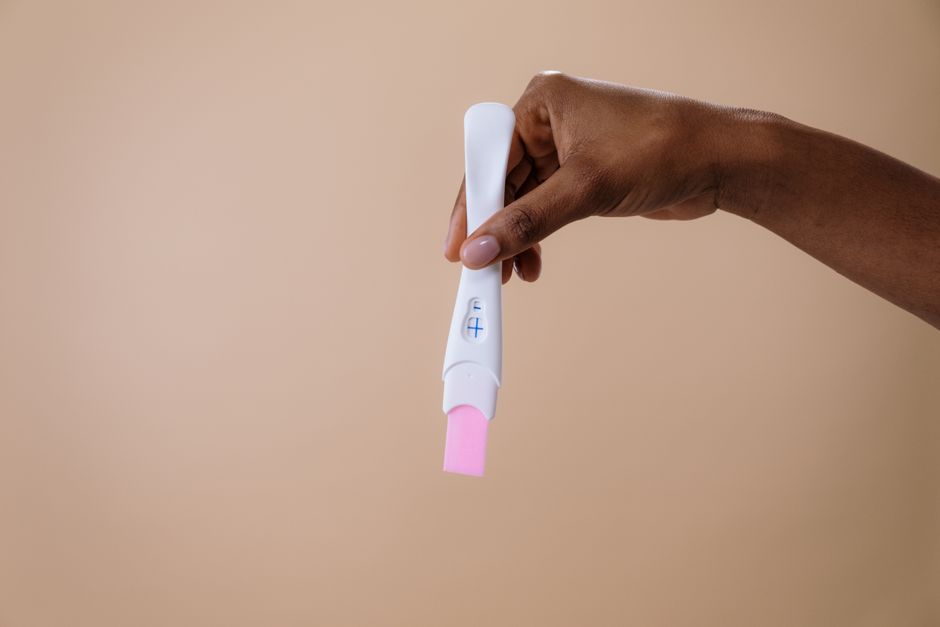
At-home ovulation predictor kits (OPKs) detect the surge in luteinizing hormone (LH) that happens 24 to 36 hours before ovulation. These tests are widely available and easy to use. A 2020 review in the Cochrane Database of Systematic Reviews found that OPKs correctly identify the LH surge in about 97% of cycles when used correctly. That is a high accuracy rate for predicting the fertile window.
But there is a catch. An LH surge only tells you ovulation is likely coming — it does not confirm that ovulation actually happened. Some women have an LH surge without releasing an egg, a condition called luteinized unruptured follicle syndrome. OPKs also cannot tell you anything about egg quality, tubal health, or sperm quality. They are a tool for timing intercourse, not a fertility test.
Some newer at-home tests also measure estrogen metabolites alongside LH. Evidence indicates these dual-hormone tests may provide a longer window of fertile days compared to LH-only tests. A study in the Journal of Assisted Reproduction and Genetics found that dual-hormone tests increased the number of identified fertile days from about 2 to 5 per cycle. However, the clinical significance of this difference for pregnancy rates is still debated.
How Do I Know If I Am Fertile Signs Tests: What Medical Tests Actually Measure Fertility?
If you want a clearer answer about your fertility, medical tests are more comprehensive than any at-home method. The most common starting point is blood work to check hormone levels. Day 3 of your menstrual cycle is the standard timing for measuring follicle-stimulating hormone (FSH), estradiol, and sometimes anti-Müllerian hormone (AMH). These hormones give insight into ovarian reserve — the number of eggs remaining in your ovaries.
AMH is currently considered the most reliable single blood test for ovarian reserve. Research from the Journal of Clinical Endocrinology & Metabolism shows that AMH levels correlate well with the number of antral follicles visible on ultrasound. However, AMH does not predict egg quality or the likelihood of pregnancy in a given month. It is a quantity test, not a quality test.
An ultrasound to count antral follicles — small follicles in the ovaries — provides another measure of ovarian reserve. This test is often combined with blood work for a more complete picture. For women under 35, the American Society for Reproductive Medicine recommends trying to conceive for 12 months before seeking fertility testing. For women over 35, the recommendation is 6 months. These guidelines exist because most couples conceive naturally within those timeframes.
| Test | What It Measures | Limitations |
|---|---|---|
| AMH blood test | Ovarian reserve (egg quantity) | Does not measure egg quality or tubal health |
| FSH blood test | Ovarian response to stimulation | Varies cycle to cycle; less reliable alone |
| Antral follicle count (ultrasound) | Number of visible follicles | Requires trained sonographer; cycle dependent |
| Ovulation predictor kit | LH surge before ovulation | Does not confirm ovulation occurred |
| Progesterone blood test | Confirms ovulation occurred | Must be timed to day 21 of cycle |




What About Male Fertility Tests?
Fertility is not just a female issue. Male factors contribute to about 40% of infertility cases, according to the CDC. The most basic male fertility test is a semen analysis. This measures sperm count, motility (movement), and morphology (shape). A normal semen analysis requires a sample collected after 2 to 5 days of abstinence. The World Health Organization provides reference ranges: a normal sperm count is 15 million or more per milliliter, with at least 40% of sperm showing motility.
At-home sperm tests are available but less comprehensive than lab-based analysis. Most at-home kits measure sperm count only. A 2021 study in Andrology found that some at-home tests had accuracy rates above 95% for detecting low sperm count. However, they do not assess motility or morphology, which are critical for fertility. The American Urological Association recommends that men with abnormal at-home results follow up with a full lab-based semen analysis.
There is also growing evidence that lifestyle factors affect male fertility significantly. Smoking, heavy alcohol use, obesity, and certain medications can lower sperm quality. A study in Human Reproduction Update found that men who smoked had 15% lower sperm counts on average compared to nonsmokers. These are modifiable factors worth addressing before assuming infertility is permanent.
What Are the Common Misconceptions About Fertility Testing?
One widespread myth is that irregular periods automatically mean infertility. While irregular cycles can indicate ovulation problems, many women with irregular periods still ovulate some months. Polycystic ovary syndrome (PCOS) is a common cause of irregular ovulation, but women with PCOS often conceive with or without medical help. The key is tracking ovulation specifically, not just cycle length.
Another misconception is that fertility tests can predict exactly how long it will take to get pregnant. No test can do this. Ovarian reserve tests give information about egg quantity, but they do not predict monthly pregnancy probability. A woman with low AMH can still conceive naturally, while a woman with high AMH may struggle for other reasons. The tests are screening tools, not crystal balls.
A third myth is that fertility testing is only for women over 35. While age is a major factor, younger women with certain conditions — such as endometriosis, previous pelvic infections, or a history of chemotherapy — may benefit from earlier testing. The National Institute for Health and Care Excellence recommends earlier testing for women with known risk factors regardless of age.
When Should You See a Doctor About Fertility?
The general guidelines are clear. If you are under 35 and have been trying to conceive for 12 months without success, see a doctor. If you are 35 or older, the threshold is 6 months. If you are over 40, some experts recommend seeing a doctor right away before actively trying. These timelines are based on the natural decline in fertility with age and the increasing risk of pregnancy complications.
You should also see a doctor sooner if you have any known risk factors. These include irregular or absent periods, a history of pelvic inflammatory disease, endometriosis diagnosis, previous ectopic pregnancy, or a partner with known fertility issues. The same applies if you have had multiple miscarriages — defined as two or more pregnancy losses.
A fertility specialist will typically start with a basic workup: blood tests for both partners, a semen analysis for the male partner, and an ultrasound or hysterosalpingogram to check the female reproductive anatomy. This initial evaluation can identify the cause in about 85% of couples, according to the American Society for Reproductive Medicine. In the remaining 15%, no specific cause is found — a condition called unexplained infertility.
Frequently Asked Questions
Can I test my fertility at home?
Yes, but at-home tests are limited. Ovulation predictor kits can detect the LH surge before ovulation, but they do not confirm ovulation or measure egg quality or sperm health.
What is the best day of my cycle to test fertility?
Day 3 of your menstrual cycle is the standard time for blood tests like FSH and AMH. For ovulation tracking, start testing a few days before you expect ovulation based on your cycle length.
Does a negative ovulation test mean I am infertile?
No. A negative test may mean you tested too early or too late in your cycle, or that you did not ovulate that month. One anovulatory cycle is normal for most women.
How accurate are at-home sperm tests?
Some at-home sperm tests are over 95% accurate for detecting low sperm count, but they do not measure sperm movement or shape. A lab-based semen analysis is more complete.
