
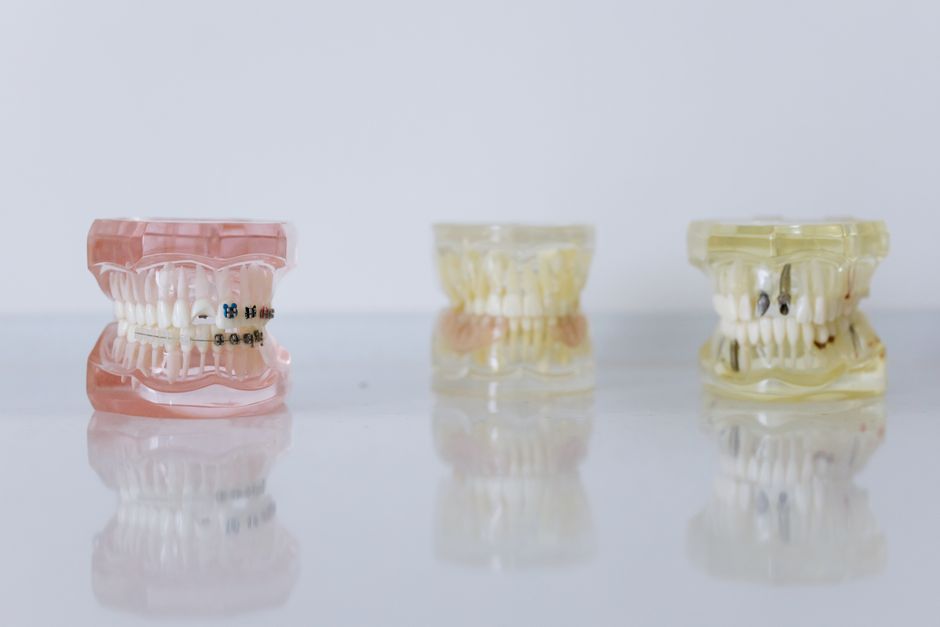
Braces straighten teeth by applying steady, gentle pressure over time. This pressure moves teeth through the bone that holds them in place. The process does not stop when the braces come off — a retainer is what keeps the teeth from moving back.
What Exactly Do Brackets And Wires Do To Your Teeth?
Think of your teeth as sitting in a bony socket, not fused solidly to the jaw. A network of fibers connects each tooth root to that bone. When pressure is applied to a tooth, those fibers stretch on one side and compress on the other.
The body responds to that pressure by remodeling the bone. Cells called osteoclasts break down bone on the compressed side. Other cells called osteoblasts build new bone on the stretched side. This process is called bone remodeling, and it is the biological foundation of how braces work from brackets to retainers.
The bracket is the small square bonded to the front of the tooth. It acts as a handle. The archwire — the metal wire that connects all the brackets — is the engine. The wire is bent to the ideal arch shape, and it slowly pulls or pushes each tooth toward that shape as it tries to return to its original form.
This is not a fast process. Teeth move about one millimeter per month on average. That is why most orthodontic treatment lasts 18 to 24 months, though complex cases take longer.
How Do Braces Move Teeth Through Bone Without Damaging Roots?
The key is that the pressure must be light and constant. If the force is too heavy, the blood supply to the periodontal ligament — the tissue between the tooth and bone — gets cut off. The tooth stops moving, and the body may respond with pain or even root damage.
Orthodontists are trained to apply the right amount of force for each tooth. Molars with multiple roots need more force than small front teeth with single roots. This is why you cannot safely move teeth with DIY methods or unlicensed providers. The margin between effective movement and tissue damage is real.
During the first few days after an adjustment, the ligament is inflamed. That is normal. The dull ache you feel is the tissue responding to pressure. It usually fades within three to five days as the bone remodeling process catches up.
Research consistently shows that controlled orthodontic forces do not damage healthy roots when treatment is monitored properly. Root shortening can occur in some cases, but it is usually minor and rarely affects the long-term function of the tooth.
Why Do Some People Need Rubber Bands Or Headgear With Braces?
Brackets and wires move teeth within each arch. But the upper and lower jaws must fit together correctly. That requires moving teeth between the arches or changing the growth pattern of the jaw itself.
Rubber bands, or elastics, connect the upper and lower brackets. They apply force across the bite to correct issues like an overbite, underbite, or open bite. The patient must wear these as directed, usually 20 to 22 hours per day, because the force stops the moment the bands are removed.
Headgear and other appliances like palatal expanders work differently. They apply force to the bones of the face, not just the teeth. In growing children, this can guide jaw development. In adults, it cannot change bone growth — it can only move teeth within the bone that already exists.
This distinction matters. If you are an adult with a significant skeletal discrepancy, braces alone may not fully correct it. Your orthodontist may discuss surgical options or accept a compensated result where the teeth are straight but the bite is not perfectly aligned.





How Often Do You Need Adjustments And What Happens At Each Visit?
Most patients see their orthodontist every four to eight weeks. At each visit, the orthodontist changes the archwire or adjusts the existing one. Newer wires may be thicker or made of materials with different properties to continue the movement.
Some modern systems use heat-activated wires. These wires become more flexible at mouth temperature, which allows for lighter, more continuous forces. This can reduce discomfort compared to older wire types that delivered heavier forces.
At each adjustment, the orthodontist also checks that the teeth are moving as planned. They may take progress photos or x-rays to confirm the roots are tracking properly. If a tooth is not moving, they can modify the force or add auxiliary springs.
Missing appointments slows treatment. If the wire is not changed on schedule, the force diminishes and teeth may stop moving. Consistent visits are one of the most reliable predictors of finishing on time.
What Causes The Pain And Soreness After Adjustments?
The soreness after an adjustment is caused by the inflammatory response in the periodontal ligament. When pressure is applied, the body releases chemical signals that increase blood flow to the area. This is the same process that occurs when any tissue is stressed.
This discomfort typically peaks 24 to 48 hours after the adjustment and resolves within a week. Over-the-counter pain relievers like ibuprofen or acetaminophen are commonly used, but you should follow the dosing instructions on the package or ask your orthodontist what they recommend.
Some research suggests that chewing on a soft object like a cold teething ring or eating soft foods can help. The mechanical stimulation may increase blood flow and speed the resolution of inflammation. However, this is not a substitute for professional care if pain is severe or persistent.
Severe pain that lasts more than a week is not normal. It may indicate excessive force, a broken bracket, or an infection. Contact your orthodontist rather than waiting for it to resolve on its own.
How Long Do You Wear Braces And What Determines The Timeline?
The average treatment time is 18 to 24 months, but this varies widely. Mild crowding may resolve in 12 months. Severe rotations, impacted teeth, or bite correction can take three years or more.
The main factors that determine treatment length are the severity of the misalignment, the patient’s age, and compliance with elastics and appointments. Younger patients often respond faster because their bones are still growing and remodeling more readily.
Compliance matters more than most people realize. Wearing elastics inconsistently can add months to treatment. Breaking brackets from eating hard foods also resets progress because the tooth stops moving while the bracket is being replaced.
Your orthodontist can give you an estimated timeline at the start, but it is an estimate. It is not a guarantee. Teeth move at their own pace, and the orthodontist adjusts the plan based on what they see at each visit.
Why Is A Retainer Needed After Braces Come Off?
When braces come off, the teeth are in their new positions, but the surrounding bone is still soft and remodeling. The periodontal ligament fibers have not fully reorganized. Teeth have a natural tendency to drift back toward their original positions.
This tendency is called relapse, and it is a well-documented phenomenon in orthodontic research. Without retention, a significant percentage of teeth will shift within the first year after treatment. The retainer holds the teeth in place while the bone and ligament stabilize.
Full bone and ligament reorganization takes at least 12 months. During this period, the retainer is essential. Most orthodontists recommend wearing a retainer full-time for the first few months, then switching to nighttime wear.
The honest answer is that retention is lifelong for many patients. Teeth continue to shift naturally with age, even in people who never had braces. Wearing your retainer a few nights per week indefinitely is the standard recommendation to maintain your result.
Fixed Vs. Removable Retainers: Which Is Better?
There are two main types of retainers. A fixed retainer is a thin wire bonded to the back of the front teeth. It is invisible from the front and requires no patient compliance because it cannot be removed. A removable retainer is a clear plastic tray or a wire-and-acrylic device that the patient takes in and out.
Fixed retainers are excellent for the lower front teeth, which are the most prone to relapse. They provide continuous protection. The downside is that they make flossing more difficult, and they can break or detach without the patient noticing.
Removable retainers are easier to clean and allow for normal flossing. The main risk is that they only work when worn. If you stop wearing them, the teeth can shift within weeks, and the retainer may no longer fit when you try to put it back in.
Some orthodontists recommend a combination: a fixed retainer on the lower front teeth and a removable retainer for the upper arch. The choice depends on your bite, your oral hygiene habits, and your orthodontist’s clinical judgment. Both types are effective when used correctly.
What Happens If You Stop Wearing Your Retainer?
Teeth will begin to shift. The speed varies from person to person, but noticeable movement can occur within weeks to months. The lower front teeth are usually the first to crowd again.
If you stopped wearing your retainer and your teeth have shifted, the old retainer may no longer fit. Forcing it on can damage your teeth or the retainer itself. You may need a new retainer or, in more significant cases, a new round of orthodontic treatment.
Minor shifting can sometimes be corrected with a new retainer alone. More significant relapse may require braces again or clear aligners. This is why orthodontists emphasize retainer wear so strongly — it is far easier to maintain the result than to redo the treatment.
If you have lost your retainer or it no longer fits, see your orthodontist promptly. The longer you wait, the more the teeth will shift, and the more complex the correction becomes.
Frequently Asked Questions
Do braces hurt when they are first put on?
You may feel pressure or soreness for a few days after placement, but it is usually mild. Over-the-counter pain relievers and soft foods can help manage the discomfort.
Can braces move teeth too fast?
Yes, if excessive force is applied, it can damage the tooth root or the surrounding bone. Orthodontists use controlled, light forces specifically to avoid this risk.
How long do you need to wear a retainer every night?
Most orthodontists recommend full-time wear for the first few months, then switching to nighttime wear. Many patients continue nighttime wear indefinitely to prevent natural shifting.
Can adults get braces or is it only for kids?
Adults can absolutely get braces, and treatment is common at any age. The main difference is that adult bones are no longer growing, so treatment may take longer and complex jaw corrections may require additional procedures.
