
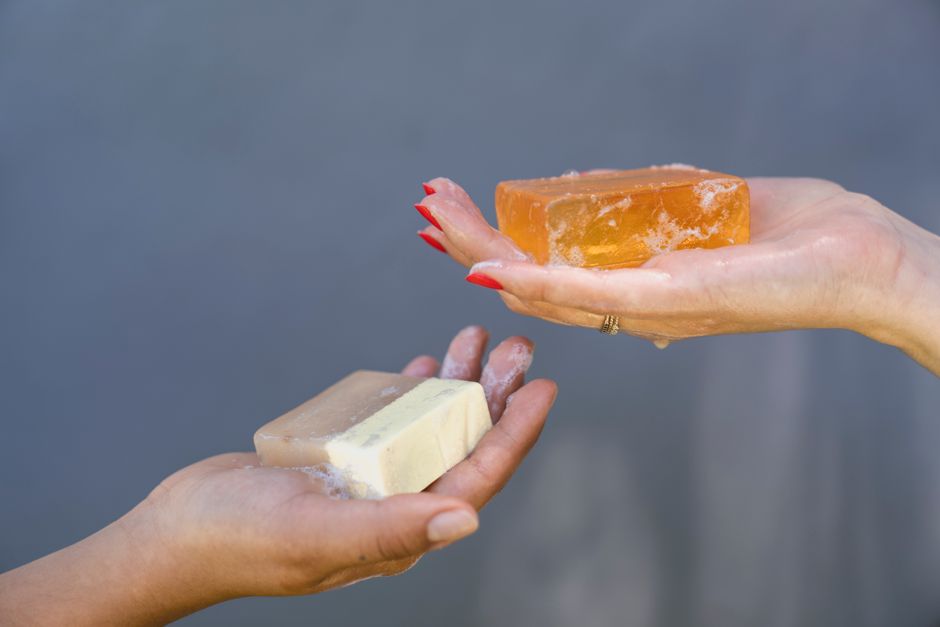
Pioneers made soap by mixing water with wood ashes to create lye, then boiling that lye with animal fat or saved cooking grease until the mixture thickened into soap. The chemistry is simple: lye is a strong base, fat is a mix of acids, and together they react to form soap and glycerin. What made it hard was that pioneers had no way to measure the strength of their lye, so every batch was a guess until it was tested.
How Did Pioneers Make Lye From Wood Ashes?
They built a lye leach. A barrel with holes in the bottom was packed with hardwood ashes and set over a trough or bucket. Water was poured slowly over the top, and as it trickled down through the ashes, it dissolved out potassium carbonate and other soluble compounds. What dripped out the bottom was a weak, brownish lye water.
Hardwood ashes worked better than softwood. Pioneers learned this by experience, not chemistry. The lye water was then boiled down to concentrate it, often in an iron kettle over an open fire.
The result was potassium hydroxide, not the sodium hydroxide used in most modern soap. Both are strong bases that can turn fat into soap, but potassium hydroxide makes a softer, more paste-like soap. Sodium hydroxide makes a harder bar. That difference explains a lot about why pioneer soap was often soft and jelly-like rather than a firm brick.
Why Lye Was Dangerous Then and Now
Lye is caustic. It reacts with skin, eyes, and the lining of the throat. A splash of concentrated lye water can cause a chemical burn. Drinking it can cause severe injury to the mouth and esophagus, and it is a medical emergency.
Pioneers handled lye water with bare hands more often than anyone should. The risk was real and constant. Anyone handling lye today, whether from ashes or from a store-bought container, needs eye protection and gloves, and should keep it away from children and pets.
Why Did Pioneers Save Bacon Grease and Other Fats?
Fat was the other half of the recipe, and it was never thrown away. Bacon grease, beef tallow, lard, and leftover cooking fat were all saved in a crock. The fat did not need to be fresh. It needed to be reasonably clean, because dirt and food particles would end up in the finished soap.
Different fats made different soap. Tallow from beef or mutton produced a harder, longer-lasting bar. Lard from pork made a softer bar that lathered more easily. Most pioneer households used whatever they had, often a mix.
There is a detail worth knowing here. The fat did not have to be rendered perfectly, but it did have to be strained. Pioneers typically melted saved fat and poured it through cloth to remove bits of meat and sediment. Cleaner fat meant cleaner soap and less chance of a rancid smell later.
What Actually Happens When Lye Meets Fat?
The reaction is called saponification. Lye, a base, breaks the chemical bonds in fat. Fat molecules are built from fatty acids attached to a backbone. When lye attacks them, it frees the fatty acids and those fatty acids combine with the base to form soap molecules. Glycerin is released as a byproduct.
That glycerin matters. It stays in the soap in traditional cold-process and hot-process methods, and it helps hold moisture against the skin. Most commercial bar soaps remove the glycerin and sell it separately. Pioneer soap kept it, which is one reason old-fashioned soap often felt less drying.
The reaction also needs heat and time. Pioneers boiled the mixture for hours, stirring constantly and adding lye water a little at a time. They watched for the moment the mixture thickened into a trace, a visible trail left behind by the stirring spoon. That was their signal that saponification had progressed far enough.




How Did Pioneers Know When the Soap Was Done?
They tested it. Without pH meters or scales, pioneers used simple physical checks that had been passed down for generations.
- They lifted a spoonful and let it cool. If it hardened into a firm, waxy blob, the batch was close.
- They tasted a cooled drop. A sharp, burning sensation meant too much lye was left. A mild taste meant the soap was usable.
- They touched it. Soap that felt slippery and greasy had too much fat. Soap that irritated the skin had too much lye.
- They watched the color and texture as it cooled in the mold.
The taste test was common and also genuinely risky. Lye is caustic, and putting it near the mouth is a bad idea. It was done because there was no other quick way to check, not because it was safe.
If a batch had too much lye, pioneers had a fix. They melted the soap back down and added more fat. If it had too much fat, they added more lye water. This back-and-forth is why old recipes often say things like “add fat until the soap stops biting.”
How Was Pioneer Soap Actually Used?
It was harsh. Pioneer soap was often used for laundry, dishes, and scrubbing floors before it was used on skin. A softer, milder batch might be used for bathing, but many people found it too drying for regular use on the face or body.
Soap was also a form of currency in some communities. A family that made a good batch might trade bars for other goods. Soap making was usually a fall or early winter task, after the annual hog butchering, when fat was most plentiful.
The process was slow. A single batch could take a full day of boiling and stirring, followed by days or weeks of curing in a mold or wooden box. Soap that was not cured long enough stayed soft and could irritate the skin.
How Does Pioneer Soap Compare to Modern Soap?
Modern commercial soap is made with sodium hydroxide and precisely measured fats, often with added fragrance, color, and preservatives. The lye is fully consumed in the reaction, so a properly made bar contains no free lye. That is a key difference from pioneer soap, where leftover lye was common.
Here is a direct comparison of the two approaches:
| Feature | Pioneer Soap | Modern Commercial Soap |
|---|---|---|
| Base used | Potassium hydroxide from wood ashes | Sodium hydroxide or potassium hydroxide, manufactured |
| Fat source | Saved animal fat, mixed and strained | Refined fats and oils, measured precisely |
| Lye measurement | Estimated by feel and test | Calculated by weight |
| Leftover lye | Common | Rare in properly made bars |
| Glycerin | Kept in the soap | Often removed and sold separately |
| Texture | Soft to firm, varies by batch | Consistent |
The comparison is not about which is better. It is about what each method could control. Modern soap making controls the chemistry. Pioneer soap making worked around not being able to.
Why Did Soap Making Matter So Much to Pioneers?
Soap was not optional. Without it, grease, dirt, and bacteria stayed on skin, clothing, and cooking tools. Handwashing with soap is one of the most effective ways to reduce the spread of infectious disease, and that has been true for as long as soap has existed. Pioneers did not know about germs, but they knew that soap kept sickness from spreading in crowded cabins.
Soap also protected food. Clean pots and hands meant less contamination. In a household where one illness could sweep through everyone, that mattered.
The process was hard, smelly, and sometimes dangerous. It was also one of the few things a family could make entirely from what they already had. Ashes from the fire. Fat from the butchering. Water from the well. Nothing had to be bought.
Frequently Asked Questions
Can you make soap with wood ashes and fat today?
Yes, but it is not recommended for beginners because you cannot easily measure the strength of ash lye. Most modern home soap makers use purchased sodium hydroxide with a calculated recipe instead.
Is lye soap safe for skin?
Properly made soap contains no free lye, so it is safe for most people. Soap with leftover lye can cause chemical burns and should not be used on skin.
What kind of fat did pioneers use for soap?
They used whatever fat was available, most commonly bacon grease, lard, beef tallow, and mutton fat. Tallow made harder soap, while lard made softer soap that lathered more easily.
Why was pioneer soap often soft?
Wood ash produces potassium hydroxide, which makes softer soap than the sodium hydroxide used in most modern bars. Uneven lye strength and short curing time also contributed to softness.
