
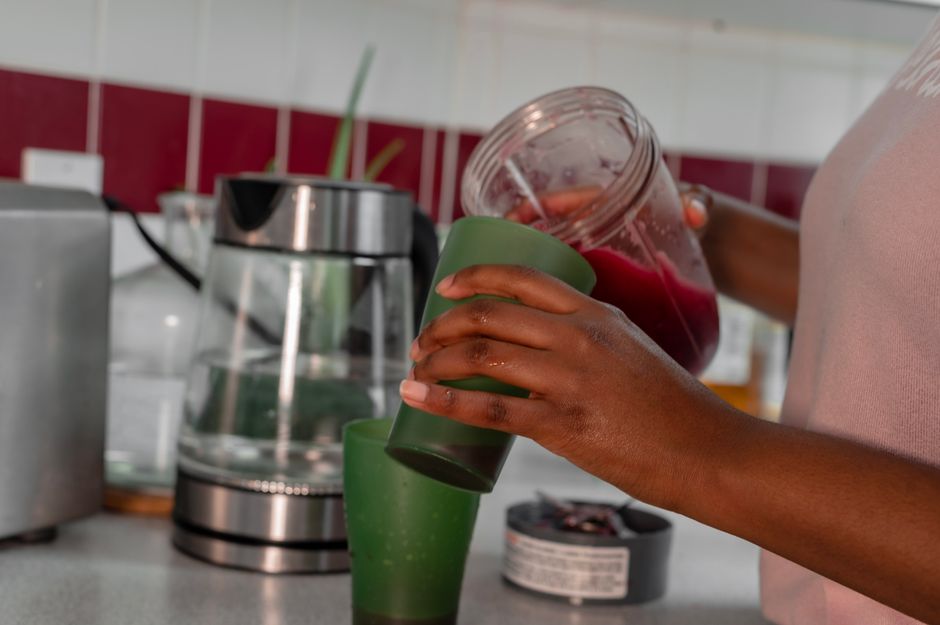
Making a smoothie at home takes about five minutes and requires just two things: a blender and ingredients you choose yourself. You start with a liquid base, add fruits or vegetables, toss in something creamy or frozen for texture, and blend until smooth. That is the entire process. The real skill is learning how to balance flavor, thickness, and nutrition so your smoothie tastes good and keeps you full.
What Do You Need to Start Making Smoothies?
You need a blender that can handle ice and frozen fruit. A standard countertop blender works fine for most recipes. High-speed blenders are smoother but not required. If you are making single servings, a personal blender with a travel cup is convenient.
Beyond the blender, keep these staples on hand:
- Liquid base: water, milk, unsweetened plant milk, or coconut water
- Fruit: bananas, berries, mango, pineapple, or peaches
- Vegetables: spinach, kale, cucumber, or carrots
- Protein or fat: Greek yogurt, nut butter, chia seeds, or silken tofu
- Ice or frozen fruit for thickness and cold temperature
Frozen fruit is your best friend. It eliminates the need for ice, which can water down flavor. Bananas are especially useful because they add natural sweetness and creamy texture. A ripe banana makes almost any smoothie taste better.
How Can You Make Smoothies Step by Step?
Add liquids first, then soft ingredients, then frozen items and ice. This order helps the blender pull everything down toward the blades instead of stalling on frozen chunks.
Follow this basic method:
- Pour 1 to 1.5 cups of liquid into the blender jar
- Add soft ingredients like yogurt, nut butter, or fresh spinach
- Add chopped fruits and vegetables
- Add frozen fruit or ice last
- Blend on low for 10 seconds, then increase to high for 30 to 60 seconds
- Stop and scrape down the sides if needed
- Blend again until completely smooth
If the smoothie is too thick, add liquid one tablespoon at a time. If it is too thin, add more frozen fruit or ice. Taste it before pouring. Adjust sweetness with a small amount of honey, maple syrup, or a pitted date if needed.
Most smoothies take under two minutes from start to finish. Cleaning takes another minute if you rinse the blender immediately after pouring.
What Are the Best Smoothie Ratios for Texture and Taste?
A reliable starting ratio is 2 parts liquid, 2 parts fruit, 1 part vegetables, and 1 part protein or fat. This produces a drinkable consistency that is not too thick and not watery.
For a thicker, spoonable smoothie bowl, reduce the liquid to 1 part and increase frozen fruit. For a thinner drink, increase liquid or add more water. The exact ratio depends on your blender and personal preference, so expect to adjust the first few times.
Balance flavors deliberately. Sweet fruits like banana and mango pair well with bitter greens like kale. Tart fruits like berries balance the richness of nut butter. A small pinch of salt can enhance sweetness without adding sugar. A squeeze of lemon brightens flavors that taste flat.
One common mistake is adding too many ingredients. A smoothie with eight different items often tastes muddled. Start with three to five ingredients. You can always add more next time.





How Can You Make Smoothies Healthier?
Smoothies can be genuinely healthy, but they can also become liquid desserts. The difference comes down to what you put in the glass and how much you drink.
Whole fruit is better than fruit juice. Blending whole fruit keeps the fiber intact, which slows sugar absorption and helps you feel full. Juices remove fiber and concentrate sugar. If you use juice as your liquid base, you are adding sugar without the fiber to balance it.
Watch portion sizes. A smoothie made with two cups of fruit, a banana, yogurt, and nut butter can easily exceed 500 calories. That is a meal, not a snack. If you are drinking it alongside a full breakfast, consider splitting it or reducing the portions.
Protein and fat make smoothies more satisfying. Greek yogurt, milk, nut butter, chia seeds, hemp seeds, or silken tofu add staying power. Research consistently shows that protein increases satiety more than carbohydrates or fat alone. A smoothie with protein keeps you full longer than one made only from fruit.
Be careful with sweeteners. Honey, maple syrup, agave, and flavored yogurts add significant sugar. A banana or a few dates provide sweetness with fiber and nutrients. If you regularly add sweeteners, your taste buds adapt, and plain fruit smoothies start to taste less sweet.
Green smoothies are not automatically healthier than fruit smoothies. Adding spinach is good, but if you also add three types of fruit and honey, the sugar content remains high. The greens do not cancel out the sugar.
How Can You Make Smoothies for Weight Loss or Weight Gain?
For weight loss, focus on volume and fiber. Use water or unsweetened plant milk as the base. Add more vegetables than fruit. Use a half banana instead of a whole one. Include a protein source like Greek yogurt or a scoop of protein powder. Skip the nut butter or limit it to one teaspoon. The goal is a filling drink with fewer calories.
For weight gain, the opposite applies. Use whole milk or full-fat coconut milk as the base. Add nut butter, avocado, oats, or full-fat yogurt. Include dried fruit like dates or raisins, which pack more calories per volume than fresh fruit. Blend in a scoop of protein powder. These additions increase calorie density without making the smoothie unmanageably large.
One important note: liquid calories are less filling than solid calories. Studies have found that people feel less full after drinking calories than after chewing the same amount of food. This matters if you are using smoothies for weight management. A smoothie can be part of a healthy diet, but it is not a free pass to consume extra calories without noticing.
What Are Common Smoothie Mistakes to Avoid?
Adding too much liquid is the most common error. A watery smoothie tastes thin and unsatisfying. Start with less liquid than you think you need. You can always add more.
Using only fresh fruit produces a thin smoothie. Frozen fruit or ice is necessary for thickness. If you only have fresh fruit, add ice cubes or freeze the fruit beforehand.
Overloading on high-sugar fruits without protein or fat causes blood sugar spikes and crashes. A smoothie made entirely of pineapple, mango, and orange juice is essentially a sugar drink with vitamins. Add a protein or fat source to slow digestion.
Not washing the blender immediately is a small mistake with annoying consequences. Dried smoothie residue is hard to remove. Rinse the jar with warm water and a drop of dish soap right after pouring, then blend for five seconds. This cleans the blades and jar in one step.
Ignoring the order of ingredients can damage your blender. Hard frozen chunks at the bottom can cause the blades to spin without pulling ingredients down. Always put liquids in first.
How Can You Make Smoothies Without a Blender?
A blender is the standard tool, but you can make smoothies without one. A food processor works well for thick smoothies, though you may need to add more liquid. An immersion blender in a tall cup works for soft ingredients but struggles with large ice cubes.
If you have no electric appliance, use a fine-mesh strainer or a nut milk bag. Mash very ripe fruit with a fork, then press it through the strainer to remove pulp. Mix the resulting puree with liquid and yogurt. This method takes more effort and produces a thinner drink, but it works in a pinch.
Frozen fruit is harder to process without a blender. Let it thaw for 15 to 20 minutes first, or use fresh fruit and add crushed ice instead of cubes. The texture will be less smooth, but the flavor will still be good.
How Can You Make Smoothies Ahead of Time?
You can prepare smoothie ingredients in advance, but blended smoothies do not store well. They separate and oxidize, turning brown and watery within a few hours. The best approach is to prep ingredients, not the finished drink.
Make freezer packs by portioning fruit, vegetables, and optional add-ins into zip-top bags. Label each bag with the date and contents. In the morning, empty a bag into the blender, add liquid and protein, and blend. This cuts prep time to under a minute.
If you must store a blended smoothie, use an airtight container and fill it to the top to minimize air exposure. Refrigerate and drink within 24 hours. Shake well before drinking because separation is normal. The taste and texture will not match a fresh smoothie, but it is safe to drink.
Frequently Asked Questions
What is the basic formula for making a smoothie?
Use 2 parts liquid, 2 parts fruit, 1 part vegetables, and 1 part protein or fat. Blend liquids first, then soft ingredients, then frozen items.
Can you make a smoothie without frozen fruit?
Yes, use fresh fruit and add ice cubes to achieve thickness. You may need to add slightly more ice than you would frozen fruit.
How long does a homemade smoothie last in the fridge?
A blended smoothie stays safe to drink for up to 24 hours in an airtight container. Shake well before drinking because separation is normal.
Are smoothies actually healthy?
Smoothies can be healthy when made with whole fruit, vegetables, and a protein source. They become less healthy when loaded with juice, sweeteners, and large portions of fruit.
