

Donating blood takes about 10 minutes of actual collection time, but the full visit usually runs 45 to 60 minutes from check-in to the snack table. You qualify if you are generally healthy, weigh at least 110 pounds, and are at least 16 or 17 years old depending on your state. The process is simple: register, answer a health questionnaire, get a quick finger-prick test, then sit back while about one pint of blood is collected.
How Can You Donate Blood Eligibility And What To Expect?
Eligibility comes down to three things: your health, your weight, and your age. The basics are straightforward, but the details matter.
Most blood centers in the US follow eligibility rules set by the FDA and the AABB, a professional organization that sets standards for blood banking. Those rules are designed to protect two people: the donor and the patient who receives the blood.
Here is what typically determines whether you can donate:
- Age: You must be at least 17 in most states. Many states allow 16-year-olds to donate with written parental consent.
- Weight: A minimum of 110 pounds. This is not about body size judgment. It reflects the volume of blood that can be safely removed relative to your total blood volume.
- Health: You should feel well on donation day. Active infections, fever, and certain chronic conditions may delay or prevent donation.
- Hemoglobin: A finger-prick test checks your hemoglobin level. For women, the minimum is typically 12.5 g/dL. For men, it is typically 13.0 g/dL. Low hemoglobin means anemia, and donating could make you feel worse.
- Medications: Some medications disqualify you. Others do not. Blood centers maintain detailed medication lists, and the person reviewing your questionnaire will check.
- Travel and health history: Recent travel to certain regions, past infections, and some medical treatments can trigger a waiting period.
The health questionnaire is the longest part of the process. It covers medical history, travel, sexual history, and recent procedures. Answer honestly. The questions exist because blood-borne infections can be present without symptoms, and the screening protects the blood supply.
One common misconception: you cannot donate if you have a tattoo. That is outdated. Most states now allow donation after a tattoo if it was applied at a licensed facility using sterile equipment. Some states still require a waiting period. Rules vary, so check with your local center.
What Should You Do to Prepare Before Donating?
Preparation is simple, and it makes a real difference in how you feel afterward.
Drink extra water in the 24 hours before your appointment. Being well hydrated helps maintain your blood pressure during and after the draw. Eat a normal meal within a few hours of donating, and include iron-rich foods if you can. Avoid fatty foods right before donating — they can affect the tests run on your blood sample.
Get a good night’s sleep. Avoid alcohol the day before. If you take medications, do not skip them unless a clinician tells you to — most medications do not disqualify you, and stopping them can be harmful.
Bring a photo ID and a list of any medications you take. Wear a shirt with sleeves that can roll up above the elbow. Short sleeves or a loose long-sleeved shirt both work.
The entire visit usually takes 45 to 60 minutes. The actual blood draw takes about 8 to 10 minutes. The rest is registration, screening, and the recovery period afterward.
What Happens During the Donation Process?
The process follows a consistent sequence at nearly every blood center.
Registration. You provide your ID and basic information. First-time donors fill out more paperwork.
Health screening. You answer the questionnaire, often on a computer. A staff member reviews it with you privately. Then comes the finger-prick test for hemoglobin.
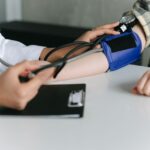
Mini-physical. Staff check your blood pressure, pulse, and temperature. These must fall within acceptable ranges. For example, blood pressure is typically checked against a threshold around 180/100 mm Hg. If your reading is outside the range, you may be deferred for that day.
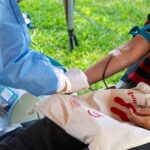
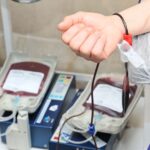
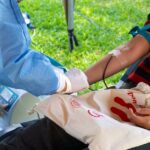
The draw. You sit or recline in a chair. A phlebotomist cleans the inside of your elbow and inserts a needle. About one pint (roughly 450 to 500 milliliters) is collected. This represents about 8 to 10 percent of the average adult’s total blood volume.
Recovery. After the needle is removed, you rest for 10 to 15 minutes and eat a snack. Staff watch for signs of lightheadedness. Most people feel fine. Some feel briefly dizzy or tired.
Your body replaces the plasma — the liquid part of blood — within about 24 to 48 hours. Red blood cells take longer to fully regenerate, generally several weeks. That is why there are minimum waiting periods between donations.
How Often Can You Donate Blood?
The waiting period depends on what you donate. Whole blood donation has the longest interval because it removes red blood cells, which take the most time to replenish.
For whole blood, the standard waiting period is 56 days (8 weeks) between donations. This applies to most donors. The body needs that time to rebuild red blood cell volume and iron stores.
Other types of donation have different intervals:
- Power red (double red cell): Typically every 112 days (16 weeks). This procedure collects two units of red cells and returns plasma and platelets to you.
- Platelets: As often as every 7 days, up to 24 times per year. Platelets are replenished much faster than red blood cells.
- Plasma: As often as every 28 days, up to 13 times per year.
These intervals exist for your safety, not bureaucracy. Donating too frequently can deplete iron stores and lead to anemia. If you donate regularly, ask your clinician about checking your iron levels periodically.
One thing many donors do not realize: frequent whole blood donation can reduce ferritin, the protein that stores iron. This is especially true for menstruating women. Some blood centers now screen for ferritin or offer iron supplementation guidance to repeat donors.
What Are the Possible Side Effects and Risks?
Serious complications from blood donation are rare. Minor side effects are common and usually pass quickly.
The most frequent complaint is lightheadedness or dizziness, especially right after the draw. This happens because of a temporary drop in blood volume and blood pressure. Lying back, elevating your feet, and drinking fluids usually resolves it within minutes.
Bruising at the needle site is also common. It looks worse than it feels and fades within a week or two. Applying ice and avoiding heavy lifting with that arm can help.
Fainting can happen, though it is uncommon. It is more likely in younger donors and those who have not eaten or hydrated well. Staying seated for the full recovery period reduces the risk.
Iron depletion is a slower, less obvious risk. It builds over repeated donations. Symptoms include fatigue, pale skin, and shortness of breath with exertion. If you notice these after donating regularly, talk to a clinician about checking your iron and ferritin levels.
Infection from the needle stick is extremely rare because sterile, single-use equipment is used. There is no risk of catching an infection from donating blood.
Who Should Not Donate Blood?
Some people should not donate, either permanently or for a defined period.
Permanent deferrals in the US include certain infectious diseases such as HIV, hepatitis B, and hepatitis C. A history of certain cancers, some heart conditions, and specific blood disorders may also result in permanent deferral.
Temporary deferrals are more common. They include:
- Active infection or fever (wait until you are well)
- Recent surgery or dental work
- Pregnancy (wait until at least six weeks after delivery)
- Recent travel to areas with certain infectious disease risks
- Certain vaccinations (waiting periods vary by vaccine)
- Low hemoglobin or low blood pressure on the day of donation
- Recent tattoo or piercing in states that still require a waiting period
If you are unsure whether you qualify, call your local blood center before your appointment. Staff can check your specific situation. It is better to ask than to show up and be turned away.
Blood centers also maintain a confidential process for donors who may have a reason to be deferred but prefer not to disclose it publicly. You can ask for a private conversation at any point.
Why Donated Blood Matters
Blood cannot be manufactured. Every unit used in surgery, trauma care, cancer treatment, and chronic transfusion therapy comes from a donor.
A single donation can help more than one patient. Whole blood is often separated into red cells, plasma, and platelets, each of which can go to a different recipient. That means one donation can potentially help up to three people.
Supply shortages are common, especially during holidays and summer months. Type O negative blood is in highest demand because it can be given to patients of any blood type in emergencies.
If you are eligible and healthy, donating is a low-risk way to contribute something that genuinely cannot be replaced by anything else.
Frequently Asked Questions
Can I donate blood if I take medication?
It depends on the medication. Many common medications, including most blood pressure drugs and antidepressants, do not disqualify you. Blood centers maintain detailed lists, and the screening staff will review your specific medications.
How long does it take to recover after donating blood?
Most people feel normal within a few hours. Plasma volume is replaced within 24 to 48 hours, but red blood cells take several weeks to fully regenerate. This is why whole blood donors must wait 56 days between donations.
Can I donate blood if I have low iron?
No. If your hemoglobin is below the minimum threshold — typically 12.5 g/dL for women and 13.0 g/dL for men — you will be deferred. Low iron means donating could worsen anemia and make you feel unwell.
Does donating blood hurt?
You feel a brief pinch when the needle goes in, then nothing during the draw. The finger-prick test for hemoglobin causes a quick sting. Most donors describe the overall experience as mildly uncomfortable at most.
