
Sciatica is not a disease. It is a symptom — pain that travels along the path of the sciatic nerve, which runs from your lower back through your buttock and down the back of each leg. Most people improve with time and without surgery. The practical answer to alleviating sciatica pain is a mix of staying gently active, using heat or cold and short-term pain relievers, and addressing the underlying cause with a clinician when symptoms are severe or don’t settle.
What Actually Causes Sciatica Pain?
The sciatic nerve is the largest nerve in the body. It forms from several nerve roots in the lower spine and travels down each leg. When something presses on or irritates one of those nerve roots, you feel it as pain, numbness, or tingling anywhere along that nerve’s path.
The most common cause is a herniated disc in the lower back. The soft center of a spinal disc pushes outward and presses against a nerve root. This is why sciatica often starts suddenly, sometimes after lifting something awkwardly or twisting.
Other causes include spinal stenosis (narrowing of the spinal canal, more common with age), a bone spur pressing on the nerve, and in rarer cases, conditions like piriformis syndrome where a muscle in the buttock irritates the nerve. Most sciatica is caused by a disc problem or spinal narrowing, not by the piriformis muscle — a point that gets blurred in a lot of online content.
Knowing the cause matters because the right approach differs. A disc-related flare behaves differently from stenosis-related pain that worsens when you stand and eases when you sit and lean forward.
How Can You Alleviate Sciatica Pain at Home?
Most people can manage early sciatica at home. The goal is to reduce pain enough to keep moving, because prolonged bed rest tends to make things worse, not better.
Current clinical guidance generally favors staying active within the limits of your pain over lying still. Movement keeps muscles from stiffening and supports recovery. Complete bed rest for more than a day or two is not recommended for most people with acute low back or sciatic pain.
Here is what tends to help:
- Gentle activity. Short walks and light daily movement. Avoid heavy lifting and twisting.
- Heat or cold. Some people get relief from a heating pad on the lower back; others prefer an ice pack for the first day or two. Evidence for which works better is mixed, so use what feels better to you.
- Over-the-counter pain relievers. Nonsteroidal anti-inflammatory drugs (NSAIDs) like ibuprofen or naproxen, or acetaminophen, can take the edge off short-term. Follow the label, and check with a pharmacist or clinician if you take other medicines or have stomach, kidney, or heart conditions.
- Position changes. Sleeping with a pillow between your knees, or lying on your side with knees bent, can ease pressure on the nerve for some people.
These measures reduce symptoms. They do not fix the underlying cause, which is why they work best alongside activity and, when needed, physical therapy.
Does Physical Therapy Help Sciatica?
Physical therapy is one of the most commonly recommended treatments for sciatica, and the evidence supports it for many people — though results vary depending on the cause.
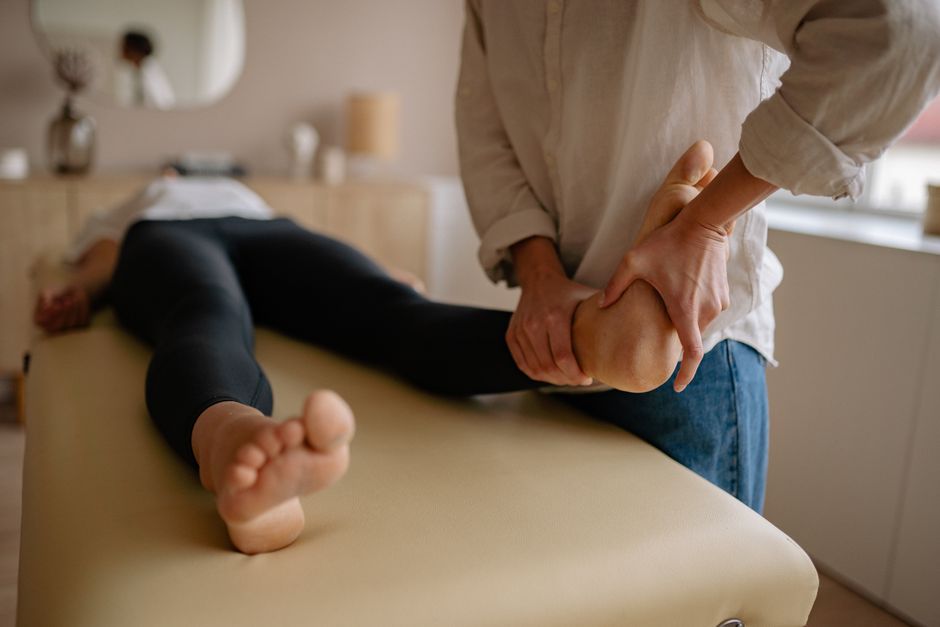
A physical therapist can assess which movements ease or worsen your symptoms and build a program around that. For disc-related sciatica, certain directional exercises and gentle nerve glides can reduce irritation. For stenosis, the approach is often different, focusing on flexion-based movement and strengthening.
Some studies suggest that structured physical therapy produces outcomes similar to surgery for certain patients with disc-related sciatica over the longer term, though the evidence is not uniform and surgery remains appropriate for some. The honest position: physical therapy is a reasonable and often effective first-line option, but it is not guaranteed to resolve everyone’s pain.
If you can, see a therapist rather than following generic stretches online. The right exercises depend on which movement direction reduces your symptoms, and doing the wrong ones can aggravate the nerve.





When Should You See a Doctor for Sciatica?
Most sciatica improves within weeks. Some situations need medical attention promptly, and a few are emergencies.
See a clinician if:
- Pain is severe or getting worse despite home care
- You have significant leg weakness, such as difficulty lifting your foot or your leg giving way
- Symptoms last more than a few weeks without improving
- You have numbness in the groin or inner thigh, or loss of bladder or bowel control — this is a medical emergency and needs immediate care
- You have fever, unexplained weight loss, or a history of cancer alongside new back pain
The combination of groin numbness and bladder or bowel changes can signal cauda equina syndrome, a rare but serious compression of the nerves at the base of the spine. It requires urgent evaluation. Do not wait to see if it improves.
A clinician can examine you, check nerve function, and decide whether imaging is needed. Imaging is not routine for typical sciatica, because many people without symptoms have disc changes on scans.
What Medical Treatments Are Available for Sciatica?
When home care and physical therapy are not enough, several medical options exist. None is guaranteed, and each has tradeoffs.
Medications. Beyond over-the-counter pain relievers, clinicians sometimes prescribe stronger pain medicines, muscle relaxants, or certain nerve-pain medications. Evidence for nerve-pain drugs in sciatica is mixed — some studies show modest benefit, others do not. These are decisions to make with a clinician, not from a website.
Epidural steroid injections. A corticosteroid is injected near the irritated nerve root to reduce inflammation. These can provide short-term relief for some people, but the evidence suggests the benefit is often temporary and does not reliably prevent the need for surgery. They are commonly used and reasonable for selected patients.
Surgery. For people with severe, persistent pain or progressive weakness, surgery to relieve the pressure — such as a discectomy — can be effective. It is generally considered when conservative treatment has not worked after a reasonable period, or when nerve function is threatened. Surgery is not a first step for typical sciatica.
Does Stretching or Exercise Make Sciatica Worse?
It can, if you do the wrong movements. This is one of the most useful things to understand about sciatica.
Because sciatica involves an irritated nerve, movements that stretch or compress that nerve can increase symptoms. Aggressive hamstring stretching, for example, pulls on the sciatic nerve and can make pain worse for some people — even though it is often recommended online. Deep forward bends or heavy loading can also aggravate certain disc-related cases.
The key is direction. Some people feel better bending forward; others feel better bending backward. A physical therapist can identify which direction calms your nerve and build a program around it. Generic stretching routines ignore this and can backfire.
Walking, gentle core work, and movement within a comfortable range are generally safer starting points than intense stretching.
How Long Does Sciatica Take to Heal?
Most cases of acute sciatica improve within a few weeks to a few months. Many people recover without surgery.
Recovery is not always a straight line. Symptoms can flare and settle. Some people have lingering mild numbness or occasional discomfort even after the main pain resolves.
A smaller group develops persistent symptoms that last longer. For those people, the focus shifts from waiting for it to pass to active treatment — physical therapy, medical management, and in some cases surgery. The timeline varies widely, and no single number applies to everyone.
What matters more than a fixed timeline is the direction of travel. Steady improvement, even slow, is a good sign. Worsening weakness or new bladder or bowel symptoms are not, and need prompt medical attention.
Can You Prevent Sciatica From Coming Back?
Recurrence is common, especially after a disc-related episode. There is no guaranteed prevention, but some habits are consistently linked to lower risk of back trouble.
Staying physically active, maintaining strength in the core and back, and using good lifting mechanics all support spinal health. Avoiding prolonged sitting and breaking up long periods of stillness can help. If you smoke, quitting supports disc health — smoking is associated with poorer disc outcomes.
These measures reduce risk. They do not eliminate it. If sciatica returns, the same principles apply: stay gently active, manage pain, and see a clinician if symptoms are severe or worrying.
Frequently Asked Questions
How can I relieve sciatica pain fast?
Gentle activity, heat or cold, and an over-the-counter pain reliever can ease symptoms in the short term. Avoid bed rest beyond a day or two, since staying still tends to worsen sciatica.
Is walking good or bad for sciatica?
Walking is generally helpful for most people with sciatica and is often recommended over rest. Stop if it clearly increases leg pain, and check with a clinician if walking consistently makes symptoms worse.
Should I stretch my hamstrings if I have sciatica?
Not usually, at least not aggressively. Hamstring stretching pulls on the sciatic nerve and can worsen symptoms for some people, so it is best guided by a physical therapist who can assess your specific case.
When is sciatica an emergency?
Sciatica is an emergency if you lose bladder or bowel control, have numbness in the groin or inner thighs, or develop sudden severe leg weakness. These can signal serious nerve compression and need immediate medical care.
