
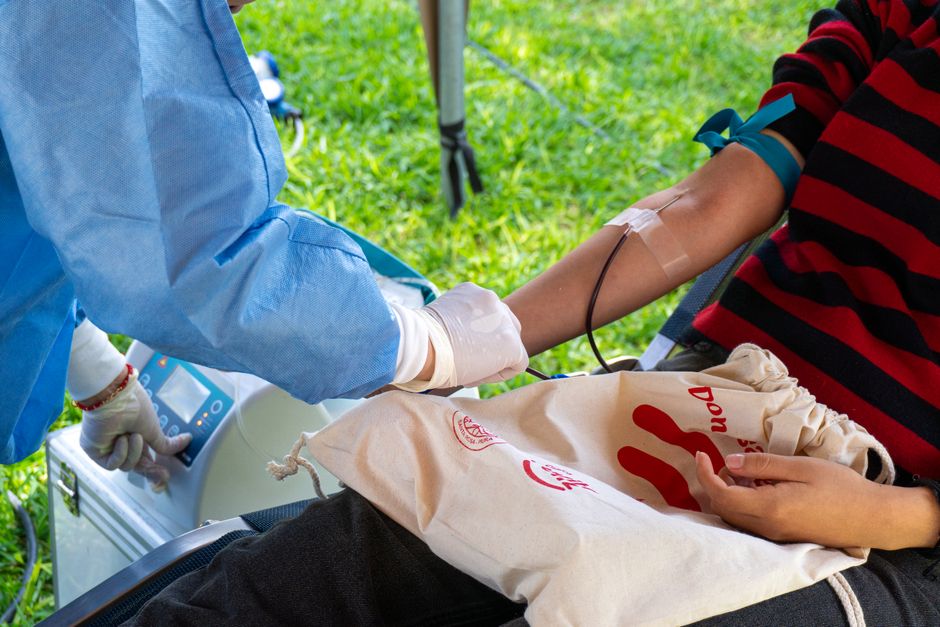
Donating plasma for money is a real way to earn extra income, but it is not a casual side gig. You must meet strict health requirements, pass a medical screening, and commit to a schedule. In the United States, you can generally donate twice within a seven-day period, with at least 48 hours between donations. Pay varies by center, location, and your weight, but new donor bonuses can reach several hundred dollars over the first month. The process takes about one to two hours per visit, and the money is loaded onto a prepaid debit card after each session.
What Are the Basic Requirements to Donate Plasma?
You must be at least 18 years old. This is a federal requirement set by the U.S. Food and Drug Administration. You cannot donate plasma if you are 16 or 17, even with parental consent, which is different from whole blood donation rules in some states.
You must weigh at least 110 pounds. Your weight also determines how much plasma the center can collect. Heavier donors can give more plasma per session, which is why some centers pay more for donors above a certain weight threshold, often 150 or 175 pounds.
You need a valid government-issued ID, proof of your Social Security number, and proof of your current address. A driver’s license and a utility bill usually cover this. If you are not a U.S. citizen, you must provide documentation showing lawful residence.
What Happens During the Medical Screening?
Before your first donation, you will have a physical exam. A clinician checks your blood pressure, pulse, temperature, and general health. Your blood pressure must typically fall within a normal range, roughly below 180/100 mmHg and above 90/50 mmHg. Your pulse should be between 50 and 100 beats per minute in most cases.
You will give a small blood sample for testing. The center checks your protein levels and hemoglobin levels. Low protein or low hemoglobin means you cannot donate that day. They also test your blood for infectious diseases including HIV, hepatitis B, hepatitis C, and syphilis. If you test positive, you are permanently deferred from donating and the center reports the result to health authorities.
You will answer a long questionnaire about your medical history, travel history, and behaviors that increase infection risk. This is not a formality. Your answers determine your eligibility. For example, certain travel to malaria-risk countries can defer you for a period of time, and some medications disqualify you from donating.
How Much Money Can You Make Donating Plasma?
Pay varies significantly by company and location. The two largest commercial plasma collectors in the U.S. are CSL Plasma and Grifols. Both compensate donors based on frequency and weight. First-time donors often receive promotional bonuses that make the first month more profitable than subsequent months.
New donor bonuses typically range from $400 to $700 in the first month if you complete the required number of donations. After the promotional period ends, regular pay usually falls between $30 and $60 per donation. Some centers pay more for donors who weigh more because they can safely collect a larger volume of plasma.
Pay is loaded onto a prepaid debit card, not paid in cash. Some centers also offer point systems where you can redeem points for merchandise or additional money. You cannot receive cash directly from the donation center. This is a regulatory and security measure.





How Often Can You Donate Plasma?
The FDA limits plasma donation to twice in a seven-day period. You must have at least 48 hours between donations. This means you could donate Monday and Wednesday, but not Monday and Tuesday.
Most centers schedule donors for two visits per week consistently. This frequency is considered safe for healthy adults because your body replaces plasma proteins within 24 to 48 hours. Red blood cells are returned to your body during the donation process, so you do not lose them like you do with whole blood donation.
Do not attempt to donate more frequently than allowed. The centers share donor information through a national database called the National Donor Deferral Registry. If you try to donate at multiple centers within the restricted window, you will be flagged and potentially permanently deferred.
How Can I Donate Plasma For Money Requirements Pay: The Actual Process
The first donation takes longer than subsequent ones. Expect to spend two to three hours on your first visit because of the physical exam, health history interview, and blood testing. Follow-up visits typically take one to one and a half hours.
During the donation, a needle is placed in a vein in your arm. Blood is drawn into a machine called a centrifuge. The machine separates plasma from your red blood cells and other components. The red blood cells are returned to your body through the same needle, mixed with saline to keep your blood volume stable.
You are not donating whole blood. You are donating only the liquid portion. This is why you can donate twice per week rather than waiting eight weeks between whole blood donations. The actual plasma collection takes about 30 to 45 minutes depending on your weight and hydration level.
Drink plenty of water before your appointment. Dehydration makes your veins harder to find and slows the collection process. Eat a meal with protein and carbohydrates within a few hours before donating. Avoid fatty foods immediately before donation because lipids in your blood can make the plasma appear cloudy, and the center may reject that donation.
What Disqualifies You From Donating Plasma?
Certain medical conditions permanently disqualify you. These include hepatitis B, hepatitis C, HIV, and active tuberculosis. If you have ever tested positive for these conditions, you cannot donate plasma, even if you are currently healthy and on treatment.
Some conditions cause temporary deferrals. Recent tattoos or piercings can defer you for up to four months in some states, though regulations vary. Recent surgery, pregnancy, or certain vaccinations also require waiting periods.
Medications matter. Some medications, such as blood thinners and certain acne treatments, disqualify you from donating. You must disclose every medication you take during the screening questionnaire. Do not skip this list because you think a medication is irrelevant. The center staff checks every medication against a deferral list.
Your travel history can defer you. Travel to areas with malaria risk, mad cow disease risk, or certain other endemic diseases can require waiting periods ranging from a few months to permanent deferral. If you lived in the United Kingdom for more than three months between 1980 and 1996, you may be permanently deferred due to variant Creutzfeldt-Jakob disease concerns.
Is Donating Plasma Safe?
Plasma donation is generally safe for healthy adults when performed at licensed centers. The FDA regulates commercial plasma collection centers. Trained staff perform the procedures, and equipment is sterile and single-use.
Common side effects include bruising at the needle site, dizziness, and lightheadedness. These are usually mild and resolve quickly. More serious reactions are rare but include fainting, nerve injury from needle placement, and citrate reactions from the anticoagulant used during the process.
Citrate is added to your blood during donation to prevent clotting in the machine. Some of it enters your body when your blood is returned. Most people process it quickly, but some experience a tingling sensation in the lips or fingers. Inform the staff immediately if this happens. They can slow the return rate or give you calcium supplements.
Long-term frequent donation can lower your protein and antibody levels if you do not replenish them through diet. Your body needs protein to rebuild the plasma you gave. If you donate regularly, pay attention to your protein intake. Most donors recover fully between donations without any lasting effects, but the evidence on very long-term frequent donation is not extensive.
Frequently Asked Questions
How long does the first plasma donation take?
Plan for two to three hours on your first visit. This includes the physical exam, health history review, blood testing, and the actual donation.
Can I donate plasma if I have tattoos?
It depends on state regulations and when you got the tattoo. Many centers require a waiting period of up to four months after a new tattoo unless it was done at a state-regulated facility.
Do I get paid immediately after donating plasma?
Yes, the payment is loaded onto a prepaid debit card before you leave the center. You can use the card immediately at most merchants or withdraw cash from an ATM.
What happens if I fail the medical screening?
You will not be allowed to donate that day. Some deferrals are temporary, and you can return once the issue resolves. Permanent deferrals mean you can never donate plasma at any center in the U.S.
