
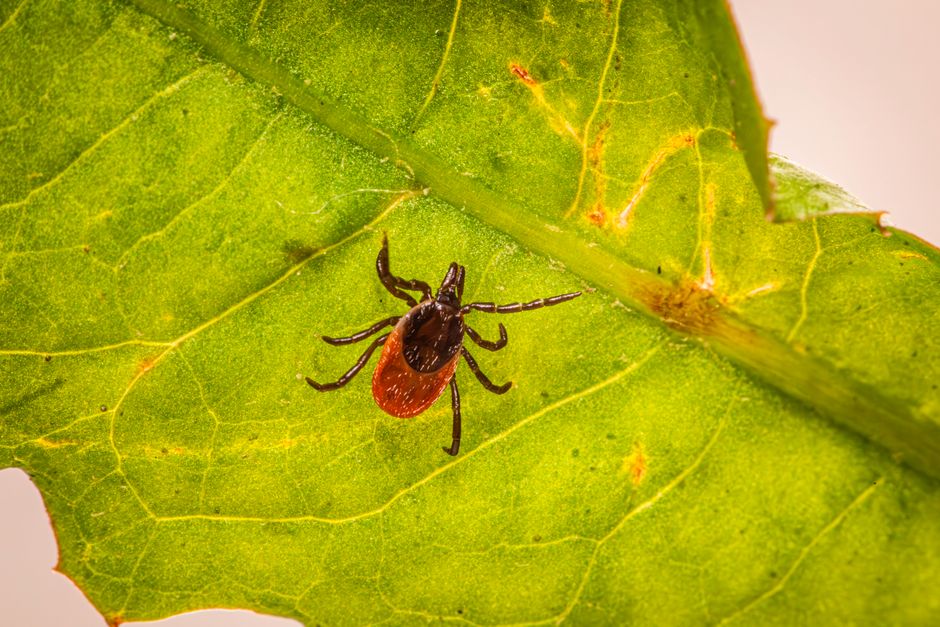
A tick the size of a poppy seed can carry a disease that changes your life. That is not a metaphor. It is a measurement problem. The same tick that is nearly invisible in April can be a visible, swollen, gray-green blob by July, and people miss both stages for the same reason: they are looking for the wrong thing.
Most adult ticks are roughly the size of a sesame seed before they feed, measuring about 3 to 5 millimeters long. Nymph ticks, the stage most likely to transmit disease to humans, are much smaller — about the size of a poppy seed, or 1 to 2 millimeters. After a full blood meal, a tick’s body can expand many times over, reaching the size of a small grape.
How Big Is A Tick Compared To Common Objects?
Size is the single most useful thing to understand about ticks, because it determines whether you will ever notice one.
An unfed adult tick is comparable to a sesame seed. You can see it if you look directly at it, but it does not jump out at you against skin, hair, or fabric. An unfed nymph tick is closer to a poppy seed or the period at the end of this sentence. It is small enough that people routinely mistake it for a speck of dirt, a freckle, or a scab.
An engorged tick is a different animal entirely. Once it has fed for several days, its body expands dramatically — often to the size of a small grape or a kernel of corn. At that point it is usually unmistakable. The problem is that by the time a tick is that large, it has often been attached for long enough to transmit certain pathogens.
This is the key insight most people miss: the tick you need to worry about is the one you almost did not see. Waiting until a tick is obvious means waiting too long.
Why Are Nymph Ticks So Much Harder To Spot?
Nymph ticks are the stage that causes the most human disease in the United States, and their size is the main reason.
After a tick egg hatches, the tick goes through three life stages that feed on blood: larva, nymph, and adult. The larva is tiny and generally not considered a major disease vector to humans. The adult is large enough to notice. The nymph sits in the middle — small enough to disappear into a hairline or a skin fold, large enough to feed efficiently and transmit infection.
Nymph ticks are most active in late spring and summer, which overlaps with when people are outside the most. Because they are roughly the size of a poppy seed, a nymph can attach to the scalp, behind the knee, in the armpit, or in the groin and go completely unnoticed for days.
There is no way to reliably feel a nymph tick bite. Tick bites are generally not painful, and many people never recall being bitten at all.
How Much Does A Tick Grow When It Feeds?
A tick’s body is built to expand. Unlike an insect, a tick’s outer shell is flexible, which allows its abdomen to stretch enormously as it takes in blood.
The change is dramatic enough that an engorged tick is often mistaken for a different creature. A tick that started at 3 millimeters can become a centimeter or more across after feeding for several days. Its color shifts too — from brown or black to a grayish, greenish, or tan tone as the blood fills its body.
This growth happens slowly. A tick typically feeds over several days rather than in one sitting. That timeline matters, because the risk of transmitting certain infections increases the longer a tick stays attached. This is why prompt removal matters — not because a tick is dangerous the moment it bites, but because time attached is a factor in transmission for some diseases.



Does Tick Size Tell You Anything About Disease Risk?
Not directly. Size tells you the life stage, and life stage is a rough proxy for risk — but it is not a reliable indicator of whether a specific tick is carrying anything.
Different tick species carry different pathogens, and the same species can carry more than one. In the United States, the blacklegged tick (often called the deer tick) is the primary vector for Lyme disease, anaplasmosis, and babesiosis. The American dog tick and the lone star tick transmit other illnesses. Size alone does not tell you which species you are looking at, and it certainly does not tell you whether that tick is infected.
What size does tell you is whether you are likely to find the tick at all. A large, engorged tick is easy to find. A nymph is not. That is the practical takeaway.
If you find a tick and want to know what it is, some public health departments and university extension services offer tick identification. Testing the tick itself for pathogens is available in some areas, but the usefulness of tick testing for guiding your own medical decisions is debated, and results can be misleading. If you develop symptoms after a tick bite, that is a conversation to have with a clinician regardless of what any tick test says.
How Do You Check For Ticks If They Are This Small?
You check by looking carefully, in the right places, with good light.
Ticks do not typically attach in the middle of your back where you would notice them. They prefer warm, moist, hidden areas. After time outdoors, particularly in wooded or grassy areas, check:
- Scalp and hairline
- Behind and inside the ears
- Armpits
- Behind the knees
- Groin and buttocks
- Belly button
- Between the toes
- Around the waistband
A mirror helps. A second person helps more. Showering soon after being outdoors can help wash off ticks that have not yet attached, and it gives you a chance to do a full-body check.
If you find a tick attached, remove it promptly with fine-tipped tweezers, pulling straight up with steady pressure close to the skin. Do not twist, crush, or burn the tick, and do not apply petroleum jelly or nail polish. Those methods are commonly described but are not recommended — they can cause the tick to release more saliva or regurgitate, and they are less effective than simply pulling it out.
What Should You Do After Finding A Tick?
Remove it, note the date, and watch for symptoms over the following weeks.
Not every tick bite causes disease, and not every tick carries a pathogen. But if you develop a rash, fever, headache, muscle aches, or fatigue in the weeks after a bite, contact a healthcare provider and mention the tick bite. A rash that expands over time is a particular reason to seek care.
Whether to take preventive antibiotics after a tick bite is a decision that depends on factors like the tick species, how long it was attached, and where you live. This is not something to self-manage. Some clinicians prescribe preventive treatment in specific circumstances, but that decision should be made with a healthcare provider who knows your situation and the local disease patterns.
The single most reliable thing you can do is reduce the time a tick stays attached. That means checking often, checking carefully, and not assuming that because you did not see a tick, there was not one.
Frequently Asked Questions
How big is a tick before it feeds?
An unfed adult tick is about the size of a sesame seed, roughly 3 to 5 millimeters long. A nymph tick is much smaller — about the size of a poppy seed, or 1 to 2 millimeters.
Can you see a nymph tick on your skin?
You can see one if you look directly at it in good light, but it is easily mistaken for a speck of dirt or a freckle. Many people never notice a nymph tick, which is part of why nymphs transmit the most disease.
How big does a tick get after feeding?
A fully engorged tick can grow to the size of a small grape or kernel of corn, expanding many times its original size. This growth happens over several days of feeding.
Does a bigger tick mean more disease risk?
No. Size reflects life stage and feeding status, not whether the tick carries a pathogen. A tiny nymph can transmit disease, and a large engorged tick may be carrying nothing.
