
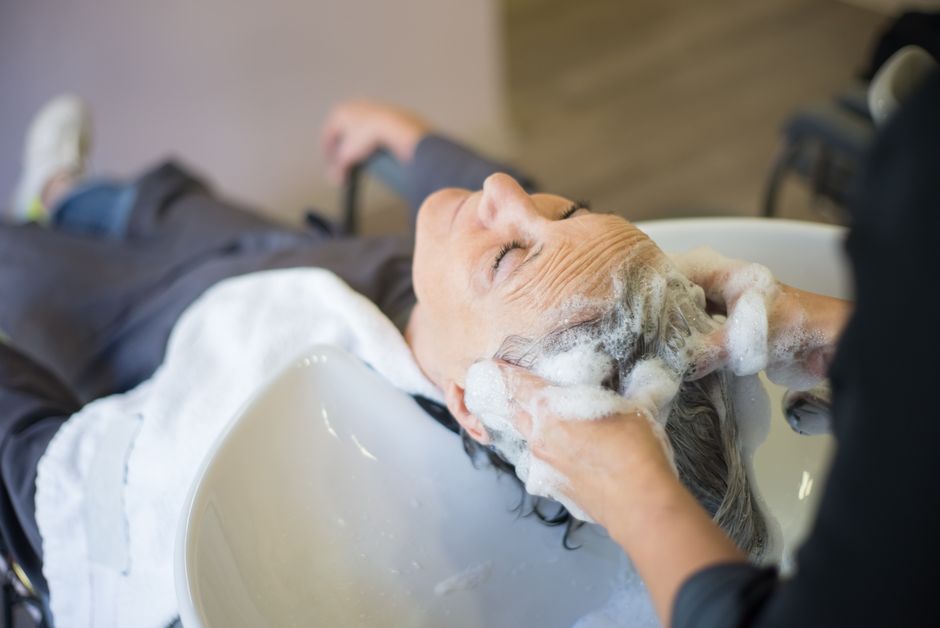
Volumizing shampoo does not damage hair by itself. The ingredients that create volume work on the surface of the hair shaft, not inside it. Most problems people blame on volumizing shampoo come from how often it is used, how the hair is handled afterward, or an ingredient that does not suit their particular hair type.
That is the short answer. The longer answer is more useful, because “volumizing shampoo” covers a wide range of formulas. Some are gentle. Some are harsh. A few contain ingredients that can cause real problems for certain people. Knowing which is which helps you decide what belongs in your shower.
What Does Volumizing Shampoo Actually Do?
Volumizing shampoo makes hair feel thicker by adding a light coating to each strand and by cleaning away oils that weigh hair down. Neither action changes the structure of the hair.
Hair volume depends on three things: the diameter of each strand, how much space exists between strands, and how much the hair bends or lifts away from the scalp. Shampoo can only influence the last two. It cannot thicken a strand.
Most volumizing formulas use lighter surfactants (cleansers) than moisturizing shampoos. They rinse clean without leaving heavy conditioning agents behind. Some add proteins, polymers, or wheat or rice derivatives that attach to the surface and create a slight thickening effect. That effect is temporary. It washes out with the next shampoo.
The real mechanism is subtraction, not addition. By removing oil and residue, the hair sits farther apart and appears fuller. This is why volumizing shampoo often works best on fine hair and does little for thick or coarse hair.
Does Volumizing Shampoo Damage Your Hair?
No, not through its normal use. The cleansing ingredients in volumizing shampoo are standard surfactants used across all shampoo types. Used as directed, they do not break down the hair shaft or damage the follicle.
The concern people raise most often is sulfates. Sulfates are effective cleansers that can strip oil more aggressively than gentler alternatives. For most people this causes dryness or temporary roughness, not damage. Hair is not living tissue. Once a strand emerges from the follicle, it cannot repair itself, and repeated stripping can leave it feeling brittle and looking dull.
There is a genuine but narrow exception. Hair that has been chemically treated — bleached, relaxed, or permed — is already structurally weakened. Aggressive cleansing on this hair can accelerate breakage. If your hair is chemically processed, a harsh volumizing shampoo used daily may not be the best match.
What volumizing shampoo does not do: it does not cause hair loss, it does not damage the follicle, and it does not permanently change hair texture. Claims that it “clogs pores” or “stops growth” are not supported by evidence.
Which Ingredients Should You Watch For?
A short list of ingredients deserves attention, though none of them are dangerous for most people at normal use.
- Sulfates (sodium lauryl sulfate, sodium laureth sulfate) — effective cleansers that can be drying, especially with frequent use.
- Alcohols — some drying alcohols in styling products can leave hair feeling rough; most shampoos do not contain high levels.
- Fragrance — a common cause of scalp irritation or contact dermatitis in sensitive people.
- Preservatives such as methylisothiazolinone — linked to allergic skin reactions in some users; some regions have restricted concentrations in leave-on products.
None of these ingredients damage hair in the structural sense at typical shampoo concentrations. The issue is tolerance. If your scalp stings, itches, or flakes after using a product, that product is not right for you, regardless of what is on the label.




Why Does Hair Sometimes Feel Worse After Volumizing Shampoo?
Because volumizing shampoo does what it is designed to do, and that is not always what your hair needs. It removes oil. If your hair is already dry, removing more oil leaves it feeling straw-like.
The texture also changes. Volumizing formulas often skip or reduce the conditioning agents that make hair feel smooth. That is intentional — those agents weigh hair down. The trade-off is that hair can feel rougher and tangle more easily.
People then compensate by brushing harder, blow-drying longer, or adding more styling product. That handling, not the shampoo, is where damage usually happens. Wet hair stretches and breaks more easily than dry hair. Rough towel drying, tight brushing, and high heat all cause more harm than the shampoo ever did.
If your hair feels worse, the fix is usually less manipulation, not a different bottle.
How Should You Use Volumizing Shampoo Without Causing Problems?
Use it on the scalp, not the ends. The scalp is where oil accumulates. The ends of your hair are older, drier, and do not need strong cleansing. Let the lather rinse through the ends rather than scrubbing them directly.
Frequency matters more than formula. Daily use of a strong volumizing shampoo is more likely to cause dryness than using it a few times a week. Many people alternate between a volumizing shampoo and a gentler moisturizing one.
Conditioner is not the enemy. Apply it to the mid-lengths and ends, avoiding the roots. This keeps the hair manageable without flattening the volume you just created.
Handle wet hair gently. Pat, do not rub. Use a wide-tooth comb. Keep heat tools on lower settings and use them less often. These habits do more for hair condition than any shampoo choice.
Is Volumizing Shampoo the Same as Thickening Shampoo?
Not exactly, though the terms overlap in marketing. Volumizing shampoos focus on cleansing and lightening hair so it sits fuller. Thickening shampoos often contain polymers or proteins that coat the strand to make it feel and look slightly thicker.
Neither changes the actual number of hairs on your head or the diameter of individual strands. Both create a temporary cosmetic effect. If a product claims to regrow hair or reverse thinning, that claim goes beyond what shampoo can do.
True hair thinning has many causes — genetics, hormones, thyroid conditions, nutritional deficiencies, certain medications, and stress-related shedding among them. A shampoo is not a treatment for any of these. If you are losing hair, a doctor or dermatologist can help identify why.
When Should You See a Doctor About Hair Concerns?
See a doctor if you notice sudden shedding, patches of missing hair, a widening part, or a receding hairline. These are signs of something happening at the follicle level, and shampoo is not the cause or the answer.
Scalp symptoms also deserve attention. Persistent itching, burning, redness, scaling, or sores are not normal reactions to shampoo. They may point to a skin condition, an allergy, or an infection that needs diagnosis.
If your hair breaks easily despite gentle handling, that can signal an underlying issue as well. Hair that snaps with normal combing is different from hair that feels dry. The first is worth a medical conversation. The second is usually a care routine problem.
Frequently Asked Questions
Can volumizing shampoo cause hair loss?
No. Volumizing shampoo cleans the surface of the hair and does not affect the follicle, which is where hair growth happens. Hair loss has many causes, and shampoo is not one of them.
Is sulfate-free volumizing shampoo better for your hair?
It depends on your hair and scalp. Sulfate-free formulas tend to be gentler and less drying, but they may not clean as thoroughly. Neither type damages hair when used appropriately.
How often should I use volumizing shampoo?
There is no single correct frequency. Many people use it a few times a week and alternate with a gentler shampoo on other days. If your hair feels dry or rough, use it less often.
Can volumizing shampoo make hair thinner over time?
No. It creates a temporary appearance of fullness and cannot make hair thinner or thicker over time. Any change in hair density is caused by something other than shampoo.
