
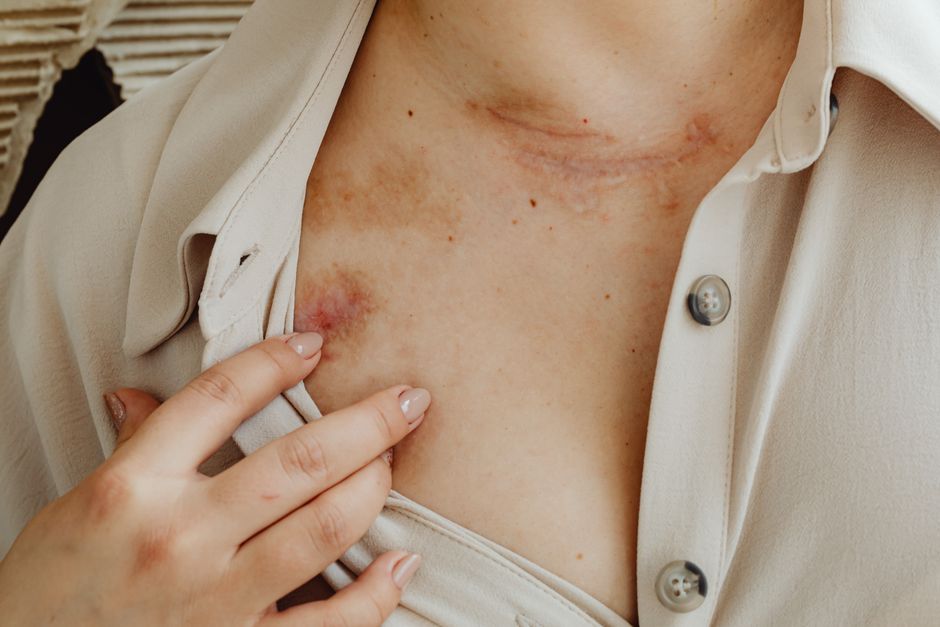
Vitamin E oil is one of the most common home remedies people try for scars, but the evidence does not support using it. Multiple studies have found that applying vitamin E oil to scars does not improve their appearance and can actually make them worse. If you are hoping to reduce the look of a scar, vitamin E oil is likely not the answer you are looking for.
Does Vitamin E Oil Help With Scars The Evidence Actually Work?
The short answer is no. The evidence is consistent and clear. Vitamin E oil does not help scars heal better or look less noticeable.
A landmark study published in the journal Dermatologic Surgery in 1999 looked at this directly. Researchers split a surgical wound in half on each patient. They treated one side with vitamin E oil and the other side with a plain moisturizer. After four weeks, the vitamin E side looked no better. In fact, 33 percent of people developed a contact dermatitis reaction on the vitamin E side. None had that reaction on the plain moisturizer side.
That study is not the only one. A 2001 review in the Journal of the American Academy of Dermatology concluded there was no scientific evidence that vitamin E oil improves scar appearance. More recent reviews have found the same thing. As of 2026, no well-designed study has shown vitamin E oil to be effective for scars.
The idea that vitamin E helps scars comes from older thinking about antioxidants. Vitamin E is an antioxidant. Antioxidants fight free radicals. In theory, that should help skin repair itself. But the body does not absorb vitamin E well through the skin. And scars are made of collagen that has already formed. An antioxidant applied on top cannot undo that structure.
What Does Research on Scars and Vitamin E Oil Show?
Research shows that vitamin E oil is not just ineffective. It may cause problems.
A 2015 study in the Journal of Drugs in Dermatology tested vitamin E oil on fresh surgical scars. Patients applied it twice a day for six weeks. The researchers measured scar color, thickness, and overall appearance. They found no difference between scars treated with vitamin E and scars treated with a placebo cream.
Some studies suggest vitamin E can actually make scars more visible. The reason is contact dermatitis. Vitamin E oil is a common skin irritant. When the skin gets red and inflamed from a reaction, the scar can become more noticeable. The inflammation can also slow down the normal healing process.
The American Academy of Dermatology does not recommend vitamin E for scars. Neither does the Mayo Clinic. These organizations base their guidance on the available evidence. And that evidence consistently shows no benefit.
One thing people often misunderstand is the difference between preventing a scar and treating an existing scar. Vitamin E oil is sometimes used on fresh wounds or new scars. But even in those cases, research has not found a benefit. Once a scar has formed, topical oils cannot change its structure. The collagen fibers are already laid down in a disorganized pattern. No oil can rearrange them.
What Actually Works for Scar Reduction?
If vitamin E oil does not work, what does? The answer depends on the type of scar and how old it is.
For new scars, silicone-based products have the strongest evidence. Silicone sheets and silicone gels are the gold standard. They work by creating a protective barrier over the scar. This keeps the skin hydrated and helps the collagen remodel more normally. The American Academy of Dermatology recommends silicone as a first-line treatment.
Research published in Plastic and Reconstructive Surgery found that silicone sheets reduced scar thickness and color in 60 to 80 percent of cases. The key is consistency. You need to use them for at least 12 hours a day for several months.
For older scars, other options work better. Here is a breakdown of treatments with real evidence:
| Treatment | Best For | Evidence Level |
|---|---|---|
| Silicone sheets or gel | New and existing raised scars | Strong – multiple clinical trials |
| Pressure therapy | Burn scars and keloids | Moderate – effective when used early |
| Corticosteroid injections | Keloids and hypertrophic scars | Strong – done by a dermatologist |
| Laser therapy | Red or dark scars | Moderate – best for color, not texture |
| Microneedling | Depressed or pitted scars | Moderate – stimulates collagen production |
| Sunscreen (SPF 30+) | All scars | Strong – prevents darkening from UV rays |
Sunscreen is the one thing anyone can do immediately. UV light darkens scar tissue. A scar that gets sun exposure will heal darker and stay darker. Using sunscreen daily on a healing scar makes a real difference.





What Are the Side Effects of Vitamin E Oil on Scars?
Vitamin E oil has real side effects. The most common is contact dermatitis. This is a red, itchy, bumpy rash where you apply the oil. It can happen even if you have used vitamin E products before without problems.
A study in the Journal of the American Academy of Dermatology found that vitamin E caused contact dermatitis in about 30 percent of people. That is a high rate for a product that does not even work.
Other side effects include clogged pores. Vitamin E oil is thick and greasy. On the face, it can cause acne breakouts. On other parts of the body, it can block hair follicles and cause small bumps called folliculitis.
Some people also experience allergic reactions. Pure vitamin E oil comes from plant sources like soy or wheat. If you have allergies to these, you can develop hives or swelling.
There is also a risk of infection. If you apply vitamin E oil to a wound that is not fully closed, the oil can trap bacteria against the skin. This is especially dangerous for surgical incisions or deep cuts. Keep oils away from open wounds.
Common Misconceptions About Vitamin E and Scar Healing
One common myth is that vitamin E oil prevents scars from forming. This is not true. Scars form when the deep layer of skin is damaged. The body produces collagen to repair the damage. No topical oil can stop this process.
Another myth is that vitamin E oil fades dark scars. Dark scars are caused by excess melanin or blood vessels under the skin. Vitamin E does not affect melanin production. It does not break down blood vessels. There is no mechanism by which it could lighten a dark scar.
Some people believe that vitamin E oil works better if you massage it into the scar. Massage itself may help break up scar tissue. But the vitamin E oil is not the active ingredient. Plain moisturizer with massage likely works just as well. A 2002 study in the British Journal of Plastic Surgery found that massage with any lubricant improved scar flexibility. The specific oil did not matter.
A third misconception is that natural means safe. Vitamin E oil is a natural product. But natural substances can still cause allergic reactions and skin irritation. Poison ivy is natural too. Natural does not automatically mean good for your skin.
What to Look for in a Scar Treatment Product
If you are shopping for a scar product, ignore the marketing. Look at the ingredients and the evidence.
Silicone is the only ingredient consistently proven to work for scars. Look for products that list “silicone” or “dimethicone” as the main ingredient. These come as sheets, gels, or creams. Silicone sheets work best for flat scars on flat body parts. Silicone gels work better for scars on curved areas like the knees or elbows.
Avoid products that claim to be “clinically proven” without naming the study. Many scar creams contain vitamin E, onion extract, or herbal blends. These ingredients have weak or no evidence. They are often added because they sound natural, not because they work.
A good scar routine is simple. Keep the scar moisturized with a silicone product. Protect it from the sun. Massage it gently for a few minutes each day. Be patient. Scar remodeling takes months. No product will make a scar disappear completely.
If you have a keloid or a scar that is growing, see a dermatologist. Topical products will not help those. You may need steroid injections, laser treatment, or surgery. A doctor can guide you based on your specific scar type.
Frequently Asked Questions
Can vitamin E oil make scars worse?
Yes. It can cause contact dermatitis, which makes the scar redder and more noticeable. Some people also develop allergic reactions or clogged pores from the oil.
How long should I try vitamin E oil on a scar?
Do not use it at all. There is no evidence it works, and it has a high risk of skin irritation. Use a silicone-based product instead.
Does vitamin E oil help old scars?
No. Once a scar has fully formed, no topical oil can change its structure. Old scars require treatments like laser therapy or microneedling for improvement.
What is the best oil for scar healing?
Silicone is the only ingredient with strong evidence. Coconut oil, rosehip oil, and other natural oils have much weaker evidence and are not recommended as primary treatments.
