
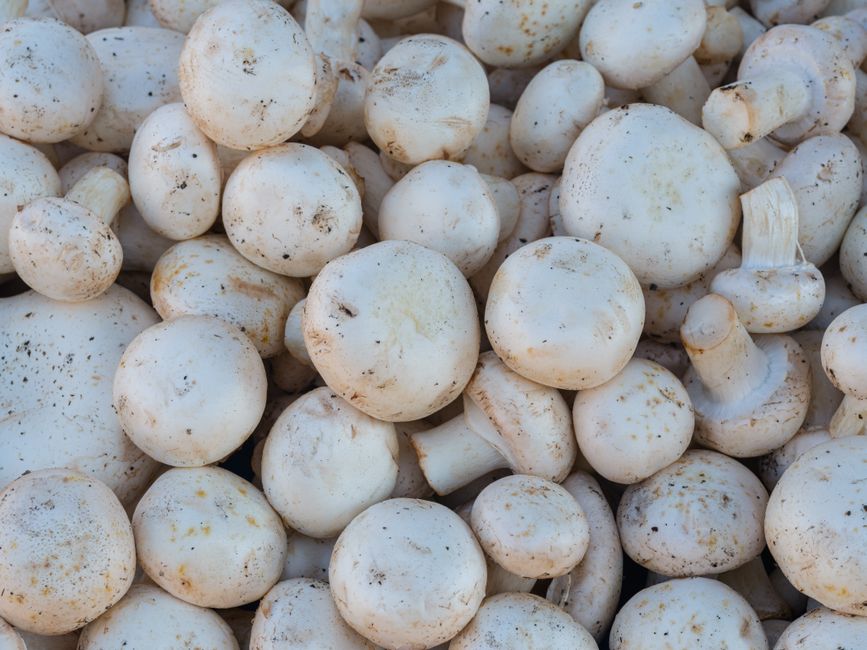
Yes, some mushrooms contain vitamin B12, but the amounts are small and vary widely by species and growing conditions. For most people, mushrooms are not a reliable source of this essential nutrient, and they cannot replace animal products or fortified foods for meeting daily B12 needs. The B12 found in mushrooms is also a form that may not be fully usable by the human body, which adds another layer of complexity.
Do Mushrooms Have Vitamin B12 How Much And Why?
The short answer is yes, but only certain types, and only in trace amounts. The most studied mushroom for B12 content is the shiitake mushroom. Research has found that dried shiitake mushrooms can contain measurable amounts of B12, but the quantity is tiny compared to what you get from meat, fish, dairy, or eggs.
To give you a sense of scale, a typical serving of cooked shiitake mushrooms might provide a small fraction of your daily B12 requirement. You would need to eat an unrealistic amount of mushrooms to meet your daily needs through this source alone. The exact numbers vary depending on the study, the mushroom’s growing conditions, and how it was prepared, but the consistent finding is that mushrooms are not a significant dietary source of B12 for humans.
Why do mushrooms have B12 at all? Mushrooms do not make B12 themselves. The B12 comes from bacteria and other microorganisms that live in the soil or on the mushroom itself. This is the same reason some fermented plant foods contain B12 — it is produced by bacteria, not by the plant or fungus.
Which Mushrooms Contain the Most Vitamin B12?
Shiitake mushrooms are the most frequently cited for B12 content. Some research has also detected B12 in other wild and cultivated mushroom varieties, but the data is less consistent. The amount depends heavily on the substrate the mushroom grew on, the soil composition, and whether the mushroom was dried or eaten fresh.
Drying mushrooms appears to concentrate the B12, which is why dried shiitake mushrooms show higher levels in laboratory tests than fresh ones. Even so, the levels are low. A study published in the Journal of Agricultural and Food Chemistry found that dried shiitake mushrooms contained about 1.3 micrograms of B12 per 100 grams. For comparison, the average adult needs about 2.4 micrograms of B12 per day. That means you would need to eat roughly 185 grams of dried shiitake mushrooms — nearly half a pound — just to hit the daily target, and that is before considering whether your body can absorb all of it.
Common button mushrooms, cremini, portobello, and oyster mushrooms generally show negligible or undetectable B12 levels in most analyses. If you are eating mushrooms for B12, shiitake is really the only variety worth considering, and even then, expectations should be modest.
Is the B12 in Mushrooms Usable by the Human Body?
This is where the science gets more complicated. Mushrooms contain a form of B12 that is not identical to the B12 found in animal foods. Most animal-based B12 is in the form of methylcobalamin or adenosylcobalamin, which the body can use directly. Mushrooms contain a compound called pseudovitamin B12, which is structurally similar but not identical.
Research suggests that pseudovitamin B12 is not absorbed or used by the human body as efficiently as true B12. Some studies have found that pseudovitamin B12 binds poorly to the proteins in the body that transport B12, meaning much of it may pass through without being utilized. This does not mean mushroom B12 is completely useless, but it does mean the already small amounts are likely even less effective than the numbers suggest.
For this reason, nutrition experts do not consider mushrooms a valid source of B12 for vegetarians or vegans. If you rely on plant foods for your diet, you still need to get B12 from fortified foods or supplements.



What Does This Mean for Vegetarians and Vegans?
If you follow a plant-based diet, you have probably heard conflicting information about mushrooms and B12. Some online sources suggest that eating shiitake mushrooms can help vegans meet their B12 needs. The evidence does not support this claim. The amounts are too small, and the form is less bioavailable.
Vitamin B12 deficiency is a real risk for people who do not eat animal products. The deficiency develops slowly, sometimes over years, because the body stores B12 in the liver. Early symptoms include fatigue, weakness, and tingling in the hands and feet. Over time, deficiency can cause nerve damage and cognitive problems.
If you are vegan or vegetarian, the reliable sources of B12 are fortified plant milks, fortified breakfast cereals, nutritional yeast that is specifically fortified with B12, and supplements. Mushrooms can be part of a healthy plant-based diet, but they should not be counted on to provide this nutrient.
How Does Mushroom B12 Compare to Animal Sources?
To understand how small the amounts are, it helps to compare directly. A 3-ounce serving of cooked beef provides about 2.4 micrograms of B12, which covers the full daily requirement. A 3-ounce serving of cooked salmon provides about 4.8 micrograms. One large egg provides about 0.6 micrograms.
Compare that to shiitake mushrooms, which provide roughly 0.1 micrograms per 100 grams when fresh, or about 1.3 micrograms per 100 grams when dried. The dried number looks better, but remember that 100 grams of dried mushrooms is a large amount — about three and a half cups. And the absorption issue means the effective amount is likely lower.
Here is a quick comparison of approximate B12 content per 100 grams:
| Food | B12 per 100 grams (approximate) |
|---|---|
| Beef liver | 70+ micrograms |
| Cooked salmon | 3-4 micrograms |
| Cooked beef | 2-3 micrograms |
| Dried shiitake mushrooms | 1.3 micrograms |
| Fresh shiitake mushrooms | 0.1 micrograms |
| Button mushrooms | Undetectable |
These numbers are approximate and vary based on the source and testing method, but the overall picture is consistent. Animal foods contain far more B12, and the B12 they contain is in a form the body can use directly.
Should You Rely on Mushrooms for Vitamin B12?
No. If you are healthy and eat a varied diet that includes animal products, you likely get enough B12 without thinking about it. Adding mushrooms to your diet is fine for other reasons — they provide fiber, potassium, selenium, and some B vitamins — but B12 is not a reason to eat them.
If you are vegan or vegetarian, you should get B12 from fortified foods or a supplement. The recommended daily intake is 2.4 micrograms for most adults. Pregnant and breastfeeding women need more, about 2.6 and 2.8 micrograms respectively. People over 50 are advised to get B12 from fortified foods or supplements because the ability to absorb B12 from food decreases with age.
There is no harm in eating shiitake mushrooms for their other nutritional benefits. Just do not count them toward your B12 intake. If you have concerns about your B12 status, a simple blood test can tell you where you stand. Talk to your doctor about whether you need a supplement.
Frequently Asked Questions
Do all mushrooms contain vitamin B12?
No, only certain varieties like shiitake contain measurable amounts, and the levels are small. Most common mushrooms like button, cremini, and portobello show negligible or undetectable B12.
Can vegans get enough B12 from mushrooms?
No, the amounts are too small and the form is less usable by the body. Vegans should rely on fortified foods or supplements for B12.
How much B12 is in shiitake mushrooms?
Dried shiitake mushrooms contain about 1.3 micrograms per 100 grams, while fresh ones contain about 0.1 micrograms per 100 grams. The daily adult requirement is 2.4 micrograms.
Is the B12 in mushrooms the same as the B12 in meat?
No, mushrooms contain a form called pseudovitamin B12 that the body absorbs less efficiently. Animal foods contain the active forms of B12 the body can use directly.
