
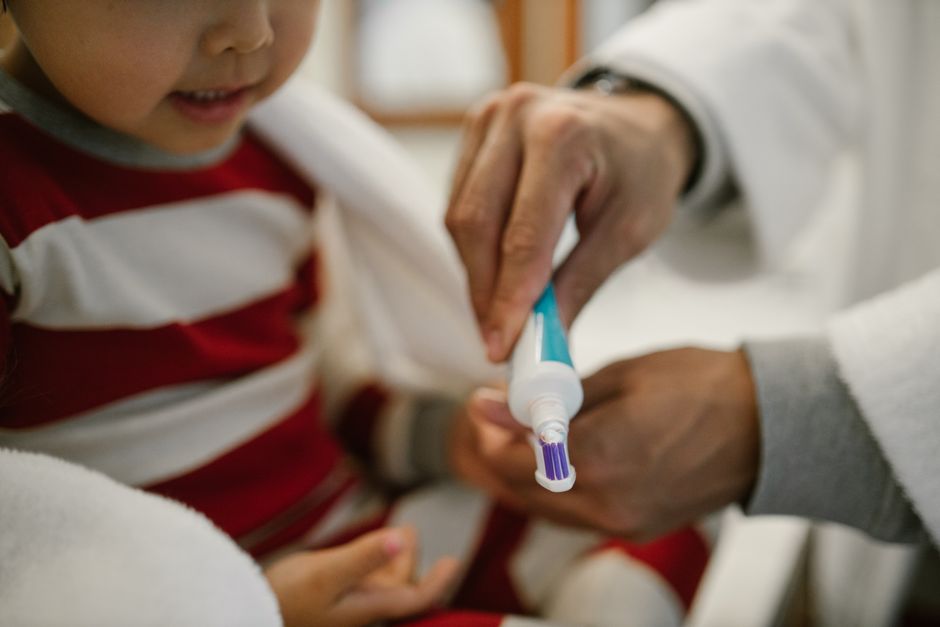
No, toothpaste is not an effective or safe treatment for pimples. It does not address the causes of acne, and the ingredients in most toothpaste can irritate and damage your skin. Dermatologists do not recommend using it, and there are far better options available at any drugstore.
The idea that toothpaste can dry out a pimple has circulated for decades. It sounds plausible — toothpaste is a paste you put on your teeth, so why not your face? But the logic falls apart when you look at what toothpaste actually contains and what acne actually is.
Why Do People Put Toothpaste on Pimples?
The reasoning is simple: toothpaste contains ingredients that dry things out, and acne involves oil. If you dry the oil, the pimple goes away. That is the theory.
Some toothpastes do contain ingredients with mild drying properties. Menthol, alcohol, and hydrogen peroxide can all reduce surface moisture. A few toothpastes also contain triclosan, an antibacterial agent. People who tried it sometimes noticed a pimple looked smaller the next morning, and word spread.
But there is a difference between drying the surface of a pimple and treating acne. Acne is not just oil sitting on your skin. It starts deep inside the pore, where dead skin cells, excess sebum, and a bacterium called Cutibacterium acnes interact to create inflammation. Toothpaste sits on the surface. It cannot reach the source of the problem.
What people often see is irritation, not healing. When toothpaste dries and peels the top layer of skin, a pimple may look flatter for a day. Then the skin becomes red, flaky, and sometimes darker than before. That is damage, not treatment.
What Is Actually in Toothpaste That Could Harm Your Skin?
Toothpaste is formulated for the inside of your mouth, which has a thick, protective lining. Your facial skin is much thinner and far more sensitive. Ingredients that are fine for your gums can cause real problems on your face.
Here is what commonly appears in toothpaste and what it can do to skin:
- Fluoride: At the concentrations used in toothpaste, fluoride can irritate facial skin, causing redness and peeling.
- Alcohol: Dries and strips the skin barrier, which can lead to more oil production over time as your skin tries to compensate.
- Menthol and peppermint: Creates a cooling sensation that many people mistake for healing. It can trigger irritation and allergic reactions.
- Hydrogen peroxide: A bleaching agent. On skin, it can cause burns, especially with repeated use.
- Sodium lauryl sulfate (SLS): A foaming agent that can break down the skin barrier and cause contact dermatitis.
- Baking soda: Abrasive and alkaline. It disrupts the skin’s natural acid mantle, which protects against bacteria.
- Flavoring agents and dyes: Common sources of allergic contact reactions on facial skin.
This is not a theoretical risk. Dermatologists regularly see patients who have given themselves chemical burns or contact dermatitis from applying toothpaste to their skin. The damage can take weeks to heal and may leave temporary dark marks, especially on darker skin tones.
What Does Toothpaste Actually Do to a Pimple?
At best, toothpaste creates temporary dryness that makes a pimple look slightly less prominent. At worst, it causes a chemical burn that is far more noticeable and longer-lasting than the original pimple.
The drying effect is not selective. Toothpaste does not know to dry out only the pimple. It dries the surrounding skin too, which weakens the skin barrier. A weakened barrier lets in more bacteria and triggers inflammation. That can make existing acne worse and create new breakouts.
Some people report that toothpaste “worked” for them. What likely happened is that the pimple was already resolving on its own — most do within a few days — and the toothpaste got credit. Or the irritation temporarily changed the appearance of the pimple in a way that seemed like improvement.
There is no clinical evidence that toothpaste treats acne. No dermatology organization recommends it. It is a folk remedy that persists because it is cheap and available, not because it works.



What Should You Use Instead?
Several over-the-counter ingredients have actual evidence behind them for treating mild acne. These are available at any pharmacy without a prescription.
Benzoyl peroxide kills C. acnes bacteria and reduces inflammation. It is one of the most studied acne treatments available. It can be drying, so start with a lower concentration.
Salicylic acid helps unclog pores by dissolving dead skin cells. It is gentler than benzoyl peroxide and works well for blackheads and mild breakouts.
Adapalene is a topical retinoid that was previously prescription-only and is now available over the counter. It helps prevent new pimples from forming by keeping pores clear. It can cause initial irritation and sun sensitivity.
Niacinamide is an ingredient found in many skincare products. Some studies suggest it may help with inflammation and oil control, though the evidence is not as strong as for benzoyl peroxide or adapalene.
For a single pimple, a hydrocolloid patch can help. These patches cover the pimple, absorb fluid, and keep you from picking at it. They do not contain medication, but they protect the area and speed healing by preventing interference.
If your acne is widespread, painful, or leaving scars, see a dermatologist. Prescription treatments — including stronger retinoids, antibiotics, or hormonal therapies — may be appropriate. Acne that causes scarring or significant distress deserves medical attention, not drugstore experiments.
Does Toothpaste Get Rid Of Pimples Overnight?
No. Nothing gets rid of a pimple overnight, including toothpaste. A pimple is an inflamed lesion that takes days to resolve as your immune system clears the inflammation.
What toothpaste might do overnight is irritate the skin around the pimple, making it redder and more noticeable. Any perceived improvement the next morning is usually the result of reduced surface oil, not resolution of the pimple itself.
Real acne treatments work over weeks, not hours. Benzoyl peroxide may reduce a pimple’s size in a few days. Adapalene takes several weeks to show full effects. Anyone promising overnight results is selling something that does not exist.
When Should You See a Doctor About Acne?
Mild acne — a few blackheads or whiteheads — usually responds to over-the-counter treatments. But some situations call for professional help.
See a dermatologist if:
- Your acne is widespread or covers large areas of your face, chest, or back
- You have deep, painful nodules or cysts
- Over-the-counter treatments have not helped after several weeks of consistent use
- Your acne is leaving scars or dark marks
- You are experiencing significant emotional distress because of your skin
- You have signs of hormonal acne, such as breakouts along the jawline that flare with your menstrual cycle
Acne is a medical condition, not a hygiene problem. It is not caused by dirty skin, and it is not your fault. Effective treatments exist. The key is using ones that actually work and giving them enough time to work.
What About Other Home Remedies for Pimples?
Toothpaste is not the only kitchen remedy people try. Some are harmless. Others can cause problems.
Tea tree oil has some evidence for mild acne. Some studies suggest it can reduce pimple counts, though it works more slowly than benzoyl peroxide. It must be diluted — undiluted tea tree oil can burn skin.
Apple cider vinegar is often recommended, but there is no clinical evidence it treats acne. Its acidity can irritate and burn skin, especially if used undiluted.
Lemon juice is a common suggestion that should be avoided. It is highly acidic and can cause phytophotodermatitis — a reaction that makes skin extremely sensitive to sunlight and can cause blistering and dark marks.
Ice can temporarily reduce redness and swelling by constricting blood vessels. It does not treat the underlying pimple. Never apply ice directly to skin; wrap it in a cloth first.
The pattern here is that home remedies either do nothing or cause irritation. The ingredients with real evidence behind them are the ones formulated for skin, not for teeth or salads.
The Bottom Line
Toothpaste does not treat acne, and it can damage your skin. The ingredients that make it useful for cleaning teeth — abrasives, foaming agents, flavorings, and fluoride — are not meant for facial skin. Applying them can cause irritation, chemical burns, and post-inflammatory hyperpigmentation that lasts far longer than the pimple would have.
If you have a pimple, reach for a product made for skin. Benzoyl peroxide, salicylic acid, and adapalene all have evidence behind them. They cost about the same as a tube of toothpaste and carry far less risk.
Your skin barrier is not a test kitchen. Treat it like the organ it is.
Frequently Asked Questions
Does toothpaste get rid of pimples fast?
No. Toothpaste does not treat pimples, and any perceived improvement is usually irritation or temporary dryness rather than healing. Real acne treatments take days to weeks to work.
Can toothpaste burn your skin?
Yes. Ingredients like hydrogen peroxide, alcohol, menthol, and sodium lauryl sulfate can cause chemical burns, redness, peeling, and dark marks on facial skin. These reactions can take weeks to heal.
What is the fastest way to get rid of a pimple?
There is no instant fix, but a hydrocolloid patch can protect the pimple and speed healing by preventing picking. Benzoyl peroxide or salicylic acid may reduce a pimple over a few days with consistent use.
Is it safe to put toothpaste on a pimple overnight?
No. Leaving toothpaste on your skin overnight increases the risk of irritation and chemical burns. Dermatologists do not recommend applying toothpaste to acne under any circumstances.
