
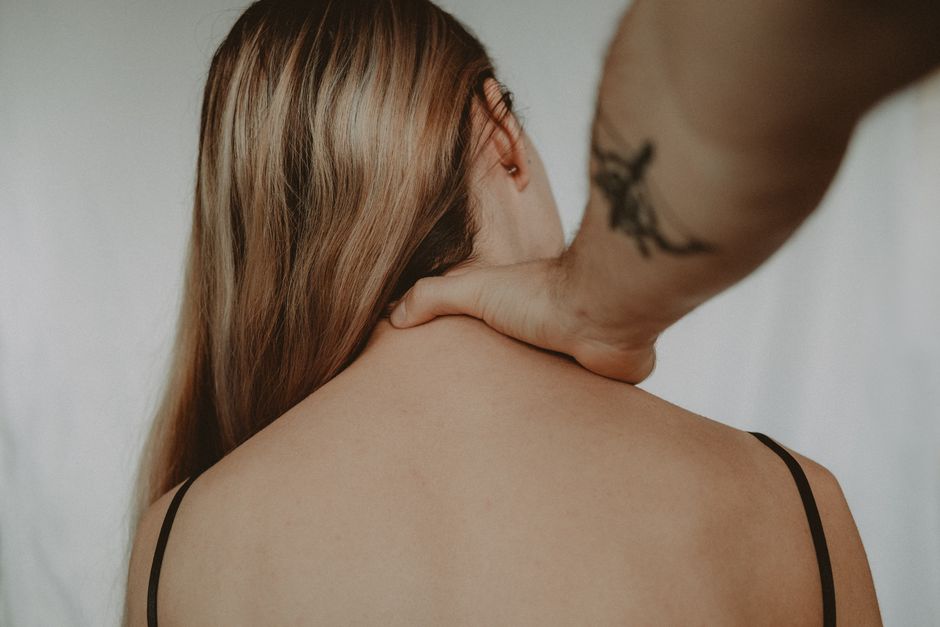
Yes, a neck tattoo hurts. The neck is one of the more painful places to get tattooed because the skin is thin, close to bone and cartilage, and packed with nerve endings. Most people describe it as noticeably more painful than an arm or thigh tattoo, though how much more varies from person to person.
Does Tattoo On Neck Hurt More Than Other Spots?
Pain from a tattoo comes down to anatomy: how thick the skin is, how close the needle gets to bone or cartilage, and how many nerve endings sit in that area. The neck scores high on all three.
Skin on the neck is relatively thin. Underneath it, you have the cervical spine, the jawbone, the collarbone, and the larynx. There is not much soft tissue cushioning the needle. When a tattoo needle vibrates against bone or cartilage, the sensation travels differently than it does through muscle or fat. That is part of why the neck, ribs, spine, and collarbone all tend to rank among the most painful tattoo locations.
Nerve density matters too. The neck carries a dense network of nerves that serve the head, throat, and shoulders. More nerve endings in a small area generally means more sharp, immediate pain signals.
On common tattoo pain charts, the neck usually sits in the higher-pain range, alongside the ribs, armpit, elbow ditch, and hands. It is typically rated as more painful than the upper arm, forearm, thigh, or back. It is generally considered less extreme than the most sensitive areas, such as the nipple, genitals, or the skin directly over the spine.
Which Part of the Neck Hurts the Most?
Not all neck tattoos feel the same. Placement within the neck changes the experience.
- Front of the neck (throat): Thin skin, close to the larynx and trachea. Many people find this the most painful part of the neck. Swallowing and movement make it harder to stay still.
- Side of the neck: Close to the carotid artery and neck muscles. Painful, but often reported as somewhat more manageable than the front.
- Back of the neck (nape): Near the cervical spine. The bone proximity makes it sharp, but the skin here is often a little thicker than the throat.
- Behind the ear: Thin skin over cartilage. Frequently described as intense and quick to sting.
The throat and the area behind the ear tend to be the toughest. The nape is often the most tolerable part of the neck for a tattoo, though “tolerable” is relative.
What Does a Neck Tattoo Actually Feel Like?
Most people describe the sensation as a continuous scratching or burning. Some compare the first few minutes to a cat scratch that does not stop. Others say it feels like a hot vibration.
The needle moves in and out of the skin many times per second. Each puncture deposits ink a fraction of a millimeter deep. On thin skin over bone, that vibration is felt more sharply than on a fleshy area.
Pain usually peaks during outlining and shading. Line work tends to feel sharper because the needle is tracing a single path. Filling larger areas can feel more like a steady burn. Color packing over a wide area can wear you down over time even if the individual sensation is less sharp.
After the session ends, the skin feels raw and sunburned for a day or two. That soreness is normal and usually fades within a few days. Sharp pain that lasts longer than expected is not typical and is worth discussing with a doctor.





How Long Does a Neck Tattoo Take?
Session length depends on size, detail, and the artist’s speed. A small, simple design can take under an hour. A larger or more detailed piece can take several hours, sometimes split across multiple sessions.
Because the neck is small and sensitive, many artists prefer shorter sessions there. Sitting still through a long session on the throat is difficult even for people with high pain tolerance. Breaking the work into two or three appointments is common.
The pain does not usually build in a straight line. Many people find the first 10 to 15 minutes the hardest, then the body releases endorphins and the sensation becomes more tolerable. Toward the end of a long session, fatigue and skin irritation can make it feel worse again.
Does a Neck Tattoo Hurt More if It Is Your First One?
Yes, in most cases. First tattoos tend to feel more intense because you have no reference point and no learned way to manage the sensation.
Experienced tattoo collectors often say the neck is uncomfortable but manageable because they know what to expect. First-timers frequently describe it as more painful than they anticipated. If you have never been tattooed, the neck is a challenging place to start.
Pain tolerance also varies with sleep, stress, alcohol use, and general health on the day of the session. Being well rested and hydrated tends to help. Drinking alcohol before a tattoo is not advised for several reasons, including increased bleeding and impaired judgment about the design.
Can You Reduce the Pain of a Neck Tattoo?
You cannot eliminate tattoo pain, but a few practical steps can make it more manageable.
- Choose an experienced artist who works efficiently and has done neck tattoos before.
- Sleep well the night before and eat a normal meal beforehand.
- Avoid alcohol and blood-thinning medications in the days before your session, unless a doctor has told you to stay on them.
- Bring headphones or something to focus on. Distraction genuinely helps some people.
- Ask your artist about session length and whether the work can be split up.
Topical numbing creams are sometimes used, but their effectiveness varies and they can change how the skin takes ink. Some artists do not allow them. If you want to use one, discuss it with your artist in advance. No clinical guidelines currently exist for routine numbing cream use before tattoos, and evidence on how much they reduce pain is limited.
Do not take pain medication on your own before a session without checking with a doctor or pharmacist. Some common pain relievers affect bleeding, which can interfere with the tattoo process.
Is the Neck a Risky Place to Get Tattooed?
The main risks of any tattoo apply to the neck as well. These include infection, allergic reaction to ink, and scarring. Because the neck is highly visible, a tattoo there is also harder to conceal, and removal is more difficult and expensive than getting the tattoo in the first place.
Laser removal works on neck tattoos, but the skin is thin and sessions may be more uncomfortable than on other areas. Complete removal is not guaranteed for any tattoo, on any part of the body.
Some employers restrict visible tattoos, and neck tattoos are among the most visible. This is a practical consideration rather than a medical one, but it matters to many people.
If you have a history of keloid scarring, the neck is a location where keloids can form. Keloids are raised, thickened scars that grow beyond the original injury. They are more common in people with darker skin tones and in those with a family history of keloids. Discussing this with a dermatologist before getting a neck tattoo is reasonable if you are unsure.
How Painful Is It Compared With Other Common Tattoo Spots?
Pain is subjective, so any ranking is approximate. Still, common patterns show up across many people’s experiences.
| Location | Typical pain level |
|---|---|
| Upper arm, forearm, thigh | Lower to moderate |
| Shoulder, calf, back | Moderate |
| Neck (nape, side) | High |
| Neck (throat), behind ear | Very high |
| Ribs, armpit, hands, feet | Very high |
| Nipple, genitals, spine | Among the highest reported |
This table reflects general patterns, not a guarantee. Two people can get the same neck tattoo and describe the pain very differently. Placement, artist technique, session length, and individual pain tolerance all shift the experience.
Frequently Asked Questions
Does a neck tattoo hurt a lot?
Yes, the neck is generally considered one of the more painful tattoo locations because of thin skin, bone proximity, and high nerve density. Most people rate it as more painful than an arm or thigh tattoo.
How long does neck tattoo pain last?
Sharp pain during the session is expected and usually eases as endorphins kick in after the first 10 to 15 minutes. Soreness afterward typically feels like a sunburn and fades within a few days.
Is the front or back of the neck more painful?
The front of the neck, over the throat, is usually reported as more painful than the back of the neck. The nape is close to the spine, which makes it sharp, but the skin there is often a little thicker than the throat.
Can I use numbing cream for a neck tattoo?
Some people do, but effectiveness varies and some artists do not allow it because it can affect how the skin takes ink. Ask your artist before your appointment and check with a doctor or pharmacist if you are unsure.
