
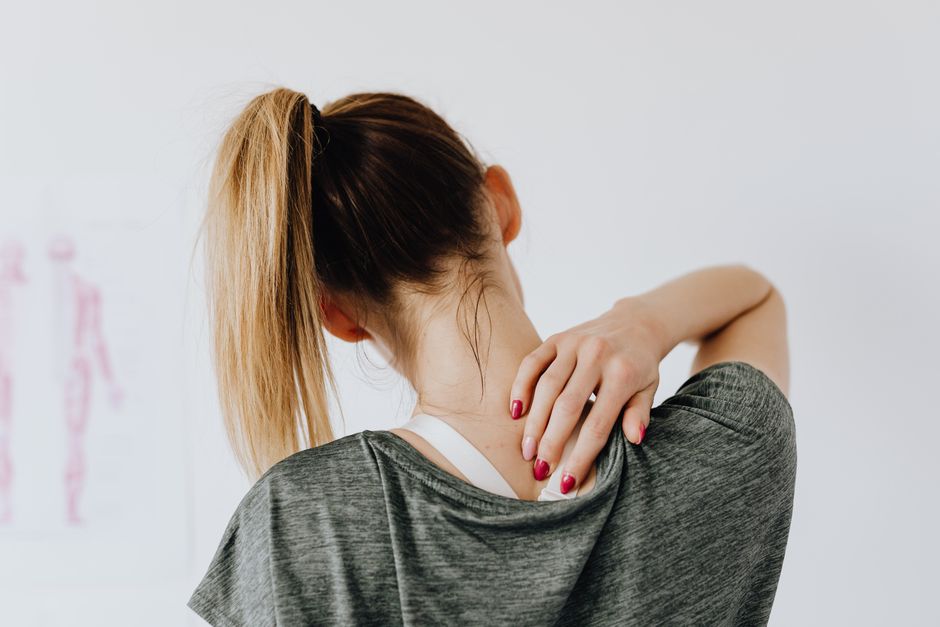
Waking up with a sharp pain on the left side of your neck can ruin your day before it even starts. The pain often worsens at night, making it hard to find a comfortable position and get the rest your body needs to heal. The key is to keep your head and neck aligned with your spine while you sleep, usually by sleeping on your back with a supportive pillow or on your right side if you prefer side sleeping.
Why Does Neck Pain Feel Worse At Night?
Your neck muscles work hard all day to hold your head upright. Your head weighs about 10 to 12 pounds. When you lie down, those muscles should finally relax. But if your pillow is too high, too flat, or too firm, your neck stays bent in an awkward angle for hours.
That sustained position puts strain on the joints, muscles, and nerves in your cervical spine. Blood flow can also slow down during sleep, which makes stiff and sore tissues feel even more painful when you wake up. Inflammation naturally increases at night in many people, which can add to the discomfort.
Left-side neck pain specifically can come from sleeping on your left side with poor support. It can also come from a sudden movement, a fall, or simply from spending hours looking down at a phone or computer during the day. The pain may be muscular, or it may involve the joints between the vertebrae. In most cases, it is not serious and improves within a few days to a couple of weeks.
What Is The Best Sleeping Position For Left-Side Neck Pain?
Sleeping on your back is the best position for neck pain. It keeps your head, neck, and spine in a straight line. Gravity works with you instead of against you. Your neck muscles can fully relax because they do not have to hold your head against the pull of gravity.
If you cannot sleep on your back, sleep on your right side. This keeps your left neck muscles stretched out and supported rather than compressed against the mattress. Side sleeping with a pillow that is too thick forces your neck to bend sideways toward the mattress, which directly aggravates left-side pain if you sleep on your left side.
Stomach sleeping is the worst position for any neck pain. It forces your head to rotate to one side for the entire night. That rotation puts the joints and muscles of your neck under constant strain. If you only fall asleep on your stomach, make a deliberate effort to change positions before you drift off.
How To Choose The Right Pillow
Your pillow is the single most important factor in how your neck feels in the morning. The right pillow depends on your sleep position. There is no one-size-fits-all pillow, despite what marketing claims suggest.
For back sleepers, a thinner pillow is usually better. It should fill the space between your head and the mattress without pushing your head forward. A memory foam pillow with a contoured dip for your head and a raised edge for your neck can help maintain the natural curve of your cervical spine.
For side sleepers, the pillow needs to be thicker. It must fill the distance between your ear and your shoulder. If the pillow is too thin, your head drops toward the mattress and your neck bends sideways. If it is too thick, your head is pushed up and your neck bends the other way. Measure the distance from the side of your head to the outside of your shoulder. That is roughly the pillow height you need.
Some people find relief with a cervical roll placed inside a pillowcase or positioned under the curve of the neck. These rolls provide targeted support to the lordotic curve of the cervical spine. If you try one and feel more pain, stop using it. The right support should feel neutral, not like pressure.





What Position Should You Avoid If Your Neck Hurts On The Left Side?
Avoid sleeping on your left side until the pain improves. This position compresses the already irritated structures on the left side of your neck. It also requires your neck muscles to work harder to keep your head stable during the night.
Avoid using more than one pillow. Stacking pillows creates a ramp that forces your neck into flexion, or a forward bend. That position can increase strain on the discs and joints of the cervical spine. One well-chosen pillow is enough.
Avoid sleeping with your arm under the pillow. This raises your head well above the neutral line and twists your neck. It is a common habit that many people do not realize is causing their morning stiffness.
How To Set Up Your Bed For Better Neck Support
Your mattress matters, but not as much as your pillow. A mattress that is too soft allows your hips and shoulders to sink, which puts your spine out of alignment. A mattress that is too firm creates pressure points that keep you from relaxing fully.
If your mattress is very soft, placing a firm board under it or a firmer mattress topper can help. If it is too firm, a medium-density topper may relieve pressure on your shoulder when you sleep on your side. These adjustments are not a replacement for a good pillow, but they can improve overall spinal alignment.
Consider a body pillow if you are a side sleeper. Placing a body pillow between your knees keeps your hips aligned and reduces rotation in your lower back. That rotation can travel up your spine and affect your neck. A body pillow can also prevent you from rolling onto your stomach during the night.
Should You Use Heat Or Ice Before Bed?
Heat is generally the better choice before sleep. Heat increases blood flow to the area and relaxes tight muscles. A warm shower or a heating pad on a low setting for 15 to 20 minutes before bed can reduce stiffness and make it easier to find a comfortable position.
Ice is more useful in the first 48 hours after an injury. It reduces inflammation and numbs sharp pain. If your neck pain started after a specific incident like a fall or a sudden twist, ice before bed may help. If the pain is from a muscle strain that has been building for days, heat is usually more soothing.
Never sleep with a heating pad on. It can cause burns, even on a low setting. Use it before sleep and remove it when you get into bed.
When Should You See A Doctor For Left-Side Neck Pain?
Most neck pain resolves on its own within a week or two. But some symptoms require medical attention. See a doctor if the pain is severe, if it spreads down your arm, or if you feel numbness or tingling in your left arm or hand.
Seek urgent care if neck pain follows a fall or injury, if it is accompanied by chest pain, shortness of breath, or weakness in your limbs. Neck pain on the left side can occasionally be referred pain from the heart, though this is rare and more likely in people with other heart risk factors. Do not ignore these warning signs.
If the pain has not improved after two weeks of home care, or if it is getting worse, a medical evaluation is appropriate. A doctor can determine whether the pain is muscular, joint-related, or involves a nerve root. Imaging is not needed for most cases of neck pain, but it may be ordered if red flags are present.
What Else Can Help You Sleep With Left-Side Neck Pain?
Gentle stretching before bed can help. Slowly tilt your head toward your right ear and hold for 20 to 30 seconds. Then slowly turn your head to the right and hold. Move within a pain-free range. Never force a stretch. If it hurts, stop.
Over-the-counter pain relievers like ibuprofen or acetaminophen can reduce pain and inflammation and help you sleep. Follow the dosing instructions on the label. Do not take them for more than a few days without consulting a doctor.
Check your sleep hygiene. A cool, dark room and a consistent bedtime help your body relax. Stress and poor sleep can make pain feel worse. Addressing these factors is not a cure, but it can make the pain more manageable while your neck heals.
Frequently Asked Questions
Is it better to sleep on my back or side with neck pain?
Back sleeping is best because it keeps your head, neck, and spine aligned. If you must sleep on your side, choose your right side to avoid compressing the left side of your neck.
How many pillows should I use for neck pain?
Use one pillow that supports the natural curve of your neck. Extra pillows force your head forward and increase strain on your cervical spine.
Can a heating pad help me sleep with neck pain?
Heat applied for 15 to 20 minutes before bed can relax tight muscles and ease stiffness. Never sleep with a heating pad on, as it can cause burns.
How long does left-side neck pain last?
Most neck pain improves within a few days to two weeks. If pain lasts longer than two weeks or worsens, see a doctor for an evaluation.
