
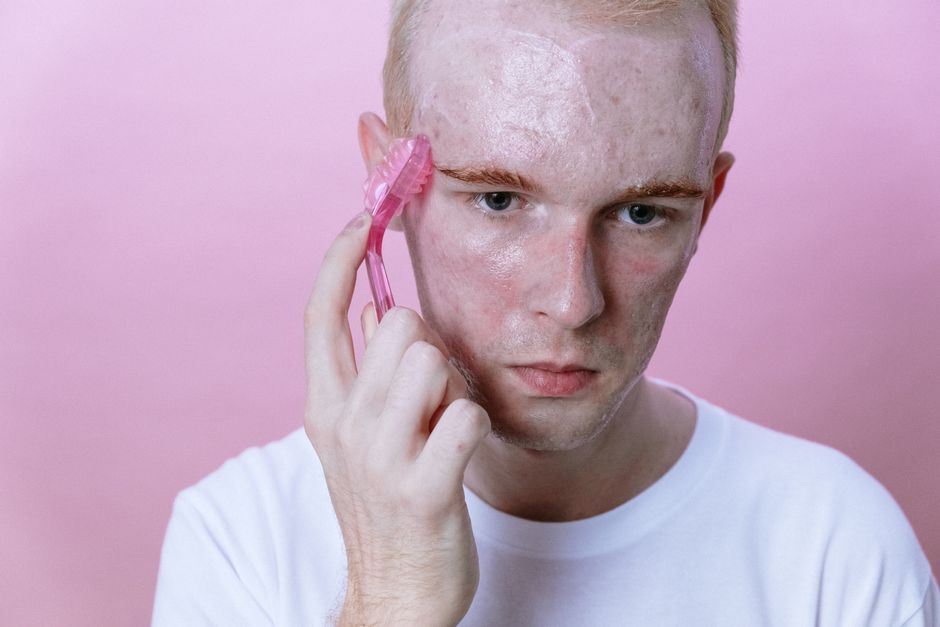
Yes, stress can make acne worse. The link is well documented in dermatology research, and it works through several pathways at once. Stress increases cortisol and other hormones that ramp up oil production, it slows wound healing, and it tends to push people toward behaviors that irritate skin. Stress does not create acne on its own, but it can make existing acne more active and harder to clear.
Does Stress Make Acne Worse? What the Evidence Shows
Acne is not caused by stress alone. It is a disorder of the hair follicle and oil gland, driven mainly by hormones, genetics, oil production, skin cell turnover, and the bacterium Cutibacterium acnes. Stress sits on top of that foundation as a trigger rather than a root cause.
That distinction matters. It means stress management can reduce how active your acne is, but it will not clear acne that is being driven by hormonal or genetic factors. Both things are true at the same time.
What the research consistently shows is a relationship between psychological stress and acne severity. Studies have found that students report more acne flare-ups during exam periods than during lower-stress weeks. Some research has also linked higher perceived stress to more inflammatory acne lesions, though the strength of that relationship varies between studies.
One honest caveat: much of this research relies on self-reported stress and self-reported acne. That introduces bias. People who feel stressed may also notice and report their skin more closely. So the direction of the relationship is well supported, but the exact size of the effect is harder to pin down.
What Happens in the Body When Stress Hits Your Skin
When you experience stress, your body releases cortisol and a group of hormones called androgens. Both of these act directly on sebaceous glands, the oil-producing glands inside your hair follicles.
Higher androgen levels increase sebum production. More oil creates a better environment for C. acnes to multiply and for pores to become blocked. This is the same hormonal pathway involved in acne during puberty and in some cases of adult acne.
Stress also triggers the release of inflammatory signaling molecules, including substance P and various cytokines. These can amplify the redness, swelling, and tenderness around existing pimples. So even if stress does not create a new blocked pore, it can make the ones you already have look and feel worse.
There is another layer worth knowing about. The skin has its own local stress response system, sometimes described as a peripheral equivalent of the hypothalamic-pituitary-adrenal axis. This means skin cells can respond to stress signals somewhat independently of the brain. It is one reason why emotional stress can show up on the skin so quickly.
Stress also slows wound healing. Research on skin barrier recovery has found that psychological stress can delay how fast the skin repairs itself. For acne, that means pimples may take longer to calm down and post-inflammatory marks may linger.
Why Stress-Related Acne Often Shows Up on Your Face and Jawline
Stress-related breakouts do not have one fixed location, but they commonly appear on the lower face, jawline, and chin. This pattern overlaps with hormonal acne, which makes sense because stress and hormones share the same pathways.
That said, location alone is not a reliable way to tell what is causing a breakout. Acne on the jawline can be hormonal, stress-related, or simply where your skin happens to be most prone. Trying to diagnose the cause by location often leads people down the wrong path.
What is more useful is looking at timing. If breakouts cluster around known high-stress periods, that pattern is worth noting. If they are constant regardless of stress levels, other factors are likely doing more of the work.




How Stress Changes the Way You Treat Your Skin
Some of the connection between stress and acne is indirect, and this part is often overlooked. Stress changes behavior, and those behaviors affect skin.
- People under stress tend to sleep less, and short sleep is associated with higher cortisol and more inflammation.
- Stress often increases picking, squeezing, and touching the face, which pushes bacteria deeper and worsens inflammation.
- High-stress periods often come with poorer food choices, more caffeine, and sometimes more alcohol.
- People under stress are more likely to skip their skincare routine or abandon a treatment plan before it has time to work.
None of these behaviors cause acne by themselves, but each one can make it harder to control. The behavioral piece is real and, in practice, often easier to change than the hormonal one.
Does Reducing Stress Actually Improve Acne?
The evidence here is more limited than the evidence that stress worsens acne. Fewer high-quality trials have tested whether stress-reduction interventions directly reduce acne severity, and results have been mixed.
Some studies have looked at relaxation techniques, mindfulness, and psychological support alongside standard acne treatment. A few have reported modest improvements in acne severity or in how people feel about their skin. The studies tend to be small, and it is difficult to separate the effect of stress reduction from the effect of the acne treatment being used at the same time.
What this means practically: stress management is reasonable to include, but it should not replace proven acne treatment. No clinical evidence currently confirms that relaxation alone will clear moderate or severe acne.
Established acne treatments include topical retinoids, benzoyl peroxide, topical or oral antibiotics, and in some cases hormonal therapies or isotretinoin. These are the interventions with the strongest evidence behind them. A dermatologist can match treatment to the type and severity of your acne.
What Actually Helps When Stress and Acne Overlap
The most effective approach addresses both sides at once. Treating the acne without addressing the stress leaves a known trigger in place. Managing stress without treating the acne leaves the underlying condition unaddressed.
On the skin side, consistency matters more than intensity. Acne treatments typically take several weeks to show results, and stopping and starting them is a common reason people see no improvement. A dermatologist can set realistic expectations about how long a given treatment needs before it can be judged.
On the stress side, the basics have the most support:
- Regular sleep at consistent times
- Physical activity, which is associated with lower perceived stress
- Slow breathing or relaxation practices, which can reduce acute stress responses
- Limiting face-touching and picking, especially during high-stress periods
None of these are cures. They are supports. They work best alongside, not instead of, acne treatment.
Does Chocolate or Junk Food Cause Stress Acne?
This is where a lot of viral advice goes wrong. The claim that chocolate or greasy food directly causes acne is not well supported. Some research has looked at high-glycemic diets and dairy in relation to acne, and the findings are mixed rather than settled.
What is more accurate is that stress can change what and how you eat, and that shift may affect your skin indirectly. Blaming a single food oversimplifies a condition with multiple drivers.
Similarly, the idea that stress acne is “just in your head” is wrong. The hormonal and inflammatory pathways involved are measurable and real. But the idea that stress is the only cause is also wrong. Acne is almost always multifactorial.
Frequently Asked Questions
Can stress alone cause acne?
No, stress alone does not cause acne. It can worsen existing acne by increasing oil production and inflammation, but the underlying condition is driven mainly by hormones, genetics, and skin biology.
How long after stress does acne appear?
Breakouts linked to stress often appear within days to a couple of weeks after a stressful period. The exact timing varies by person and is not precisely established in research.
Does reducing stress clear up acne?
Reducing stress may help calm flare-ups, but no clinical evidence confirms it will clear moderate or severe acne on its own. It works best alongside proven acne treatment.
Is stress acne different from hormonal acne?
They overlap significantly because stress affects the same hormones involved in hormonal acne. They are not separate conditions, and both can respond to similar treatment approaches.
