
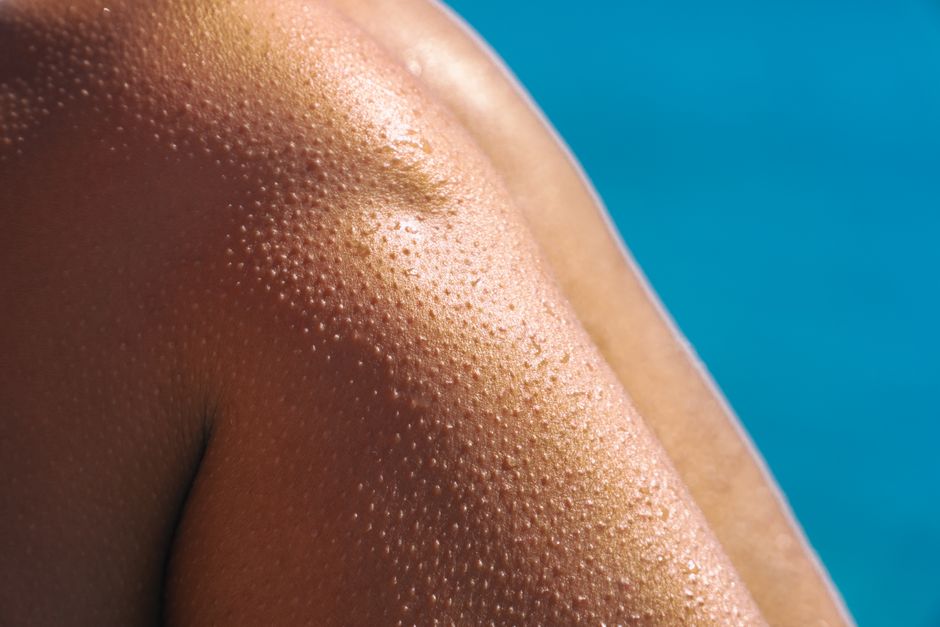
Many people believe sunscreen blocks a tan completely, but the science is more specific. Sunscreen does not stop your skin from tanning entirely; it filters the UV radiation that triggers tanning, allowing some through unless the formula blocks it fully. The real question is how much protection you get, how you apply it, and what that means for your skin’s color and health.
Does SPF Stop You Tanning?
No, SPF does not stop you from tanning. SPF stands for Sun Protection Factor, and it measures protection against UVB rays, the type that causes sunburn. It does not measure protection against UVA rays, which also cause tanning and skin aging.
When you wear SPF 30, it blocks about 97% of UVB rays. SPF 50 blocks about 98%. That remaining 2–3% of UVB, plus most UVA rays, can still reach your skin. That small amount of radiation is enough to trigger melanin production, which is the tan you see.
A tan is actually a sign of skin damage. Your skin produces melanin as a defense mechanism after UV exposure. Even with sunscreen on, if you spend enough time in the sun, your skin can still produce melanin and darken.
How Sunscreen Works on Your Skin
Sunscreen contains active ingredients that absorb, reflect, or scatter UV radiation before it penetrates the skin. Chemical filters like avobenzone and oxybenzone absorb UV rays and convert them into heat. Mineral filters like zinc oxide and titanium dioxide sit on the surface and reflect or scatter UV light.
The level of protection depends on the formulation. A high-SPF sunscreen with broad-spectrum coverage filters more UV radiation than a low-SPF product. But no sunscreen blocks 100% of UV rays. The FDA states that no sunscreen can provide complete protection.
Because some UV always gets through, tanned skin after sunscreen use is common. The tan may develop more slowly than without sunscreen, but it can still occur with prolonged sun exposure.
Why You Still Tan With High SPF Sunscreen
Several factors explain why people tan despite using high-SPF products. The most common reason is under-application. Most people apply far less sunscreen than the amount used in testing. The standard is about 2 milligrams per square centimeter of skin, which equals roughly one full shot glass for your entire body. Most people apply half that amount or less.
When you apply less sunscreen, the actual protection drops significantly. An SPF 30 applied at half the required amount may perform closer to SPF 7. That lower protection allows more UV to reach the skin, which increases the chance of tanning.
Another factor is that SPF only measures UVB protection. UVA rays penetrate deeper into the skin and contribute to tanning and premature aging. Unless a sunscreen is labeled broad-spectrum, it may offer minimal UVA protection. Even broad-spectrum products do not block all UVA rays.
Sweating, swimming, and towel drying also remove sunscreen from the skin. Reapplication every two hours is necessary to maintain protection. Missing reapplication windows allows UV exposure to accumulate, which can lead to a tan.





What SPF Number Actually Means
SPF numbers indicate how long it would take for UVB rays to redden your skin compared to wearing no sunscreen. If your skin starts to redden after 10 minutes without protection, an SPF 15 would theoretically allow you to stay in the sun 15 times longer, or about 150 minutes, before reddening.
This calculation assumes perfect application and no sweating or rubbing. In real-world conditions, protection is always lower. The SPF scale is not linear. SPF 15 blocks about 93% of UVB rays. SPF 30 blocks about 97%. SPF 50 blocks about 98%. SPF 100 blocks about 99%.
The difference between SPF 30 and SPF 50 is small in terms of UVB blockage. However, that small difference matters for people with fair skin who burn easily. For tanning purposes, higher SPF does not guarantee no tan.
UVA vs UVB: Which One Causes Tanning
Both UVA and UVB rays contribute to tanning, but they work differently. UVB rays have shorter wavelengths and affect the outer layer of skin. They cause sunburn and stimulate melanin production as a protective response. This type of tan appears after sun exposure and fades as skin cells shed.
UVA rays have longer wavelengths and penetrate deeper into the dermis. They cause immediate tanning by oxidizing existing melanin and also stimulate new melanin production. UVA rays contribute significantly to skin aging and are present throughout the day, even when UVB levels are lower.
Broad-spectrum sunscreens protect against both UVA and UVB rays. But the SPF number only reflects UVB protection. Two sunscreens with the same SPF can have very different UVA protection levels. This is why reading labels matters if your goal is to minimize tanning.
Some research suggests that UVA exposure may be more responsible for the deeper, longer-lasting tan. UVB triggers the immediate protective tan that fades quickly. If you want to reduce tanning, choosing a sunscreen with strong UVA protection is important.
Can You Tan Through SPF 50 or SPF 100
Yes, you can tan through SPF 50 or even SPF 100. No sunscreen blocks all UV radiation. SPF 50 blocks about 98% of UVB rays. SPF 100 blocks about 99%. The remaining 1–2% of UVB can still reach your skin.
More importantly, the SPF number does not tell you about UVA protection. A sunscreen with SPF 100 but weak UVA filters will still allow significant UVA rays through. Those UVA rays can trigger tanning.
The practical reality is that high-SPF sunscreens delay tanning rather than prevent it. If you stay in the sun long enough, the cumulative UV exposure will eventually trigger melanin production. The tan may take longer to appear, but it can still develop.
Does Spray Tan or Self-Tanner Offer Sun Protection
No. Spray tans and self-tanners provide zero sun protection. The active ingredient in most self-tanners is dihydroxyacetone (DHA), which reacts with amino acids in the outer skin layer to produce a brown color. This color change is purely cosmetic and does not absorb or reflect UV radiation.
People with spray tans can still get sunburned and can still develop a natural tan underneath the cosmetic color. The fake tan does not interfere with melanin production. If you have a spray tan and go in the sun, your skin will respond to UV exposure normally, which means burning or tanning can occur.
Some dermatologists warn that a spray tan may give a false sense of security. You might think you have a base tan that protects you, but you do not. Sunscreen is still necessary.
Does a Base Tan Protect You From Sunburn
A base tan offers minimal protection, roughly equivalent to SPF 3 or less. This level of protection is not meaningful for preventing sunburn or skin damage. The idea that a base tan prevents burning is a myth that leads many people to skip sun protection.
Tanning itself is a sign of DNA damage. The melanin produced during tanning provides some natural protection, but it is far weaker than any commercial sunscreen. Relying on a base tan for protection increases your risk of sunburn and long-term skin damage.
How to Minimize Tanning While in the Sun
If your goal is to avoid tanning entirely, sunscreen alone will not achieve that. The most effective approach combines multiple strategies. Limit direct sun exposure during peak hours, typically between 10 a.m. and 4 p.m. when UV levels are highest. Seek shade whenever possible.
Wear protective clothing, including long sleeves, pants, and a wide-brimmed hat. Clothing provides physical blockage of UV rays and does not wear off like sunscreen. Many outdoor brands sell clothing with a UPF rating, which measures UV protection for fabric.
Apply a broad-spectrum sunscreen with SPF 30 or higher to all exposed skin. Use the recommended amount and reapply every two hours or immediately after swimming or sweating. Even with perfect application, some UV will get through. If you stay outdoors long enough, a tan can still develop.
For people who want the look of a tan without UV exposure, self-tanners are a safe alternative. They provide color without triggering melanin production or causing UV damage.
Is Tanning Ever Safe
No tan is completely safe. Any tan indicates that UV radiation has damaged your skin’s DNA. The body produces melanin to protect against further damage, but the damage itself has already occurred. Over time, accumulated UV damage increases the risk of skin cancer, including melanoma.
The American Academy of Dermatology states that there is no safe way to tan. This includes tanning beds, which emit UVA and UVB radiation. Tanning beds are classified as carcinogenic by the World Health Organization.
If you choose to be in the sun, use sunscreen as directed. But understand that sunscreen reduces risk; it does not eliminate it. A tan after sunscreen use still represents UV damage.
Frequently Asked Questions
Will I still tan if I wear SPF 50?
Yes, you can still tan with SPF 50 because no sunscreen blocks 100% of UV rays. The remaining UV exposure can trigger melanin production over time.
Does higher SPF prevent tanning better?
Higher SPF blocks slightly more UVB rays, but it does not guarantee no tan. SPF 50 blocks about 98% of UVB while SPF 30 blocks about 97%, and UVA exposure still occurs with both.
How long can I stay in the sun with SPF 30 without tanning?
There is no set time because tanning depends on your skin type, UV intensity, and how much sunscreen you applied. Sunscreen delays tanning but does not prevent it indefinitely.
Does SPF protect against UVA rays that cause tanning?
SPF only measures UVB protection. You need a broad-spectrum sunscreen to get UVA protection, but even broad-spectrum products do not block all UVA rays.
