
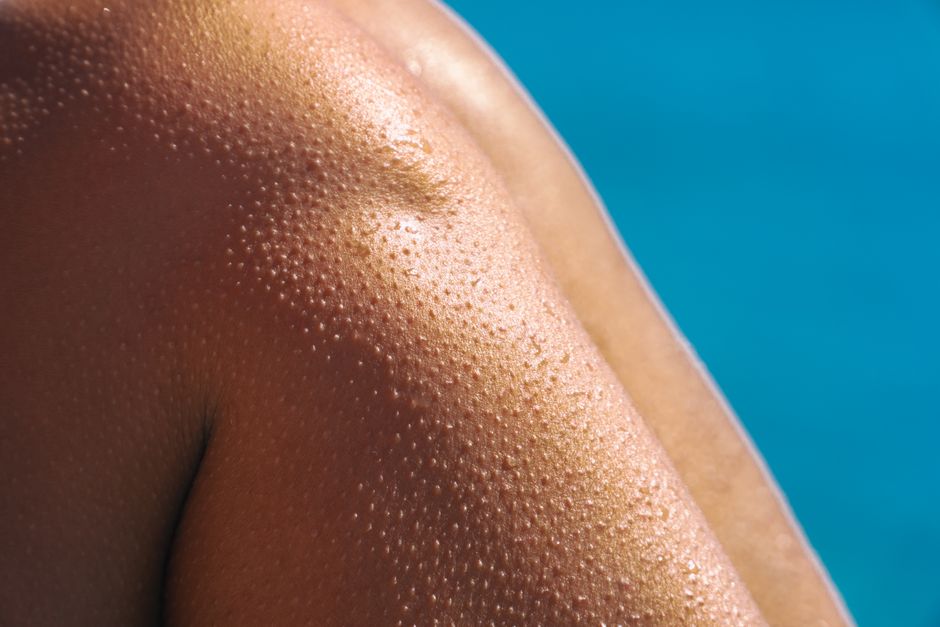
Yes, sunscreen stops most of the tanning process — but only if it is applied correctly and reapplied often enough. SPF blocks or absorbs the ultraviolet radiation that triggers melanin production, which is the pigment change we call a tan. In real-world use, most people apply far less sunscreen than the label assumes, so some tanning can still occur even when you think you are protected.
How Does Sunscreen Actually Prevent a Tan?
A tan is your skin’s response to DNA damage from ultraviolet radiation. When UV hits the skin, specialized cells called melanocytes produce melanin, a pigment that darkens the skin and absorbs some UV before it can damage deeper cells. That darkening is not a sign of health. It is a stress response.
Sunscreen interrupts this process at the source. Chemical sunscreen ingredients absorb UV radiation and convert it into a small amount of heat. Mineral ingredients like zinc oxide and titanium dioxide sit on the skin’s surface and scatter or reflect UV away. Either way, less UV reaches the melanocytes, so less melanin gets produced.
SPF stands for Sun Protection Factor, and it measures protection against UVB rays specifically — the ones that cause burning and drive most tanning. The number tells you how much longer skin takes to burn with the product on compared to no protection at all. SPF 30 does not mean 30 times the protection. It means roughly 30 times longer to reach a burn, assuming you apply it exactly as tested.
UVA rays also contribute to tanning, and SPF alone does not tell you how well a product blocks them. That is why labels say “broad spectrum.” A product without broad-spectrum coverage may let UVA through while blocking UVB, which can still trigger pigment changes.
Does SPF Stop Tanning Completely?
No sunscreen blocks 100 percent of UV radiation. Even a high-SPF product lets a small fraction through. That means some melanin response is possible, especially during long exposure.
The bigger issue is application. Sunscreen is tested in labs at 2 milligrams per square centimeter of skin. Most people apply somewhere between a quarter and half that amount in real life. When you use less, you do not get the SPF on the label. A product labeled SPF 50 might deliver something closer to SPF 15 or lower depending on how thinly it is spread.
Reapplication matters just as much. Sunscreen breaks down with sun exposure, sweat, and swimming. Even “water-resistant” formulas lose effectiveness over time. If you are outside for hours without reapplying, you are accumulating UV exposure that can produce a tan.
So the honest answer is layered. Used correctly, broad-spectrum sunscreen with a high SPF prevents most tanning for most people. Used the way most people actually use it — a thin layer, applied once — it slows tanning but does not stop it.
Why Do Some People Tan Even With Sunscreen On?
Several factors explain this. The first is under-application, as described above. The second is missed areas. Ears, neck, hairline, tops of feet, and the back are commonly skipped or under-covered.
Skin type plays a role too. People with darker skin have more melanin to begin with and their skin responds to UV differently. They may tan rather than burn at doses that would burn lighter skin. But that does not mean they are protected from UV damage. Melanin offers some natural protection, but it is not equivalent to sunscreen, and it does not prevent all DNA damage.
Time of day and location matter. UV intensity peaks in the middle of the day and increases at higher altitudes and closer to the equator. A sunscreen that works well on a cloudy morning may not keep up during strong midday sun over a long afternoon.
Certain medications and skincare ingredients increase photosensitivity, meaning skin reacts more strongly to UV. Some antibiotics, acne treatments, and retinoids fall into this category. If you are using one of these, tanning can happen faster and with less exposure.





Is a Tan Without Burning Still Skin Damage?
Yes. The idea that a “base tan” is safe or protective is one of the most persistent myths in sun safety. Any tan represents melanin production triggered by UV-induced DNA damage. The darkening is the visible result of your skin trying to defend itself.
A tan provides only minimal protection — roughly comparable to a low-SPF sunscreen at best, and the protection it offers is uneven. It does not prevent the deeper structural damage that accumulates over years and contributes to premature aging and skin cancer risk.
There is no such thing as a healthy tan from UV exposure. That includes tans from tanning beds, which emit UV radiation and carry the same fundamental risks. If you want darker skin without UV exposure, self-tanning products that use dihydroxyacetone (DHA) darken the skin’s surface through a chemical reaction with dead skin cells. They do not involve UV and do not provide any sun protection, so sunscreen is still needed.
What SPF Should You Use to Avoid Tanning?
The general public health recommendation is broad-spectrum sunscreen with SPF 30 or higher. SPF 30 blocks about 97 percent of UVB rays when applied correctly. SPF 50 blocks about 98 percent. The difference between them is smaller than most people assume.
Higher SPF does not mean you can apply less or reapply less often. It also does not extend how long you can stay in the sun indefinitely. The main advantage of a higher SPF is a buffer against imperfect application — if you use less than the tested amount, a higher-SPF product gives you more margin.
For tanning prevention specifically, the application habits matter more than the number:
- Apply enough to cover all exposed skin — most adults need about one ounce (a shot glass) for the body
- Reapply every two hours, or sooner after swimming, sweating, or toweling off
- Use broad-spectrum products that cover both UVA and UVB
- Do not skip lips, ears, neck, and the part in your hair
- Seek shade during peak UV hours, typically late morning through mid-afternoon
Sunscreen is one part of sun protection, not the whole strategy. Clothing, hats, and shade reduce UV exposure without relying on correct application.
Does Sunscreen Prevent Vitamin D Production?
This concern comes up often, and the evidence is more nuanced than either side suggests. UVB radiation is what triggers vitamin D synthesis in the skin, and sunscreen does reduce that process. But in real-world conditions, most people do not apply enough sunscreen, or apply it inconsistently enough, for it to cause vitamin D deficiency on its own.
Some research suggests that even when sunscreen is used properly, enough UVB gets through to support vitamin D production in many people. The relationship depends on skin type, latitude, season, and how much time is spent outdoors. People with darker skin, those who live at higher latitudes, and those who spend most of their time indoors are at higher risk of low vitamin D regardless of sunscreen use.
If you are concerned about vitamin D, the more reliable approach is to talk with a healthcare provider about testing and whether supplementation is appropriate for you. Do not reduce sunscreen use as a strategy for vitamin D. The trade-off — increased UV exposure to raise vitamin D — carries skin cancer risk that outweighs the benefit for most people.
Do Tanning Oils or “Tanning Accelerators” Change Anything?
Products marketed as tanning accelerators or tanning oils do not make tanning safer. Many contain ingredients that increase UV penetration or simply provide minimal SPF while encouraging longer sun exposure. Some contain tyrosine or other compounds claimed to boost melanin production. No clinical evidence confirms that these products produce a safer tan or reduce UV damage.
Tanning oils often have very low SPF — sometimes none at all. Using them increases UV exposure and therefore increases DNA damage. The tan they help produce is the same damage response described earlier.
If a product claims to give you a tan without UV exposure, check whether it is a self-tanner using DHA. Those are legitimate cosmetic products that darken the skin’s surface. They are not sunscreen and do not protect you from UV.
Frequently Asked Questions
Does SPF 50 stop tanning completely?
No. SPF 50 blocks about 98 percent of UVB rays when applied correctly, so a small amount of UV still reaches the skin and can trigger some melanin production.
Can you still tan with sunscreen on?
Yes, especially if you apply too little or do not reapply. Most people use less than the tested amount, which reduces the actual protection well below the label number.
Is a tan from sunscreen safer than a tan without it?
There is no safe tan. Any tan reflects UV-induced DNA damage, though using sunscreen reduces the total UV dose and therefore the amount of damage.
What SPF is best for preventing a tan?
Broad-spectrum SPF 30 or higher is the standard recommendation. Application and reapplication habits matter more than choosing a higher number.
