
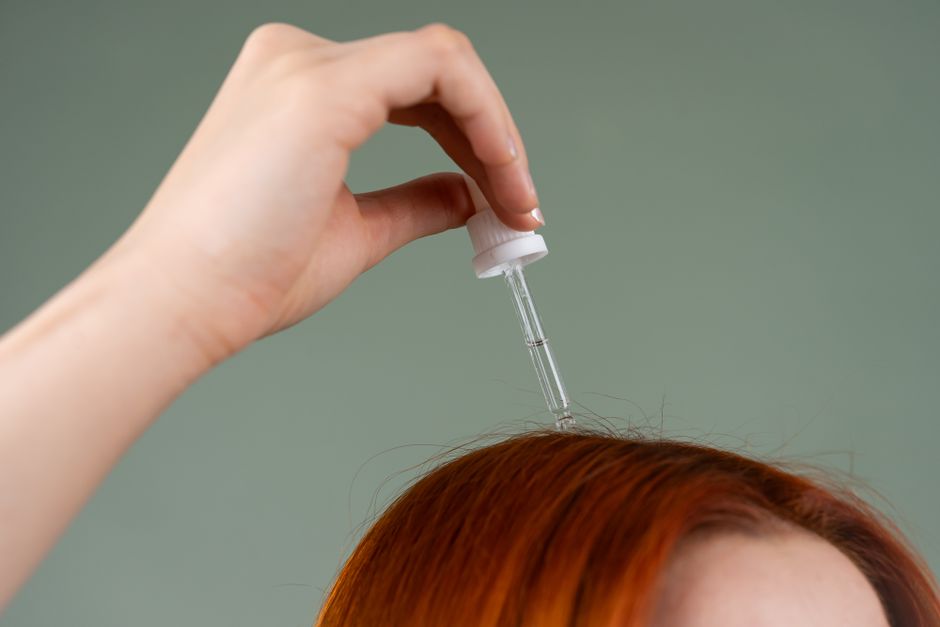
Thinning on top is one of the most common hair concerns for both men and women. The good news is that you are not powerless against it. Treatments that genuinely work target the biological process of hair loss, not just the hair shaft itself. The most effective approach combines FDA-approved topical medications, oral prescription options, and sometimes procedures like platelet-rich plasma (PRP) therapy. Consistency matters more than any single product, and starting early gives you the best chance of keeping the hair you still have.
Why Does Hair Thin On Top First?
Hair on the top of the head is more sensitive to hormones than hair on the sides or back. This is the defining feature of androgenetic alopecia, commonly called male or female pattern baldness.
Inside the hair follicle, an enzyme called 5-alpha-reductase converts testosterone into dihydrotestosterone (DHT). In genetically susceptible follicles, DHT binds to receptors and slowly shrinks the follicle over time. Each hair cycle produces a thinner, shorter hair until the follicle eventually stops producing visible hair altogether. This process does not happen overnight. It takes years, which is why early intervention is critical.
For men, this typically starts with a receding hairline and thinning at the crown. Women usually see widening of the center part with preservation of the frontal hairline. The pattern is a clue to the cause, but a dermatologist can confirm the diagnosis with a simple scalp examination.
What Is The Most Effective Treatment For The Crown?
Minoxidil is the most studied topical treatment for crown thinning. It is available over the counter in 2% and 5% strengths. The 5% foam or solution is generally more effective and is approved for use in both men and women.
Minoxidil works by prolonging the growth phase of the hair cycle and increasing blood flow to the follicle. It does not block DHT. Instead, it stimulates the follicle directly. Visible results typically take 4 to 6 months of twice-daily use. Many people stop because they see no immediate change, but the medication is working beneath the surface.
One important detail: minoxidil causes shedding in the first few weeks. This is a sign the medication is pushing old hairs out to make room for new growth. It is not a reason to stop. If you stop using minoxidil, the new hair will shed within a few months and the follicle returns to its previous state.
Does Finasteride Actually Regrow Hair?
Finasteride is an oral prescription medication that blocks the enzyme responsible for converting testosterone to DHT. By lowering DHT levels in the scalp, it protects vulnerable follicles from further shrinkage.
Clinical studies show that finasteride stops further hair loss in most men who take it consistently. A smaller percentage experience visible regrowth, but the primary benefit is preservation. Think of it as a shield rather than a growth serum. The hair you have today is more likely to be there in five years if you take finasteride daily.
Women who are pregnant or may become pregnant should not handle crushed or broken finasteride tablets. The medication can cause birth defects in a male fetus. For postmenopausal women, low-dose finasteride is sometimes prescribed off-label, but evidence is less robust than in men.
Side effects are uncommon but real. Some men report decreased libido or erectile dysfunction. These effects usually resolve when the medication is stopped. Discuss the risk-to-benefit ratio with your doctor before starting.





What About Low-Level Laser Therapy?
Low-level laser therapy (LLLT) uses red or near-infrared light to stimulate cellular activity in hair follicles. Devices include helmets, combs, and caps that you use at home for 10 to 15 minutes several times per week.
Some clinical trials show modest increases in hair density with LLLT. The mechanism is thought to involve increased blood flow and reduced inflammation in the scalp. The evidence is less robust than for minoxidil or finasteride, but the risk profile is very low.
LLLT is best used as an add-on to proven treatments, not as a replacement. If you are already using minoxidil and finasteride, adding laser therapy may provide incremental benefit. If you are using it alone, expect slower and less dramatic results.
Is Platelet-Rich Plasma (PRP) Worth It?
Platelet-rich plasma therapy involves drawing your blood, spinning it in a centrifuge to concentrate the platelets, and injecting the solution into the scalp. Platelets contain growth factors that may stimulate follicle activity.
PRP is a medical procedure, not an over-the-counter product. It requires multiple sessions, usually three initial treatments spaced a month apart, followed by maintenance sessions every 6 to 12 months. Results vary widely between individuals and between providers.
Some studies show meaningful increases in hair density, while others show minimal change. The evidence is promising but not definitive. Cost is a significant factor, as most insurance plans do not cover PRP for hair loss. If you choose this route, seek a board-certified dermatologist with experience in the procedure.
Are Hair Transplants A Permanent Solution?
A hair transplant moves hair follicles from the back and sides of the scalp, where they are genetically resistant to DHT, to the thinning crown or hairline. The transplanted hair behaves like the donor hair — it grows for life.
Modern techniques, such as follicular unit extraction (FUE), leave minimal scarring and produce natural-looking results. The procedure is expensive, typically ranging from several thousand to over ten thousand dollars depending on the number of grafts.
Hair transplants do not stop the underlying hair loss. You will still need to take finasteride or use minoxidil to protect the non-transplanted hair around the grafted area. Without medical therapy, the native hair continues to thin, creating a patchwork appearance over time.
Good candidates have stable hair loss, adequate donor hair, and realistic expectations. A consultation with a surgeon who specializes in hair restoration is the first step.
What Actually Works For Women?
Women have fewer FDA-approved options than men. Minoxidil 5% is the first-line treatment for female pattern hair loss. It is applied once daily and takes 6 to 12 months to show visible improvement.
Spironolactone is an oral medication sometimes prescribed off-label for women with hormonal hair loss. It blocks androgen receptors and reduces testosterone production. Evidence supports its use, but it is not FDA-approved specifically for hair loss. Blood pressure and potassium levels need monitoring while taking it.
Hair transplants work for women too, but the donor supply is often more limited than in men. Women with diffuse thinning across the entire scalp may not have enough healthy donor hair for a successful transplant.
Hormonal changes from pregnancy, menopause, or thyroid disease can also cause temporary shedding. If your hair loss started suddenly or is accompanied by other symptoms, see a doctor to rule out underlying medical conditions.
What About Natural Remedies And Supplements?
The market is full of supplements claiming to regrow hair. Most have no clinical evidence behind them. A few nutrients are genuinely linked to hair health, but only when you are deficient.
Iron deficiency, low vitamin D, and low ferritin levels are associated with hair shedding. A blood test can identify these deficiencies. Supplementing to correct a confirmed deficiency can improve hair density. Supplementing when your levels are normal will not help.
Biotin is perhaps the most overhyped hair supplement. Biotin deficiency is extremely rare, and supplementation in people with normal levels has not been shown to regrow hair. The same applies to collagen, keratin, and most botanical blends.
Scalp massage and essential oils like rosemary have some small studies suggesting benefit, but the evidence is far weaker than for minoxidil or finasteride. They are safe and inexpensive, but they should not be your only strategy if you want reliable results.
How Long Until You See Results?
Hair grows slowly. The average scalp hair grows about half an inch per month. This biological fact sets the timeline for any treatment.
With minoxidil, expect 4 to 6 months before you notice changes. With finasteride, the effect on DHT levels happens within days, but visible changes take 6 to 12 months. PRP requires multiple sessions before results become apparent. Hair transplants take 8 to 12 months for the final result to fully mature.
Do not judge a treatment before the one-year mark. If you see no improvement or continued thinning after 12 months of consistent use, revisit your plan with a dermatologist.
Frequently Asked Questions
Can you regrow hair on the crown naturally?
No natural remedy has been proven to regrow hair on the crown. Minoxidil and finasteride are the only treatments with strong clinical evidence for crown regrowth.
How long does minoxidil take to work on the crown?
Most people see visible improvement after 4 to 6 months of twice-daily use. Full results typically appear by the 12-month mark.
Will hair loss continue if I stop taking finasteride?
Yes. Hair loss resumes within 6 to 12 months of stopping finasteride, and the hair gained during treatment is typically lost.
Is a hair transplant permanent?
Transplanted hair is permanent because the donor follicles are genetically resistant to DHT. The surrounding native hair will continue to thin without ongoing medical treatment.
