
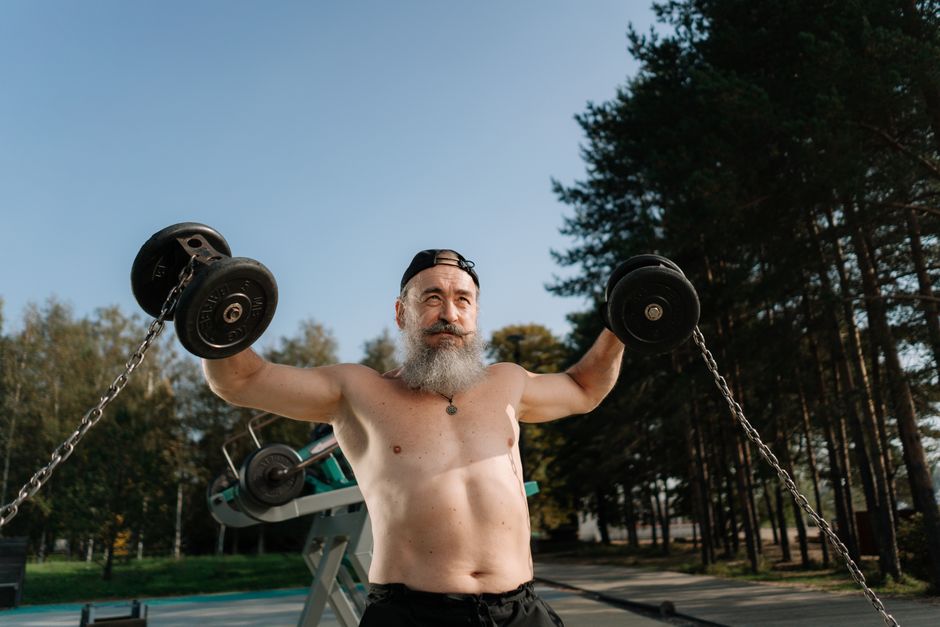
Testosterone directly supports muscle building, but more testosterone does not automatically mean more muscle. The relationship is real, but it is not simple. Your body needs a certain level of testosterone for muscle growth to happen normally. Going above that natural range gives diminishing returns for most people.
Does High Testosterone Directly Cause More Muscle Growth?
Research shows testosterone is an anabolic hormone. That means it tells your body to build tissue, including muscle. It works by increasing protein synthesis inside your muscle cells. More protein synthesis means your muscles can repair and grow larger after exercise.
But here is where the hype falls apart. The Cleveland Clinic reports that normal testosterone levels range from 300 to 1,000 nanograms per deciliter for adult men. Someone at 900 does not automatically have more muscle than someone at 500. The body has a saturation point. Once your testosterone is within a healthy range, adding more does not give you proportional muscle gains.
A study published in the New England Journal of Medicine looked at this directly. Men with very low testosterone who received replacement therapy gained significant muscle mass. But men who already had normal levels and got extra testosterone saw much smaller gains. The biggest effect was in men who started at the bottom.
What Does Research on High Testosterone and Muscle Show?
The most famous study on this topic was done at the University of Texas Medical Branch. Researchers gave healthy young men different doses of testosterone for 20 weeks. Some men received no extra testosterone. Others received doses that pushed them well above normal levels.
Men who received the highest doses gained about 13 pounds of lean body mass on average. That sounds impressive until you look at the details. These men did not exercise. They gained muscle just from having supraphysiological levels of testosterone. But the men who exercised without any extra testosterone gained almost as much muscle through training alone.
Here is the non-obvious part that most articles skip. The study also measured strength gains. Men with high testosterone who did not exercise got bigger but not much stronger. Their muscle size increased faster than their muscle strength. That is an important distinction. Bigger does not always mean stronger if the nervous system is not trained to use that muscle.
Does High Testosterone Matter More Than Training and Diet?
No. Evidence is very clear on this point. Training and diet are far more important than testosterone levels for muscle growth in healthy people. The American College of Sports Medicine states that progressive resistance training and adequate protein intake are the primary drivers of muscle hypertrophy.
Think of it this way. Testosterone is like the fuel pump in your car. A working pump is essential. But a bigger pump does not make you drive faster if you never press the gas pedal. Training is the gas pedal. Diet is the gasoline. Without those two things, high testosterone does very little.
Some people report that they built muscle easily in their twenties but struggle now. They assume their testosterone dropped. That might be true, but the bigger factor is usually that they train less consistently and eat worse than they did years ago. Lifestyle changes explain more of the muscle loss than declining hormones do.
| Factor | Impact on Muscle Growth | How Much Control You Have |
|---|---|---|
| Resistance training | Very high | Complete |
| Protein intake | High | Complete |
| Sleep quality | Moderate to high | Mostly |
| Testosterone (within normal range) | Moderate | Limited |
| Testosterone (above normal range) | Low additional benefit | Low without medical intervention |




What Are the Real Risks of Artificially High Testosterone?
This is where the conversation needs to get honest. Chasing high testosterone for muscle gain comes with serious risks. The Endocrine Society warns that supraphysiological doses of testosterone can cause sleep apnea, acne, and an increase in red blood cell count that thickens the blood. Thick blood raises your risk of stroke and blood clots.
For men, high doses of external testosterone can shut down natural production. The testicles stop making their own testosterone. When you stop taking the hormone, levels can crash below normal. That leaves you with less muscle, low energy, and depression. Recovery of natural production can take months or even years.
Women face different but equally serious risks. High testosterone can cause permanent voice deepening, facial hair growth, and enlargement of the clitoris. These effects are often irreversible even after stopping the hormone.
There is no clinical evidence that over-the-counter testosterone boosters like D-aspartic acid or fenugreek raise testosterone enough to build muscle. The Federal Trade Commission has fined multiple companies for making false claims about these supplements. If a product promises to skyrocket your testosterone and build muscle fast, it is almost certainly lying.
What Actually Increases Testosterone Naturally for Muscle Growth?
Some lifestyle factors do support healthy testosterone production. But the effects are modest. You are not going to turn a 500 level into a 900 level by drinking green tea or doing squats. That is not how the system works.
- Strength training with heavy compound movements. Squats, deadlifts, and bench presses cause a temporary spike in testosterone right after exercise. The spike lasts about 30 to 60 minutes. It does not permanently raise your baseline levels.
- Getting enough sleep. The CDC reports that one in three adults does not get enough sleep. Sleeping less than five hours per night has been linked to lower testosterone levels in several studies. Seven to nine hours is the target.
- Maintaining a healthy body fat percentage. Fat cells convert testosterone into estrogen through an enzyme called aromatase. More body fat means more conversion and less available testosterone. Losing excess fat can help bring levels back up.
- Eating enough fat. Testosterone is made from cholesterol. Very low fat diets have been shown to reduce testosterone levels in some studies. Dietary fat is not the enemy when it comes to hormone health.
These strategies help you stay at the top of your natural range. They do not push you above it. That is the ceiling your genetics set. No supplement, food, or workout routine will break through that ceiling without pharmaceutical intervention.
Common Misconceptions About Testosterone and Muscle
The biggest myth is that high testosterone is the secret to huge muscles. Professional bodybuilders often have testosterone levels in the normal range when they are drug-free. Their muscle comes from years of consistent training, precise nutrition, and genetic luck. Not from naturally high hormones.
Another common belief is that testosterone therapy is a safe shortcut for middle-aged men who want to look younger and more muscular. Testosterone therapy is a medical treatment for people with diagnosed low levels. It is not a cosmetic product. The FDA has not approved it for muscle building in healthy people.
Some people also think that high testosterone alone prevents muscle loss with age. Sarcopenia, the age-related loss of muscle, is caused by multiple factors. Lower physical activity, reduced protein intake, and hormonal changes all play a role. Testosterone decline is just one piece of a larger puzzle.
Frequently Asked Questions
Can high testosterone alone build muscle without exercise?
Research shows it can increase muscle size, but not nearly as much as exercise does. The muscle gained without training is also weaker relative to its size.
What is a good testosterone level for building muscle?
Any level within the normal range of 300 to 1000 ng/dL supports muscle growth when combined with proper training and diet. Higher within normal range does not guarantee better results.
Do testosterone booster supplements work for muscle gain?
There is no strong clinical evidence that over-the-counter testosterone boosters significantly increase muscle mass. Most tested ingredients show no meaningful effect on testosterone levels.
Does low testosterone prevent muscle growth completely?
Low testosterone makes muscle growth harder but not impossible. Consistent resistance training and adequate protein still produce gains, though the rate of growth may be slower.
