
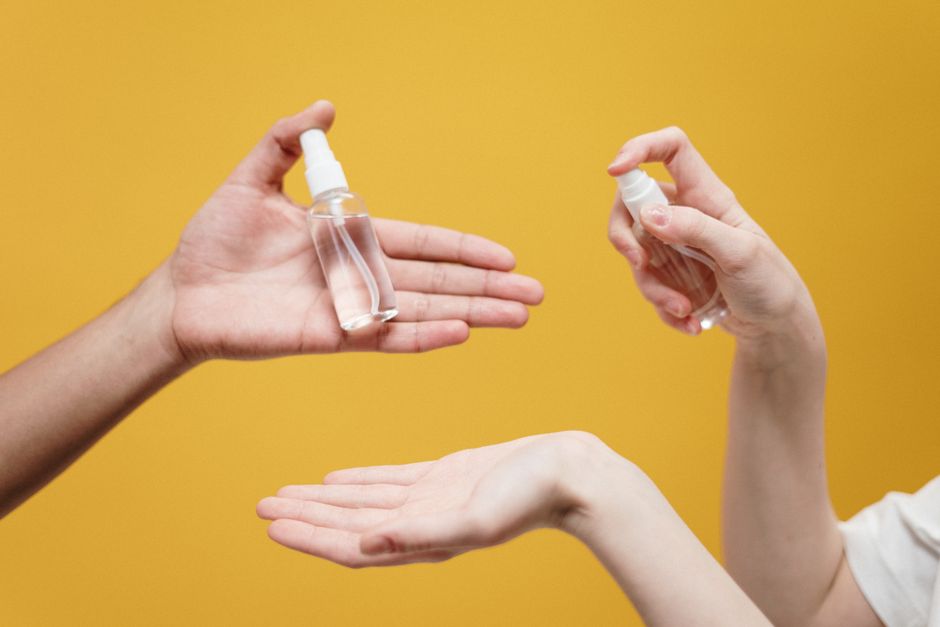
Yes, hand sanitizer can kill the flu virus on your hands, but it is not a substitute for washing with soap and water. The flu virus has a fatty outer layer, and alcohol-based sanitizers break that layer apart, which destroys the virus. This works best when your hands are not visibly dirty or greasy. For the best protection during flu season, you should use a hand sanitizer with at least 60% alcohol and wash your hands with soap and water whenever they are visibly soiled.
How Does Hand Sanitizer Actually Kill the Flu Virus?
The flu virus is what scientists call an enveloped virus. It has a protective outer membrane made of lipids, which are essentially fats. This fatty envelope is crucial for the virus to infect your cells.
Alcohol, specifically ethanol or isopropanol, is a solvent. When you rub an alcohol-based sanitizer on your hands, the alcohol dissolves that fatty membrane. Without that protective envelope, the virus falls apart and can no longer infect you. This process happens quickly, usually within seconds of applying the sanitizer.
This is why hand sanitizers are so effective against the flu specifically. Viruses that do not have this fatty envelope, like norovirus, are much harder to kill with alcohol. The flu virus is vulnerable to this simple chemical reaction.
What Percentage of Alcohol Do You Need?
Not all hand sanitizers are created equal. The concentration of alcohol is the single most important factor in whether the product will actually kill the flu virus.
Health authorities and clinical guidelines consistently state that you need a hand sanitizer with at least 60% alcohol to effectively kill germs like the flu virus. Products with less than 60% alcohol simply do not work reliably. They may reduce the number of germs, but they will not consistently kill the flu virus.
Look for the active ingredient on the label. The most common and effective are:
- Ethanol (ethyl alcohol)
- Isopropanol (isopropyl alcohol)
If the label lists a different active ingredient, like benzalkonium chloride or triclosan, the evidence for killing the flu virus is much weaker. Stick with alcohol-based products if your goal is flu prevention.
When Does Hand Sanitizer Fail Against the Flu?
Hand sanitizer is a powerful tool, but it has clear limits. Understanding these limits is just as important as knowing how to use it.
Visible dirt and grease block the alcohol. If your hands are visibly dirty, covered in food, or greasy, the alcohol cannot reach the virus particles embedded in that grime. The sanitizer simply sits on top of the dirt. In this situation, soap and water is the only effective option. The friction of rubbing your hands together with soap physically lifts the dirt and germs off your skin, and the water rinses them away.
Hand sanitizer also does not remove certain chemicals or heavy metals, but that is a separate concern from flu prevention. For the flu, the primary failure is when hands are soiled.
Another factor is time and coverage. You need to apply enough sanitizer to cover every surface of both hands. Then you need to rub your hands together until the sanitizer is completely dry. This usually takes about 20 seconds. If you stop rubbing early, the alcohol has not had enough contact time to kill the virus completely.





Does Hand Sanitizer Work Better Than Hand Washing?
This is a common question, and the answer depends on the situation. For the flu virus, both methods work well when done correctly.
Soap and water is the gold standard. It works through a different mechanism. Soap molecules have a structure that allows them to lift the fatty envelope of the virus off your skin and break it apart. The physical scrubbing action dislodges the virus, and running water carries it away.
Hand sanitizer is more convenient. It is faster, does not require a sink, and is easy to carry. It is an excellent option when you are on the go, at work, or in a public space.
However, hand washing is always preferred when your hands are visibly dirty. It is also the better choice after using the bathroom, because soap and water are more effective at removing certain types of germs that cause diarrhea, like norovirus or Clostridioides difficile.
For routine flu prevention when your hands look clean, hand sanitizer is highly effective. For overall hygiene, soap and water wins. The best strategy is to use both appropriately.
Does Hand Sanitizer Prevent You From Getting the Flu?
This is where the evidence requires careful interpretation. Hand sanitizer kills the flu virus on your hands, but it does not guarantee you will not get sick.
You can catch the flu in several ways. The primary way is by breathing in respiratory droplets when an infected person coughs, sneezes, or talks. Hand hygiene does nothing to stop this route of transmission.
You can also get the flu by touching a contaminated surface and then touching your eyes, nose, or mouth. This is called fomite transmission. Hand sanitizer is highly effective at breaking this chain of transmission. By killing the virus on your hands, you reduce the chance of self-inoculation.
Research consistently shows that good hand hygiene, including the use of alcohol-based hand sanitizers, reduces the overall risk of respiratory infections. However, it is not a perfect shield. The flu is highly contagious, and airborne transmission is a major factor. Hand sanitizer is one layer of protection, not the only one.
How to Use Hand Sanitizer Correctly
Most people do not use enough sanitizer or do not rub it in long enough. The process is simple, but it must be done thoroughly.
Apply the product to the palm of one hand. Read the label to see how much to use, but generally, you want a generous squirt or pump. You need enough to cover the entire surface of both hands.
Rub your hands together, covering all surfaces:
- Palms
- Backs of hands
- Between fingers
- Around and under fingernails
- Thumbs
Keep rubbing for about 20 seconds, or until your hands are completely dry. Do not wipe the sanitizer off with a towel or rinse your hands with water before it dries. The drying process is part of the killing mechanism.
If your hands feel dry or sticky after using sanitizer, that is normal. You can use moisturizer after the sanitizer has dried, but not before.
What About Natural or Non-Alcohol Sanitizers?
The market is full of hand sanitizers that claim to be natural, plant-based, or free of harsh chemicals. Many of these do not contain alcohol.
The evidence for non-alcohol sanitizers against the flu virus is weak. Some use benzalkonium chloride, which has some antibacterial properties, but studies on its effectiveness against enveloped viruses like the flu are limited and inconsistent. Other products rely on essential oils or botanical extracts. No clinical evidence currently confirms that these ingredients reliably kill the flu virus.
If you choose a non-alcohol product for other reasons, understand that you may not be adequately protected against the flu. The most honest position is that alcohol-based sanitizers with at least 60% alcohol are the only type with strong, consistent evidence of killing the flu virus on your hands.
Is Hand Sanitizer Safe to Use Every Day?
Yes, for most people, daily use of alcohol-based hand sanitizer is safe. The alcohol evaporates quickly and does not accumulate in your body. It is not absorbed through the skin in significant amounts.
Repeated use can dry out your skin. This is a common complaint. The alcohol strips away the natural oils from your skin’s surface. Using a moisturizer regularly can help counteract this. Some people develop contact dermatitis from frequent use, which causes redness, itching, or cracking.
If you have a skin condition like eczema, frequent use of hand sanitizer can make it worse. In this case, prioritizing hand washing with a gentle cleanser and moisturizing after may be a better strategy.
One critical safety point: hand sanitizer is flammable and should be kept away from open flames. It is also toxic if swallowed. Keep it out of reach of young children, and do not leave it in a hot car where the bottle could burst.
Frequently Asked Questions
Can hand sanitizer kill the flu virus instantly?
Alcohol-based hand sanitizer kills the flu virus within seconds when applied correctly. You must use enough product and rub your hands together until they are completely dry.
Is 70% alcohol hand sanitizer good for the flu?
Yes, 70% alcohol is effective against the flu virus. It is within the recommended range of 60% to 95% alcohol concentration.
Should I use hand sanitizer or wash my hands to prevent the flu?
Wash your hands with soap and water when they are visibly dirty or greasy. Use hand sanitizer when your hands look clean and you do not have access to a sink.
Can hand sanitizer expire and stop working?
Yes, hand sanitizer can lose potency over time. Check the expiration date on the bottle, and replace it if the alcohol content has evaporated or the product has changed consistency.
