
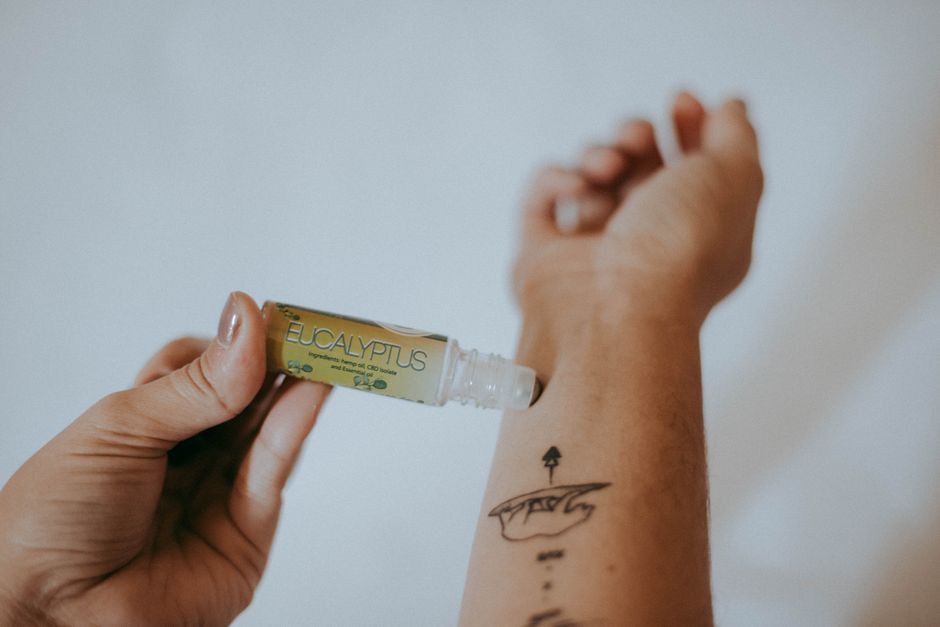
Eucalyptus oil can slow mold growth, but it does not reliably kill mold. Laboratory studies show that eucalyptus oil and its main compound, eucalyptol, have antifungal activity against some mold species. That activity generally stops mold from spreading rather than destroying it. On porous surfaces like drywall, wood, or grout, eucalyptus oil usually leaves living mold behind.
The distinction matters because “inhibit” and “kill” are not the same thing. A product that inhibits mold may make a stained surface look cleaner while the mold’s root-like structures stay alive beneath the surface. When moisture returns, so does the mold. For real removal on building materials, eucalyptus oil is not a substitute for proven methods.
Does Eucalyptus Kill Mold or Just Inhibit It?
Eucalyptus inhibits mold more than it kills it. That is the honest summary of what the research shows.
Eucalyptol, also called 1,8-cineole, is the compound that gives eucalyptus its strong smell and most of its antimicrobial activity. In lab settings, it disrupts the cell membranes of certain fungi and can slow or stop their growth. Some studies report that eucalyptus oil reduced growth of common indoor molds, including some Aspergillus and Penicillium species.
But those results come from controlled lab conditions. Researchers apply concentrated oil directly to mold in a dish. Real homes are different. Mold grows into porous materials, hides behind paint, and sits inside wall cavities. A spray of diluted oil on the surface does not reach any of that.
There is also a gap in the evidence. Most studies test eucalyptus oil against mold in a petri dish, not on drywall or wood in a real building. No large human studies show that eucalyptus oil removes mold from a home effectively. That does not mean it does nothing. It means the evidence is limited and mostly laboratory-based.
How Does Eucalyptus Oil Affect Mold?
Eucalyptus oil works on mold by attacking the fungal cell membrane. That is a well-established mechanism for many plant oils.
The cell membrane is the outer barrier that controls what enters and leaves a fungal cell. Compounds like eucalyptol slip into that membrane and disrupt it. When the membrane loses its structure, the cell cannot regulate its internal environment and its growth stalls or stops.
This is why eucalyptus oil can look effective in a dish. Direct contact with a high concentration of oil damages the mold. But several things weaken that effect in a real room:
- Dilution. Most homemade sprays mix a small amount of oil with water and sometimes alcohol. The concentration that reaches the mold is far lower than in lab tests.
- Contact time. The oil has to sit on the mold long enough to act. On a vertical wall, it runs off.
- Reach. Mold hyphae (the branching threads) grow into porous material. Surface oil cannot touch what is inside.
- Spores. Mold releases spores into the air. A surface spray does not remove airborne spores or stop them from settling elsewhere.
So the mechanism is real, but the practical effect on a mold problem in a building is limited. Inhibiting growth on a surface is not the same as clearing an infestation.
Is Eucalyptus Oil an Effective Mold Remover?
For cleaning mold off hard, non-porous surfaces, eucalyptus oil may help as part of a cleaning routine. For eliminating mold from a home, it is not an effective standalone solution.
Here is the practical problem. Mold is not just what you see. The visible patch is often the fruiting body of a network that has grown into the material beneath. Wiping the surface with oil may remove the stain and slow regrowth for a while. It does not remove the network.
Porous materials are the hardest case. Drywall, ceiling tiles, carpet, and untreated wood soak up moisture and give mold a place to grow inside. Once mold is established in these materials, cleaning the surface rarely solves it. In many cases the affected section has to be removed and replaced. No oil, including eucalyptus, changes that.
There is a second issue that gets overlooked. Even mold that is no longer growing can leave behind proteins and particles that trigger reactions in sensitive people. Killing or inhibiting the mold does not necessarily remove those particles. Physical removal is what clears them.





What Actually Removes Mold From a Home?
The most reliable way to deal with mold is to remove it physically and fix the moisture that let it grow. Cleaning products support that process. They do not replace it.
Established guidance from public health and environmental agencies generally points to the same core steps:
- Find and fix the water source. Leaks, condensation, and high humidity are what let mold grow. Without fixing moisture, mold returns no matter what you clean with.
- Dry the area within 24 to 48 hours of a water event. Mold can begin growing on wet materials in that window.
- Remove porous materials that are moldy and cannot be cleaned, such as soaked drywall and carpet.
- Clean hard surfaces with detergent and water, then dry them completely.
- Keep indoor humidity low. Many guides suggest keeping indoor humidity below about 50 percent, though the exact target can vary by climate and home.
- Use ventilation and, when needed, a dehumidifier or air conditioner to control moisture.
For small areas, cleaning with soap and water is often enough. For larger areas, or mold inside walls or HVAC systems, professional help is the safer route. Disturbing a large mold colony can release a lot of spores and particles into the air.
One clarification worth making: bleach is widely used on mold, but it works best on non-porous surfaces. On porous materials, bleach mainly affects the surface and does not reach mold growing inside. It also does not prevent mold from coming back if moisture remains.
Does Eucalyptus Oil Have Other Uses?
Eucalyptus oil has well-documented uses beyond mold. It is a common ingredient in cough and cold products, chest rubs, and steam inhalations.
Eucalyptol acts as an expectorant and gives a cooling, clearing sensation in the airways. Some over-the-counter products use it for that reason. These uses are separate from any mold-killing claim, and the evidence for them varies by product and purpose.
Safety matters here. Eucalyptus oil is not safe to swallow, and it should not be applied to the face or chest of infants and young children. Ingesting even small amounts can cause serious harm, and topical use near the nose of a young child has been linked to breathing problems. Keep it out of reach of children and pets. Cats in particular are sensitive to many essential oils.
For mold specifically, none of these other uses change the picture. A product being useful for congestion does not make it an effective mold treatment.
What Is the Bottom Line on Eucalyptus and Mold?
Eucalyptus oil inhibits mold. It does not reliably kill it, especially on the porous surfaces where mold tends to take hold.
Lab studies show real antifungal activity, and that is worth acknowledging. But lab activity does not translate into a working solution for a mold problem in a building. The evidence for eucalyptus oil as a mold remover in real homes is limited, and no large human studies confirm it works.
If you have a small patch of surface mold on a hard surface, cleaning it with detergent and water and drying the area is a reasonable approach. Eucalyptus oil may play a minor role in a cleaning routine, but it is not the main tool. If you have a larger problem, recurring mold, or mold in porous materials, the priority is removing the mold and fixing the moisture. That is what actually solves it.
Frequently Asked Questions
Does eucalyptus oil kill mold spores?
It can damage some mold spores on direct contact in lab conditions, but it does not remove spores from the air or from a room. No large human studies confirm it clears spores in a real home.
Can I use eucalyptus oil to clean mold off walls?
It may help slow regrowth on hard, non-porous surfaces as part of a cleaning routine, but it does not remove mold that has grown into drywall or paint. Cleaning with detergent and water and fixing the moisture source is more reliable.
Is eucalyptus oil safer than bleach for mold?
Eucalyptus oil is gentler on some surfaces and has fewer harsh fumes, but it is also less effective at removing mold from porous materials. Neither product fixes the moisture problem that causes mold to return.
Why does mold come back after I clean it?
Mold returns when moisture is still present, because the water source was never fixed or the mold grew into material that surface cleaning cannot reach. Removing the moisture and the affected material is what stops it from coming back.
