
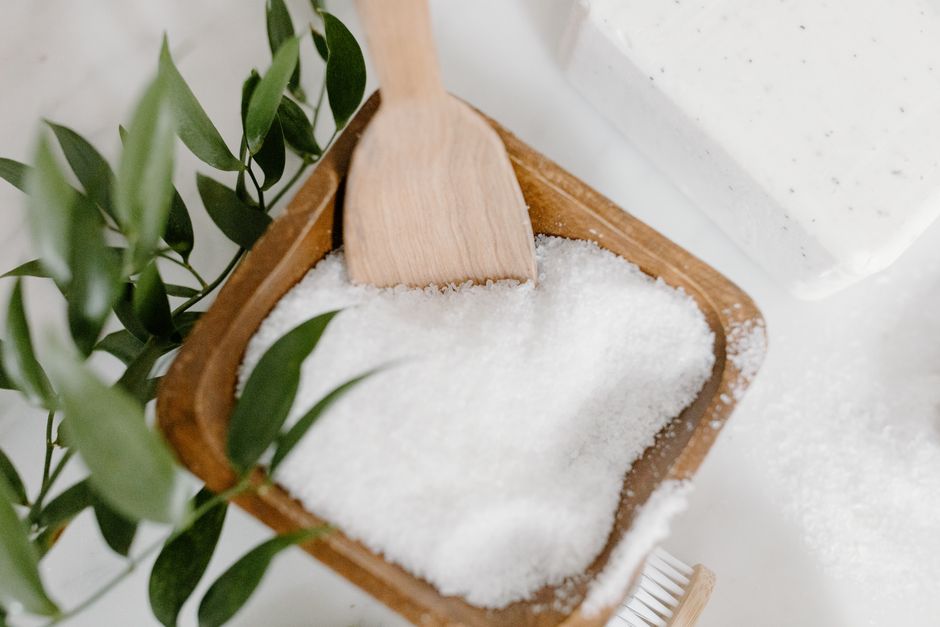
Epsom salt does not kill fungus. This is the plain answer, and it holds for the fungi that cause athlete’s foot, nail infections, and ringworm, as well as for mold around the home. Epsom salt is magnesium sulfate, a mineral compound with no antifungal activity. Soaking in it may ease itching or soften skin, but it does not treat the infection itself.
That gap between what Epsom salt does and what people hope it does is where most confusion starts. The salt can feel soothing. Soothing is not the same as killing.
What Is Epsom Salt and What Does It Actually Do?
Epsom salt is a naturally occurring mineral made of magnesium, sulfur, and oxygen. It was named after a town in England where the compound was first found in mineral springs. It is not a salt in the same way table salt is. Chemically, it is magnesium sulfate, and that difference matters.
When you dissolve Epsom salt in warm water, the magnesium and sulfate ions separate and float freely in the liquid. Some of those ions can pass through the outer layers of your skin in small amounts. This is why Epsom salt baths are often used for muscle soreness and why they can make skin feel softer.
What Epsom salt does not do is produce any compound that attacks fungal cells. It has no antifungal properties. It does not disrupt fungal cell walls, block fungal reproduction, or create an environment where fungus cannot survive. When you soak a fungal infection in Epsom salt water, you are soaking it in a mineral solution that fungi tolerate just fine.
The soothing effect is real. Warm water relaxes tissue and can temporarily reduce itching. Epsom salt can draw some fluid out of swollen tissue, which may ease discomfort. But easing a symptom is not the same as treating a cause.
Does Epsom Salt Kill Fungus the Science Explained
No. There is no established scientific evidence that Epsom salt kills any type of fungus. This includes the dermatophytes that cause skin and nail infections and the yeasts that cause other common conditions.
Fungi are resilient organisms. Many species survive in harsh conditions, including high salt environments. In food preservation, salt is used to limit bacterial growth, but many molds and yeasts tolerate salt concentrations that would stop bacteria. Epsom salt, which is a different compound from table salt, offers even less of a challenge to fungi.
To kill fungus, you generally need one of three things: an antifungal drug, high heat, or a chemical disinfectant. Epsom salt is none of these. It does not appear on any list of antifungal agents used in medicine, agriculture, or home disinfection.
Some people point to the sulfur content in Epsom salt as a reason it might work. Sulfur does have antifungal uses in certain forms. But the sulfur in Epsom salt is bound to magnesium as sulfate, and it does not behave like the sulfur compounds used in antifungal treatments. This is a case where a chemical element appears in two very different forms, and only one of them has antifungal action.
Can Epsom Salt Help With Athlete’s Foot or Nail Fungus?
It may reduce itching and soften thickened skin, but it will not clear the infection. That distinction is important because untreated fungal infections tend to spread and can become harder to treat over time.
Athlete’s foot is caused by dermatophyte fungi that live on the outer layer of skin. These fungi feed on keratin, the protein that makes up skin, hair, and nails. Soaking your feet in Epsom salt water might feel good and might temporarily reduce scaling. It will not reach the deeper layers where the fungus is actively growing.
Nail fungus is even more stubborn. The fungus lives under the nail plate, which is a hard barrier. Topical treatments struggle to penetrate it. Epsom salt soaks cannot reach the infection at all. Nail fungus often requires prescription oral medication or medicated nail lacquers, and treatment can take months because nails grow slowly.
There is a real risk in relying on Epsom salt for these conditions. While you soak and wait, the infection can spread to other toes, other nails, or other parts of the body. It can also spread to other people through shared floors, towels, or shoes.



Does Epsom Salt Kill Mold or Fungus in the Home?
No. Epsom salt is not a disinfectant and is not recommended for mold removal. Household mold is a fungus, and it requires actual removal, not mineral soaks.
Mold grows on surfaces where moisture is present. To address it, you need to remove the mold itself and fix the moisture problem that allowed it to grow. Common recommendations involve cleaning affected surfaces and improving ventilation. Epsom salt does not play a role in this process.
Some viral cleaning tips suggest Epsom salt mixtures for mold. No research supports these claims. If mold covers a large area or keeps returning, the issue is usually a water problem that needs professional attention.
What Actually Kills Fungus?
Different fungal infections call for different treatments. What works for one may not work for another, and some treatments require a prescription.
- Antifungal medications: Drugs like terbinafine, clotrimazole, and miconazole are designed to target fungal cells. Some are available over the counter for skin infections. Others, especially for nail infections, require a prescription.
- Heat: High temperatures can kill many fungi. This is why washing infected clothing and bedding in hot water helps prevent reinfection.
- Drying: Fungi need moisture. Keeping skin dry and allowing shoes to dry between wears reduces the conditions fungi need to grow.
- Proper cleaning: For surfaces, removing the fungus physically and addressing moisture is more effective than any mineral soak.
For skin and nail infections, an antifungal medication is the standard approach. For mold in the home, removal and moisture control are the priorities. Epsom salt does not appear in either category.
Why Do People Think Epsom Salt Works?
Because it feels like it works. That is the simplest explanation.
When you soak an itchy, irritated foot in warm Epsom salt water, the itching often calms down. The skin feels softer. Swelling may decrease. These are real effects, and they happen quickly. It is easy to interpret relief as healing.
But symptom relief and infection clearance are different things. A fungal infection can continue to grow even when it feels less irritating. The itching may return as soon as the soak wears off.
There is also a long tradition of Epsom salt use in home remedies. It has been used for decades for muscle aches, constipation, and skin complaints. That history gives it an air of credibility. But traditional use is not the same as proven antifungal action.
Are There Any Risks to Using Epsom Salt for Fungus?
The main risk is delay. If you treat a fungal infection with Epsom salt instead of an antifungal, the infection has time to get worse. Nail fungus can spread to multiple nails. Athlete’s foot can spread to the hands, groin, or other skin areas.
There are also direct risks from Epsom salt soaks themselves. People with diabetes or nerve damage in the feet may not feel water that is too hot, which can lead to burns. Open wounds or broken skin should not be soaked in Epsom salt water without medical guidance. And for people with kidney disease, absorbing too much magnesium can be dangerous.
Epsom salt soaks are generally considered low risk for healthy adults when used occasionally. But low risk is not the same as effective. And for anyone with a chronic condition or a worsening infection, a soak is not a substitute for medical care.
When to See a Healthcare Provider
If a fungal infection does not improve with standard over-the-counter treatment, or if it spreads, it is time to get medical help. Signs that warrant attention include spreading redness, swelling, pain, or discharge. People with diabetes should be especially cautious about foot infections and should not rely on home remedies.
Nail fungus in particular often needs prescription treatment. The earlier it is addressed, the easier it usually is to manage. Waiting and hoping a soak will work tends to make the problem harder to solve.
Frequently Asked Questions
Does Epsom salt kill athlete’s foot fungus?
No. Epsom salt has no antifungal properties and does not kill the fungi that cause athlete’s foot. It may temporarily reduce itching, but it will not clear the infection.
Can I use Epsom salt to treat nail fungus?
No. Epsom salt soaks cannot reach the fungus living under the nail plate. Nail fungus usually requires prescription treatment, and Epsom salt is not an effective substitute.
Is Epsom salt an antifungal?
No. Epsom salt is magnesium sulfate, a mineral compound with no antifungal activity. It does not appear on any list of antifungal agents used in medicine or home disinfection.
What kills fungus naturally?
Few natural remedies have strong evidence for killing fungus. Keeping skin dry, washing items in hot water, and using proven antifungal medications are the most reliable approaches.
