
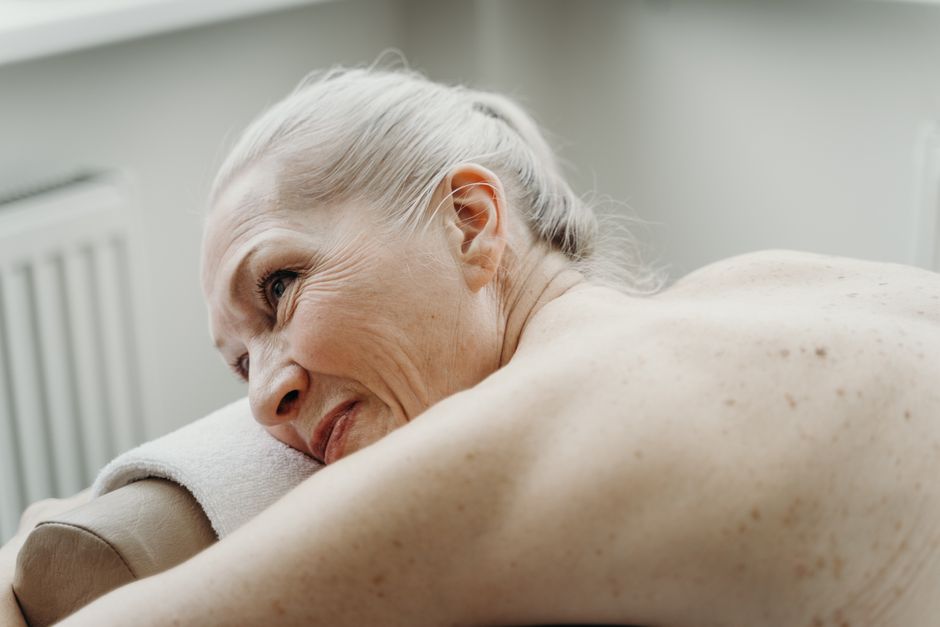
Yes, dry skin can make you look older than you are. When your skin lacks water and oil, it loses plumpness, fine lines look deeper, and light reflects off your face in a dull, uneven way. The good news is that most of this is reversible with the right routine.
Does Dry Skin Make You Look Older And How To Fix It?
Dry skin doesn’t create wrinkles the way sun damage or aging does. What it does is make the wrinkles you already have look more obvious.
Here’s the mechanism. Healthy skin holds water in its outer layer, the stratum corneum. That water keeps the surface smooth and slightly plump. When water content drops, the skin surface develops tiny cracks and rough patches. Those rough patches scatter light instead of reflecting it evenly, which is why dry skin often looks dull and gray.
At the same time, the skin loses some of its cushioning. Fine lines around the eyes and mouth that are barely visible on hydrated skin become more noticeable. This is a temporary effect, not permanent damage.
There’s an important distinction here. Dry skin is a condition of the skin barrier. Dehydrated skin is a condition of water content. They overlap but aren’t the same thing. Someone with oily skin can still have dehydrated skin. Someone with dry skin can have well-hydrated skin if they’re using the right products.
Fixing the appearance starts with fixing the barrier. That means replacing what’s missing and stopping what’s stripping it away.
What Actually Happens to Skin as It Gets Drier?
The skin barrier is a layered structure of skin cells surrounded by lipids — fats like ceramides, cholesterol, and fatty acids. These lipids act like mortar between bricks. When the mortar is intact, water stays inside and irritants stay outside.
When the barrier breaks down, two things happen at once. Water escapes more easily, a process called transepidermal water loss. And irritants get in more easily, which triggers inflammation. That inflammation can cause redness, flaking, and itching.
Several things damage the barrier:
- Harsh cleansers that strip natural oils
- Hot water, which dissolves lipids faster than warm water
- Low humidity, especially in winter or in air-conditioned rooms
- Sun exposure, which damages the lipids and the skin cells themselves
- Aging, which naturally reduces lipid production and oil gland activity
- Certain medications, including some acne treatments and diuretics
- Medical conditions like eczema, psoriasis, and thyroid disorders
The appearance problem follows directly from the barrier problem. Rough texture, dullness, and more visible lines are all downstream effects of a compromised barrier.
What Ingredients Actually Help?
Three categories of ingredients have solid evidence behind them for improving dry skin: humectants, emollients, and occlusives. They work in different ways, and most good moisturizers combine all three.
Humectants pull water into the skin. Glycerin is the most studied and one of the most effective. Hyaluronic acid also works this way, though its ability to penetrate deeply is debated. Other examples include urea and panthenol.
Emollients fill in the gaps between skin cells, making the surface smoother. Think of them as spackle. Common ones include fatty acids, ceramides, and squalane.
Occlusives sit on top of the skin and physically block water from escaping. Petrolatum is the most effective occlusive available. It reduces water loss by over 98 percent in laboratory testing. Mineral oil and dimethicone also work this way.
Ceramides deserve special mention. They make up a significant portion of the skin’s natural lipid barrier. Research has consistently shown that moisturizers containing ceramides can improve barrier function and reduce water loss. They’re particularly useful for people with eczema or very dry skin.
Niacinamide is another ingredient with decent evidence. It supports ceramide production and can improve the skin’s barrier over time. It’s generally well tolerated, though some people experience irritation at higher concentrations.





Does Drinking More Water Fix Dry Skin?
This is one of the most persistent myths in skincare. Drinking more water does not directly hydrate your skin.
The relationship between water intake and skin hydration is more complicated than most people assume. Some research suggests that increasing water intake can help skin that is already dehydrated, but the effect is modest. For someone who is adequately hydrated, drinking extra water doesn’t translate to plumper skin.
The water in your skin comes primarily from your body’s internal supply, which is tightly regulated. Your kidneys and hormones control fluid balance. Drinking more water mostly increases urine output, not skin water content.
That said, severe dehydration will show in your skin. If you’re genuinely dehydrated, your skin will look dull and lose elasticity. But for most people drinking normal amounts of fluid, adding more won’t make a visible difference.
The exception is people who are chronically under-hydrated. If you’re active, live in a hot climate, or take medications that increase fluid loss, you might see some improvement from drinking more. But topical moisturizer will do far more for dry skin appearance than extra water.
What Makes Dry Skin Look Worse?
Some common habits make dry skin look older than it needs to. Changing these can produce visible improvement within days.
Hot showers. Hot water strips lipids from the skin faster than warm water. It feels good, especially in winter, but it’s one of the most common causes of dry, tight skin.
Harsh soaps. Traditional bar soaps have a high pH, which disrupts the skin’s acid mantle. The acid mantle is a thin film on the skin surface that helps maintain barrier function. When it’s disrupted, the barrier weakens.
Over-exfoliation. Chemical exfoliants like alpha-hydroxy acids and retinoids are effective for many skin concerns. But using them too often, or combining them, can damage the barrier and make dry skin worse. More is not better here.
Skipping moisturizer after washing. The best time to apply moisturizer is within a few minutes of washing, while the skin is still slightly damp. This traps water in the skin before it evaporates.
Alcohol-based toners. These can feel refreshing but strip oils and water from the skin. They’re rarely helpful for dry skin.
Not using sunscreen. Sun damage is the primary cause of skin aging. It breaks down collagen and elastin, the proteins that keep skin firm. Dry skin plus sun damage looks much older than dry skin alone.
How Long Does It Take to See Improvement?
Some improvement is noticeable within a few days of starting a consistent routine. Surface roughness and dullness often improve first, sometimes within 3 to 5 days.
Barrier repair takes longer. The skin’s outer layer turns over roughly every 2 to 4 weeks in younger adults, and slower in older adults. Full improvement in barrier function typically takes several weeks of consistent care.
If you have an underlying condition like eczema or psoriasis, the timeline depends on treating that condition. A moisturizer alone won’t resolve inflammation from a medical skin condition.
If dry skin doesn’t improve after several weeks of consistent moisturizing and gentle cleansing, it’s worth seeing a dermatologist. Persistent dry skin can be a sign of an underlying condition like hypothyroidism, diabetes, or a nutritional deficiency.
What About Anti-Aging Products for Dry Skin?
Retinoids are the most studied ingredients for improving skin appearance over time. They increase cell turnover, stimulate collagen production, and can reduce the appearance of fine lines. Research consistently supports their use for photoaging.
The problem is that retinoids can be irritating, especially for people with dry or sensitive skin. Starting with a low concentration, applying it a few nights per week, and using the sandwich method — moisturizer, then retinoid, then moisturizer — can reduce irritation.
Vitamin C serums have some evidence for brightening and supporting collagen. But they can be unstable and irritating for some people. They’re not essential for dry skin specifically.
Peptides are popular in anti-aging products. The evidence for their effectiveness is mixed. Some studies suggest they may support collagen production, but results vary and more research is needed.
The bottom line: retinoids have the strongest evidence for improving skin appearance over time. But they work best when the skin barrier is healthy. Fix the dryness first, then consider adding active ingredients.
What’s the Simplest Routine That Works?
A basic routine for dry skin doesn’t need to be complicated or expensive. The essentials are gentle cleansing, consistent moisturizing, and sun protection.
Morning: Rinse with lukewarm water or use a gentle, non-foaming cleanser. Apply a moisturizer with ceramides or glycerin. Finish with sunscreen, at least SPF 30.
Evening: Remove makeup and sunscreen with a gentle cleanser. Apply moisturizer while skin is still damp. If using a retinoid, apply it after moisturizer to reduce irritation, or use the sandwich method.
For very dry skin, consider adding an occlusive layer at night. Petrolatum or a thick cream with petrolatum can significantly reduce water loss overnight.
A humidifier in the bedroom can help, especially in winter or dry climates. Keeping indoor humidity between 30 and 50 percent is generally recommended.
Consistency matters more than the number of products. A simple routine used every day will outperform a complex routine used sporadically.
Frequently Asked Questions
Can dry skin cause permanent wrinkles?
No, dry skin doesn’t cause permanent wrinkles. It makes existing fine lines look deeper and more visible, but this effect reverses when the skin is rehydrated.
How long does it take for dry skin to look better?
Surface improvement is often visible within 3 to 5 days of consistent moisturizing. Full barrier repair typically takes several weeks because the skin’s outer layer renews over a 2 to 4 week cycle.
Is drinking water good for dry skin?
Drinking water does not directly hydrate the skin for most adequately hydrated people. Topical moisturizers are far more effective for improving dry skin appearance.
What is the best ingredient for very dry skin?
Petrolatum is the most effective occlusive for preventing water loss, reducing it by over 98 percent in laboratory testing. Ceramides are also well supported for repairing the skin barrier.
