
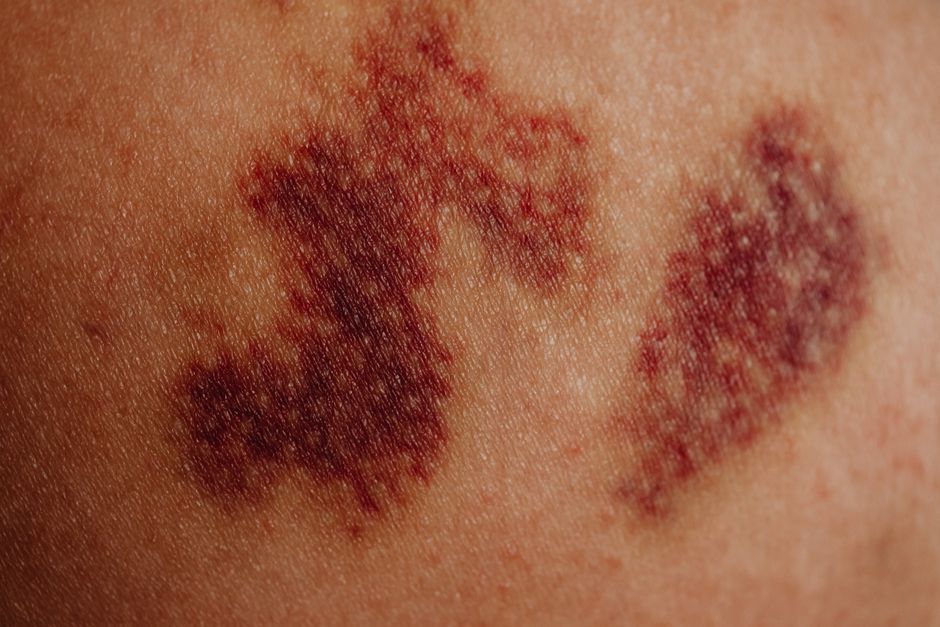
A bruise does not cause a blood clot. A bruise is blood that has leaked from small damaged vessels into the tissue under your skin, and it stays there until your body clears it away. A blood clot is a gel-like mass that forms inside a blood vessel. These are two different events, and one does not create the other.
That said, bruises and clots can share a cause. A hard hit that leaves a bruise can also injure a deep vein, and in rare cases that injury is where a clot begins. Some people also bruise easily because of a bleeding disorder or a medication that changes how their blood works. So the bruise is not the problem. It can be a clue worth paying attention to.
What Actually Happens When You Get a Bruise
A bruise is a bleed, but a small and contained one. When something strikes your skin hard enough, tiny blood vessels called capillaries break. Blood escapes into the surrounding tissue. That trapped blood is what you see as the purple, blue, or black color.
Your body then does what it always does with a small bleed. Platelets gather at the torn vessel and plug it. Clotting proteins in the blood reinforce that plug so the leak stops. This is normal, healthy clotting happening exactly where it should, inside the injured vessel.
The color changes people notice over days are part of cleanup. Hemoglobin in the escaped red blood cells breaks down into other pigments, which is why a bruise shifts from red to blue to green to yellow before it fades. None of this involves a clot forming in a vein or artery where it could travel.
One point that gets lost in the confusion: the clotting that seals a bruise is the same basic process that can, in the wrong place, form a dangerous clot. The difference is location and size, not the biology itself.
What a Blood Clot Actually Is and Why Location Matters
A blood clot is a mass of blood that has turned from liquid to gel inside a vessel. Where it sits determines how dangerous it is.
A clot in a deep vein, usually in the leg or pelvis, is called a deep vein thrombosis. It can block blood flow and cause swelling, pain, and warmth in that limb. The serious risk is that part of it can break loose and travel to the lungs, where it becomes a pulmonary embolism. That is a medical emergency.
A clot in an artery can block blood flow to the heart or brain, causing a heart attack or stroke. These are the clots that concern doctors most, and they form through a different process than a bruise does.
Arterial clots usually grow on top of a damaged or narrowed artery wall, often from years of plaque buildup. That is a slow, internal process. A bruise on your arm has nothing to do with it.
Does Bruising Cause Blood Clots? What Research Says
The evidence does not support the idea that a bruise itself causes a clot. Bruising and clotting are linked in the sense that both involve blood escaping or sealing off, but the direction of cause runs the other way in most cases. A clot can cause bleeding and bruising, not the reverse.
There is one real connection worth understanding. A significant injury, such as a fall, a car accident, or a hard blow to the leg, can damage a deep vein. When a vein wall is injured, the body’s clotting response activates at that spot. In some people this can progress to a deep vein thrombosis. This is why doctors sometimes watch for clots after major trauma or certain surgeries.
The key distinction is that the bruise is a marker of the injury, not the cause of the clot. The injury is the cause of both.
There is also a group of people who bruise easily and clot easily at the same time. These are usually separate tendencies, but they can overlap in conditions that affect platelets or clotting proteins. If someone bruises far more than expected and also has had an unexplained clot, that combination is worth a medical evaluation.





When a Bruise Might Signal Something More Serious
Most bruises are harmless and fade on their own. A few patterns deserve a closer look from a doctor.
- Bruises that appear without any injury or known cause
- Bruises that keep growing or spreading over hours
- Bruising along with unusual bleeding, such as from the gums or nose
- Bruising in someone taking a blood thinner
- A bruise over a deep vein that comes with swelling, warmth, or pain in the leg
That last one matters most for this topic. If a leg injury leaves a bruise and the leg later swells, feels warm, or aches deep inside, that is a reason to seek care. Those are symptoms of a possible deep vein thrombosis, and they should not be dismissed as just a bruise.
Easy bruising can also run in families or reflect a bleeding disorder. Some people simply have more fragile capillaries. Others have low platelets or a problem with clotting proteins. A doctor can sort this out with blood tests if the pattern is unusual.
Can a Blood Clot Look Like a Bruise?
Sometimes a clot causes skin changes that resemble a bruise, which is part of why the two get confused. A deep vein thrombosis can cause redness or a bluish discoloration in rare, severe cases. More often it causes swelling and pain without much color change at all.
A clot that has traveled to the lungs does not cause a bruise. Its signs are shortness of breath, chest pain that worsens with a deep breath, a fast heart rate, and sometimes coughing up blood. These need emergency care.
So the visual overlap is limited. A bruise is usually a flat patch of color change from trauma. A clot is an internal blockage that shows up mainly through swelling, pain, and warmth, not through a colorful mark on the skin.
Who Is at Higher Risk for Blood Clots
Certain factors raise the chance of a clot forming, and most of them have nothing to do with bruising.
- Recent major surgery, especially hip or knee replacement
- Long periods of not moving, such as during a long flight or bed rest
- Certain cancers and some cancer treatments
- Pregnancy and the weeks after childbirth
- Some hormonal medicines, including certain birth control pills
- Smoking and obesity
- Inherited clotting disorders
- Age, with risk rising after about age 60
If you have several of these factors and notice leg swelling or pain, that combination is worth a prompt medical check. The bruise question is secondary to the symptoms themselves.
How to Tell the Difference in Practice
You can usually sort out a bruise from a clot by paying attention to what you feel, not just what you see.
A bruise is tender to the touch and the color is on the surface. It fades over days to weeks without treatment. A clot deep in the leg tends to cause a heavier, aching pain, swelling that makes one leg larger than the other, and skin that feels warm. It does not fade on its own and can get worse.
When in doubt, get it checked. A simple ultrasound can confirm or rule out a deep vein thrombosis. Waiting is the one thing that can turn a manageable problem into an emergency, because a clot in the leg can travel to the lungs.
This is not a reason to fear every bruise. It is a reason to know the difference and act on the symptoms that fit a clot rather than a bruise.
Frequently Asked Questions
Can a bruise turn into a blood clot?
No, a bruise does not turn into a blood clot. A bruise is blood leaked into tissue, while a clot forms inside a blood vessel, and one does not become the other.
Why do I bruise easily and also worry about clots?
Easy bruising and clotting problems are usually separate issues, though some conditions can affect both platelets and clotting proteins. If you bruise a lot and have had an unexplained clot, see a doctor for testing.
Can a leg injury cause a deep vein thrombosis?
A significant injury can damage a deep vein, and that injury can sometimes lead to a clot. The bruise itself is not the cause; the injured vein is.
When should I worry about a bruise on my leg?
Seek care if the leg swells, feels warm, or aches deep inside after an injury. Those are signs of a possible deep vein thrombosis and are not explained by a bruise alone.
