
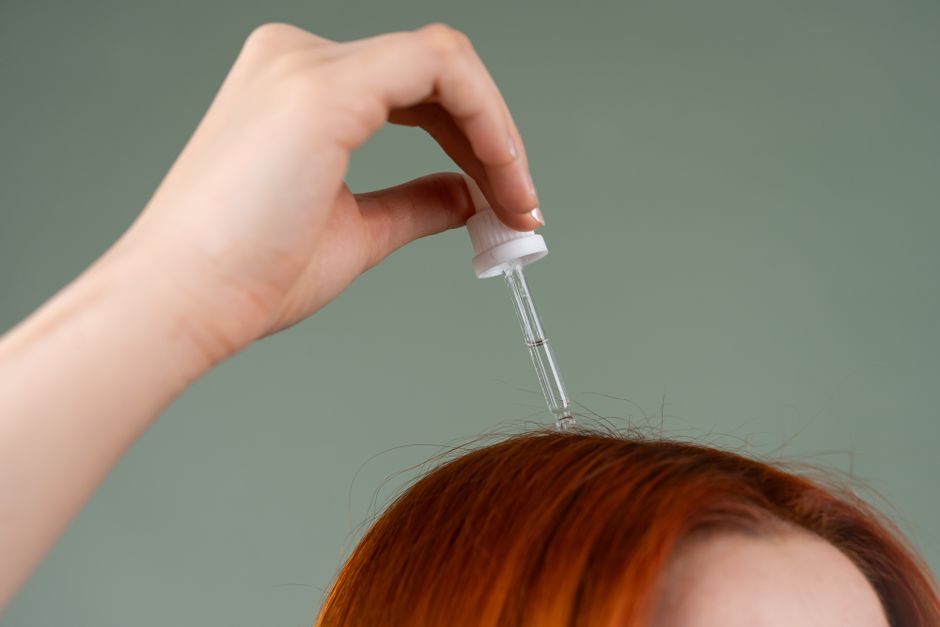
Biotin is one of the most popular supplements for hair growth, but the honest answer is that it only helps thinning hair in specific cases. For most people with normal biotin levels, taking extra biotin will not stop hair loss or regrow hair. Research shows that biotin deficiency is rare, and only people who are actually deficient are likely to see a difference. If you are experiencing thinning hair, biotin is rarely the root cause — and it is important to understand what it can and cannot do before spending money on supplements.
What Is Biotin and How Does It Affect Hair?
Biotin is a B vitamin, specifically vitamin B7. Your body needs it to convert food into energy and to support the health of your skin, nails, and hair. Biotin helps your body produce keratin, which is the protein that makes up hair strands. Without enough biotin, your hair can become brittle and thin over time.
The key point is that your body only needs a small amount of biotin each day. The National Institutes of Health (NIH) states that the recommended daily intake for adults is 30 micrograms. Most people get that amount easily from food. Eggs, nuts, seeds, salmon, avocados, and sweet potatoes all contain biotin. A single cooked egg provides about 10 micrograms.
Because biotin is water-soluble, your body flushes out any excess through urine. Taking more than your body needs does not mean more hair growth. It simply means your kidneys work a little harder to remove the extra vitamin. This is why high-dose biotin supplements — often 5000 to 10000 micrograms — are not backed by strong evidence for hair benefits in healthy people.
Does Biotin Help Thinning Hair? What the Evidence Says
The short answer is that biotin helps thinning hair only if you have a confirmed biotin deficiency. For everyone else, the evidence is very weak.
A 2017 review published in the journal Skin Appendage Disorders looked at all available studies on biotin and hair growth. The researchers found that only a handful of case reports showed improvement — and all of those involved people who were actually deficient in biotin. No large, well-controlled studies have shown that biotin supplements improve hair thickness or reduce shedding in healthy people.
Some studies suggest that biotin combined with other ingredients — like zinc, iron, or collagen — may show modest improvements. But it is impossible to know whether biotin caused the effect or the other nutrients did. Most of these studies are small, short-term, and funded by companies that sell the supplements.
The truth is that thinning hair has many causes. Hormonal changes, genetics, stress, thyroid disorders, iron deficiency, and aging are far more common than biotin deficiency. If you are losing hair for any of those reasons, biotin will not fix it. It is not a treatment for pattern baldness or telogen effluvium, the two most common types of hair loss.
Who Actually Needs Biotin for Hair?
There are specific groups of people who are more likely to be biotin deficient and may benefit from supplementation. These include:
- Pregnant and breastfeeding women — Pregnancy can lower biotin levels, and some women experience hair thinning after childbirth. Supplementing during pregnancy is common, but always talk to your doctor first.
- People who eat raw egg whites regularly — Raw egg whites contain a protein called avidin that blocks biotin absorption. Cooking the egg whites destroys avidin, so this is mainly a concern for people who consume raw eggs in large amounts.
- People with certain digestive disorders — Crohn’s disease, ulcerative colitis, and other conditions that affect nutrient absorption can lead to biotin deficiency.
- Chronic alcohol users — Alcohol interferes with biotin absorption and increases its excretion.
- People taking certain medications — Long-term use of anticonvulsants or antibiotics can reduce biotin levels.
If you do not fall into one of these groups, your biotin levels are almost certainly normal. A blood test can confirm this, but most doctors do not order it unless you have symptoms of deficiency. Those symptoms include thinning hair, brittle nails, red scaly rashes around the eyes and mouth, and fatigue.
The CDC reports that biotin deficiency is rare in the general population. Most cases occur in people with the risk factors listed above. For the average healthy adult, a biotin supplement is unnecessary for hair health.





What Actually Works for Thinning Hair?
Since biotin is rarely the answer, it helps to know what research shows actually works. This table compares common treatments for thinning hair based on evidence strength.
| Treatment | What It Does | Evidence Level |
|---|---|---|
| Minoxidil (Rogaine) | Stimulates hair follicles and prolongs the growth phase | Strong — FDA-approved, multiple large trials |
| Finasteride (Propecia) | Blocks DHT, the hormone that shrinks follicles in male pattern baldness | Strong — FDA-approved for men, multiple large trials |
| Iron supplements | Corrects iron deficiency, which is a common cause of hair loss in women | Moderate — effective only if deficient |
| Low-level laser therapy | Increases blood flow to follicles | Moderate — some positive trials, long-term data limited |
| Biotin supplements | Supports keratin production | Weak — only helps if deficient |
| Collagen supplements | Provides amino acids for hair structure | Weak to moderate — early research, not conclusive |
If you are dealing with thinning hair, the first step is to find out why. A doctor can check your iron levels, thyroid function, vitamin D, and hormone levels. These are the usual suspects. Treating the underlying cause is far more effective than guessing with supplements.
Common Myths About Biotin and Hair Loss
Several viral claims about biotin are not supported by evidence. Knowing what is real can save you time and money.
Myth: Biotin can reverse genetic baldness. No. Androgenetic alopecia, the medical term for male and female pattern baldness, is driven by hormones and genetics. Biotin does not affect DHT or follicle sensitivity to hormones. No credible study has ever shown biotin stops or reverses this condition.
Myth: High-dose biotin is better for hair. No. Your body can only use a limited amount. The rest is excreted. Mega-doses of 10000 micrograms are not more effective than standard doses. They just cost more and increase the risk of inaccurate lab test results.
Myth: Biotin works for everyone with thinning hair. No. As discussed, it only helps people who are deficient. For everyone else, it is a placebo at best. Some people report thicker hair after taking biotin, but that is likely because they were correcting a deficiency they did not know they had.
Myth: Biotin supplements are harmless. Mostly true, but there is one serious concern. High doses of biotin can interfere with lab tests, particularly thyroid tests and troponin tests used to diagnose heart attacks. The FDA has issued warnings about this. If you take biotin and need blood work, tell your doctor. It can lead to falsely high or falsely low results.
What to Avoid When Choosing a Hair Supplement
The supplement industry is poorly regulated. The FDA does not approve supplements for safety or effectiveness before they hit the market. This means you cannot always trust what is on the label.
Avoid products that make bold claims like “cure for baldness” or “regrows hair in weeks.” No supplement can do that. Also avoid products that list biotin as the only active ingredient if you are not deficient. You are paying for expensive urine.
Look for supplements that have been third-party tested. Organizations like USP, NSF, or ConsumerLab verify that what is on the label matches what is in the bottle. If a product does not have this certification, you have no way of knowing its quality.
Also be cautious with hair gummies. Many contain added sugar, which is not helpful for overall health. Some gummies have less biotin than advertised. A 2020 investigation by ConsumerLab found that several popular hair gummies contained less biotin than their labels claimed.
If you decide to try biotin anyway, choose a reputable brand and stick to a dose between 30 and 100 micrograms per day. There is no evidence that higher doses provide additional benefit for hair.
Practical Steps for Thinning Hair
If you are worried about thinning hair, here is a straightforward approach based on evidence.
First, see a doctor or a dermatologist. Ask for blood tests that include iron, ferritin, vitamin D, thyroid-stimulating hormone, and a complete blood count. These tests cover the most common reversible causes of hair loss.
Second, review your diet. Are you getting enough protein, iron, and healthy fats? Hair is made of protein, and low-protein diets can slow growth. Iron-rich foods like spinach, red meat, and lentils are important, especially for women with heavy periods.
Third, be gentle with your hair. Avoid tight hairstyles, excessive heat styling, and harsh chemical treatments. These can cause traction alopecia or breakage that mimics thinning.
Fourth, consider proven treatments like minoxidil if your doctor recommends it. Minoxidil is available over the counter and has decades of research behind it. It works best when started early.
Fifth, be patient. Hair grows slowly, about half an inch per month. It can take three to six months to see results from any treatment. If you try biotin for that long and see no change, it is time to move on to something more evidence-based.
Frequently Asked Questions
Does biotin help thinning hair in women?
Only if the woman has a biotin deficiency. For most women, thinning hair is caused by iron deficiency, hormonal changes, or genetics, not low biotin levels.
How long does biotin take to work for hair growth?
If you are deficient, it may take three to six months to see improvement because hair grows slowly. If you are not deficient, you will likely see no change at any time point.
Can biotin make hair loss worse?
No. Biotin is safe and does not cause hair loss. But taking biotin when you have an undiagnosed condition like thyroid disease can delay getting the right treatment.
What is the best dose of biotin for hair thinning?
The recommended daily intake is 30 micrograms. Most supplements contain far more, but there is no evidence that high doses provide extra benefit for hair.
