
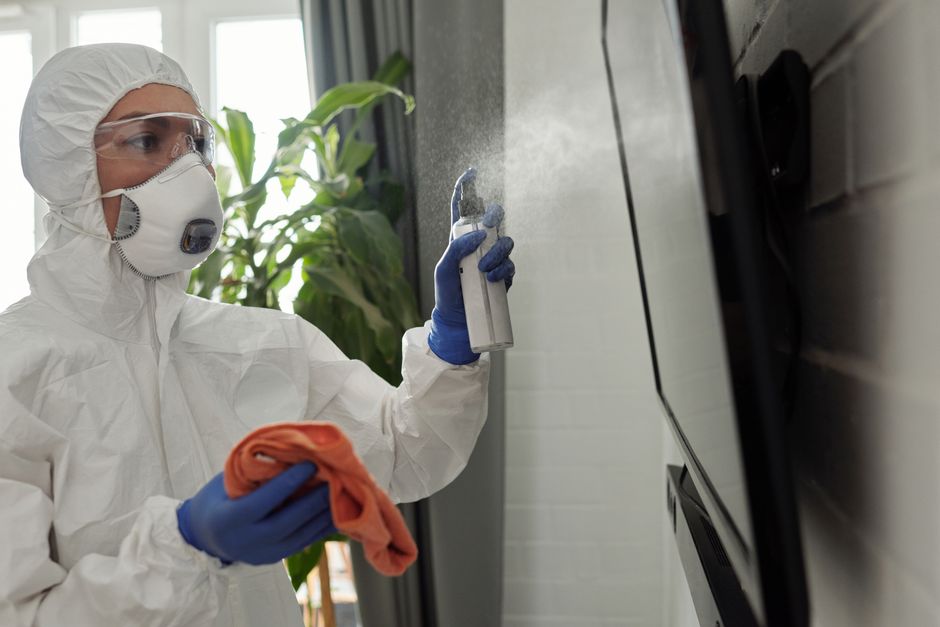
Ammonia can kill mold on wood, but it is rarely the best choice. It works best on non-porous surfaces like tile and glass. Wood is porous, so the mold’s root-like structures grow into the fibers where a surface spray cannot reach. Ammonia also cannot remove the stains mold leaves behind, and it carries real health risks.
Does Ammonia Actually Kill Mold On Wood?
Yes, ammonia kills mold on contact. It is a caustic substance that damages the cell structure of mold and many other microorganisms. In laboratory settings, ammonia-based solutions have shown antimicrobial activity against a range of fungi.
The problem is not whether ammonia kills mold. The problem is whether it kills the mold growing in your wood.
Mold on wood has two parts. The surface growth — the fuzzy or powdery stuff you can see — sits on top. The hyphae, which are root-like filaments, extend down into the wood’s pores. A spray or wipe reaches the surface growth. It usually does not reach what has grown into the grain.
This is why mold often returns after an ammonia cleaning. You killed what was visible. The deeper growth survived.
There is also a pH issue. Ammonia is strongly alkaline. Wood is naturally acidic, and some wood species — oak in particular — react with alkaline substances. Repeated ammonia exposure can darken the wood, raise the grain, and damage the finish. On unfinished wood, that damage is hard to undo.
What Are The Health Risks Of Using Ammonia Indoors?
Ammonia is a respiratory irritant, and the risk is greater indoors where air movement is limited. The American Cleaning Institute and household product labels warn against using ammonia in enclosed spaces without ventilation.
Short-term exposure to ammonia vapor can cause:
- Burning in the eyes, nose, and throat
- Coughing and shortness of breath
- Chest tightness
- Headache
People with asthma, COPD, or other chronic lung conditions are more vulnerable. So are children and older adults. If you have any respiratory condition, ammonia is a poor choice for indoor cleaning regardless of how well you ventilate.
The most serious danger is mixing. Ammonia reacts with chlorine bleach to produce chloramine gas. This is a toxic gas that can cause severe lung injury. It has sent people to emergency rooms. Never mix ammonia with bleach, and never use them in the same space back to back without thorough rinsing and airing out.
Ammonia also reacts dangerously with some other cleaners. If you are not certain what is in a product, do not combine it with ammonia.
Wearing gloves and opening windows helps. It does not eliminate the risk. The vapor is the problem, and vapor spreads through a room quickly.
Why Is Wood A Difficult Surface For Mold Treatment?
Wood is porous, and that changes everything about mold treatment. On tile or glass, mold grows on the surface. You wipe it off and the surface is clean.
Wood absorbs moisture. Mold spores land on damp wood and send hyphae into the grain. By the time you see surface growth, there is often more growth below.
This means any treatment that only contacts the surface is incomplete by design. It is not a failure of ammonia specifically. It is a limitation of liquid treatments on porous material in general.
Wood also holds moisture, which is the actual root cause. Mold cannot grow without moisture. If the wood stays damp, mold will return no matter what you clean it with. Fixing the moisture source matters more than any cleaning product.




What Are The Alternatives To Ammonia For Mold On Wood?
Several options exist, and each has trade-offs. None of them solves the underlying moisture problem.
Vinegar. Household white vinegar is acidic, and acidity is generally more compatible with wood than alkalinity. Some studies suggest vinegar has antifungal activity against common household molds. It is milder on wood than ammonia and far less irritating to breathe. It still may not reach deeply into the grain.
Hydrogen peroxide. A 3% solution, the kind sold in drugstores, has documented antifungal properties and can also lighten some mold stains. It is generally gentler on wood than bleach. It can still bleach or lighten some wood finishes, so test a hidden spot first.
Commercial mold cleaners made for wood. Products designed for wood surfaces are formulated to clean without the same level of damage. Read the label and follow it. Do not assume a product is safe for wood just because it says “mold remover.”
Bleach. Bleach kills mold on non-porous surfaces, but on wood it is a poor choice. It can lighten or damage the finish, and like ammonia it does not penetrate into the grain. The CDC notes that bleach is not recommended for porous materials because it cannot reach growth below the surface.
Sanding and refinishing. For mold that has grown into unfinished or lightly finished wood, sanding down past the affected layer and refinishing is often the most thorough approach. It removes the mold rather than trying to kill it in place. This is labor-intensive but addresses the problem more completely than any spray.
Replacement. If wood is structurally compromised — soft, crumbly, or deeply discolored — cleaning may not be worth it. Mold that has caused rot means the wood has lost integrity. Replacement is sometimes the honest answer.
How Does Ammonia Compare To Other Options?
The table below compares common approaches. The ratings reflect general properties, not results from head-to-head trials, which are limited.
| Method | Kills Surface Mold | Reaches Into Wood | Wood Damage Risk | Breathing Risk |
|---|---|---|---|---|
| Ammonia | Yes | Limited | Moderate to high (alkaline damage, especially oak) | High |
| White vinegar | Some evidence | Limited | Low | Low |
| 3% hydrogen peroxide | Yes | Limited | Low to moderate (may lighten finish) | Low |
| Bleach | Yes | Limited | High | Moderate to high |
| Sanding and refinishing | Removes it | Yes, if sanded deep enough | Removes surface layer | Dust risk, wear a mask |
One point worth clarifying: “kills mold” and “removes mold” are not the same thing. Dead mold spores can still trigger allergic reactions and asthma symptoms. Killing mold does not neutralize it. Physical removal — wiping, vacuuming with a HEPA filter, or sanding — is what actually takes it out of your space.
When Should You Stop Cleaning And Call A Professional?
Some mold situations are beyond what a homeowner should handle. The EPA and CDC generally advise professional help when the affected area is large — a common guideline is more than about 10 square feet of contiguous mold, roughly a 3-foot by 3-foot patch.
Call a professional if:
- The mold covers a large area or has spread through walls or flooring
- You smell a persistent musty odor but cannot find the source
- The mold keeps returning after cleaning
- The wood is soft or crumbling, suggesting rot
- Anyone in the home has asthma, allergies, or a weakened immune system
- The mold resulted from sewage or floodwater, which carries additional contamination
A professional can find the moisture source, contain the area, and remove contaminated material safely. That last part matters. Disturbing mold without containment can spread spores through the house.
How Do You Prevent Mold From Coming Back?
Moisture control is the only real prevention. Cleaning removes what is there. It does not stop the next round.
Keep indoor humidity below 60%, and ideally between 30% and 50%, according to EPA guidance. Use exhaust fans in bathrooms and kitchens. Fix leaks promptly — a slow leak behind a wall can feed mold for months before you notice. Watch for condensation on windows and cold pipes, which signals humidity is too high.
If wood gets wet, dry it within 24 to 48 hours. Mold generally needs sustained moisture to establish. Fast drying is your best defense.
For furniture or structural wood that stays damp because of its location — a basement, a crawl space, a poorly ventilated room — a dehumidifier addresses the cause rather than the symptom.
Frequently Asked Questions
Does ammonia kill mold on wood?
Ammonia kills mold on contact, but on wood it mainly reaches surface growth. The hyphae that grow into the wood’s pores usually survive, so mold often returns.
Is it safe to mix ammonia and bleach?
No. Mixing ammonia with chlorine bleach produces toxic chloramine gas that can cause severe lung injury. Never combine them or use them in the same space without thorough rinsing and ventilation between uses.
What kills mold on wood better than ammonia?
There is no single best option. Vinegar and 3% hydrogen peroxide are gentler on wood and less irritating to breathe, while sanding and refinishing removes mold most completely. Fixing the moisture source matters more than the cleaner you choose.
When should I hire a professional for mold on wood?
Hire a professional when mold covers a large area, keeps returning after cleaning, or the wood is soft or crumbling. The EPA and CDC commonly suggest professional help for mold covering more than about 10 square feet.
