
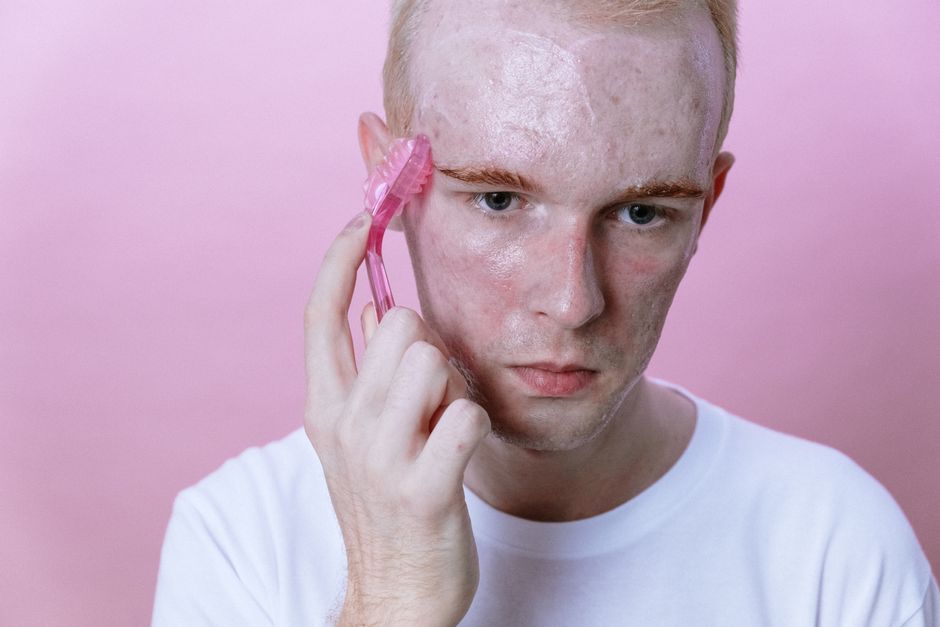
Popping a pimple is one of the most common skincare habits, and most dermatologists will tell you the same thing: don’t do it. Picking at a pimple can push bacteria deeper into your skin, increase inflammation, and often leads to scarring or a longer healing time. While it is tempting to squeeze that whitehead for instant relief, the risks almost always outweigh the temporary satisfaction. This guide explains what happens when you pop a pimple, when it might be acceptable, and how to treat breakouts safely instead.
What Happens When You Pop a Pimple?
When you squeeze a pimple, you are applying external pressure to an already inflamed area. The goal is to force the contents out, but that pressure often pushes the material sideways or deeper into the dermis, the living layer of skin beneath the surface. This can rupture the hair follicle wall, spilling bacteria, oil, and dead skin cells into the surrounding tissue.
Your immune system responds to that spill by sending white blood cells to the area. That response causes more redness, swelling, and tenderness than you had before. In many cases, a small surface pimple becomes a larger, deeper, and more painful cyst within a day or two of being squeezed. The visible bump may go away temporarily, but the inflammation below the surface is just beginning.
Why Do Dermatologists Strongly Advise Against It?
The main concern is scarring. When the follicle wall ruptures deep in the skin, the body forms collagen to repair the damage. That collagen can form a raised scar or a depressed pit, depending on how the tissue heals. Acne scars are notoriously difficult to treat, and many require professional procedures like laser therapy, microneedling, or chemical peels to improve their appearance.
There is also the risk of infection. Your fingernails carry bacteria, even when they look clean. Introducing new bacteria into an open wound can turn a minor blemish into a serious infection. In rare cases, an infection from squeezing a pimple on the face can spread to other areas, requiring medical treatment with prescription antibiotics.
Are There Any Safe Ways to Pop a Pimple?
Dermatologists generally say no for most people. The safest approach is to leave the pimple alone and let your immune system clear it naturally. That process usually takes a few days to a week for a surface-level whitehead.
That said, some dermatologists acknowledge that certain pimples can be drained safely under specific conditions. A mature whitehead that sits right at the surface with a visible head may be gently extracted using sterile tools. The key is that this should only be done when the pimple is ready — meaning the white or yellow head is clearly visible and the surrounding skin is not deeply inflamed. If the area is red, swollen, or painful, the pimple is not ready and should be left alone.
If you choose to extract a mature whitehead, the technique matters. Clean the area with rubbing alcohol, use a sterile lancet to make a tiny puncture in the very top of the whitehead, and wrap your fingers in tissue or use cotton swabs to apply gentle pressure from the sides. If the contents do not release easily, stop. Never force it.
This is not a recommendation. It is a description of what dermatologists sometimes do in a clinical setting. At home, the risk of doing it wrong is high, and many people end up causing more damage than they prevent.




What About Blackheads and Cysts?
Blackheads are different from whiteheads. They are open comedones, meaning the pore is open at the surface and the contents have oxidized, turning dark. Squeezing a blackhead can still damage the pore lining and cause inflammation, but the risk of deep rupture is lower because the opening is already there.
Even so, dermatologists recommend using a comedone extractor tool rather than fingers. These tools allow for even pressure around the pore, which can help release the contents without crushing the surrounding tissue. Clean the tool with alcohol before and after use.
Cysts and nodules are entirely different. These are deep, inflamed lesions that do not have a visible head. Popping them is never a good idea. There is no surface opening to drain, so squeezing only causes the contents to spread deeper into the skin. This can lead to significant scarring and prolonged healing. If you have a painful, deep pimple that does not come to a head within a week, see a dermatologist. They can inject a corticosteroid directly into the lesion to reduce inflammation quickly.
How to Treat a Pimple Without Popping It
There are several evidence-based approaches to treating a pimple without squeezing it. The most effective over-the-counter ingredient is benzoyl peroxide. It kills the bacteria that contribute to acne and helps dry out excess oil. It is available in strengths of 2.5%, 5%, and 10%. Research suggests that lower concentrations are just as effective as higher ones but cause less skin irritation.
Salicylic acid is another common option. It works by helping to exfoliate the skin and unclog pores. It is less effective for active inflammation but useful for preventing new breakouts. It is often found in cleansers, toners, and spot treatments.
For a red, inflamed pimple, a warm compress can help. Apply a clean, warm, damp cloth to the area for 10 to 15 minutes, two to three times a day. This can help bring the pimple to a head more quickly without forcing it. Once it comes to a head, you still should not pop it — but it will resolve faster on its own.
Hydrocolloid patches have become popular in recent years. These small adhesive patches are placed over a pimple and absorb fluid from the lesion while creating a protective barrier. Some evidence suggests they can reduce the size and redness of a pimple overnight, particularly for surface-level whiteheads. They do not work well on deep cysts or nodules because those lesions do not have fluid at the surface.
Do U Pop Pimples — What the Evidence Says About Long-Term Skin Health
The habit of popping pimples is common, but the long-term consequences are often underestimated. Repeated picking and squeezing can cause permanent changes to the skin’s texture. Over time, the skin may develop uneven pigmentation, thickened areas, or depressed scars that are cosmetically significant.
There is also a psychological component. Many people pick at their skin as a response to stress or anxiety, sometimes without even realizing they are doing it. This can develop into a condition called excoriation disorder, also known as skin-picking disorder. If you find that you cannot stop picking at your skin even when you know it is causing damage, it is worth discussing with a healthcare provider. Cognitive behavioral therapy has been shown to help people reduce this behavior.
For most people, the best approach is prevention. A consistent skincare routine that includes a gentle cleanser, a non-comedogenic moisturizer, and a topical treatment like benzoyl peroxide or salicylic acid can reduce the frequency and severity of breakouts. If over-the-counter products are not controlling your acne after several weeks, a dermatologist can prescribe stronger treatments, including topical retinoids or oral medications.
When to See a Dermatologist
Most pimples are harmless and resolve on their own. But there are situations where professional care is needed. If you have a pimple that is extremely painful, larger than a pea, or does not improve after a week of home care, see a dermatologist. They can safely drain it in a sterile environment or inject it with a corticosteroid to reduce inflammation quickly.
If you have frequent breakouts that leave scars, or if acne is affecting your self-esteem, it is worth seeking professional help. Prescription treatments are far more effective than anything available over the counter for moderate to severe acne. There is no reason to suffer through breakouts when effective medical treatments exist.
One final note: the “triangle of death” — the area on the face from the bridge of the nose to the corners of the mouth — is often discussed in online health circles. The concern is that infections in this area can spread to the cavernous sinus, a space in the skull, through veins that lack the same valves as veins elsewhere. While this is anatomically real, the actual risk of a serious complication from popping a pimple in this area is extremely low. That said, the area is still prone to scarring, so the same advice applies: leave it alone.
Frequently Asked Questions
Is it ever okay to pop a pimple?
Dermatologists generally recommend against popping any pimple at home. A mature whitehead with a visible head can sometimes be extracted with sterile tools, but the risk of scarring and infection is always present.
What is the fastest way to get rid of a pimple without popping it?
A warm compress applied for 10 to 15 minutes several times a day can help bring a pimple to a head faster. A benzoyl peroxide spot treatment can also reduce inflammation and kill bacteria.
Why does popping a pimple make it worse?
Pressure from squeezing can rupture the follicle wall, pushing bacteria and oil deeper into the skin. This triggers more inflammation and often leads to a larger, more painful pimple or a scar.
Can popping a pimple cause an infection?
Yes. Fingernails carry bacteria, and introducing them into an open wound can cause a secondary infection. In rare cases, a facial infection can spread and require prescription antibiotics.
