
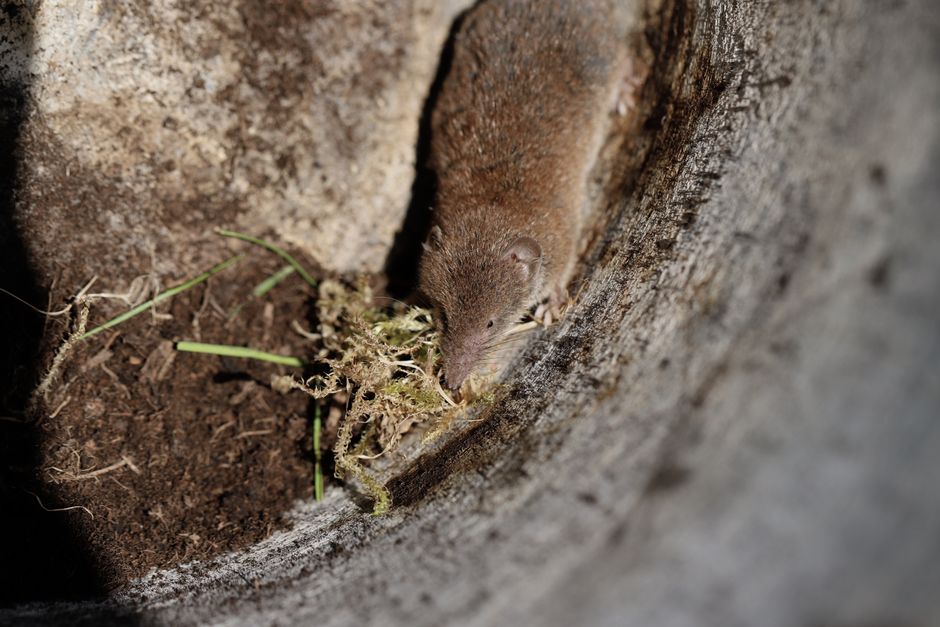
Shrews do burrow, and many species spend most of their lives underground in networks of shallow tunnels they dig themselves. Their tunneling is not random digging. It is a direct extension of how they find food, avoid predators, and survive a very fast metabolism that forces them to eat almost constantly.
Unlike moles, which are famous for pushing up molehills, shrews often tunnel just below the surface or use tunnels made by other animals. Some species dig their own runs through soil and leaf litter. Others simply take over existing tunnels and turn them into hunting routes.
Do Shrews Burrow Explaining Their Tunneling Behavior?
Yes. Burrowing is normal, expected behavior for many shrew species, especially those that live in soil, grassland, or forest floor habitats. The tunnel is not just shelter. It is a hunting system.
Shrews are insectivores and small predators. They eat earthworms, insects, spiders, slugs, and other small invertebrates. Most of this food lives in soil, under logs, or in leaf litter. A tunnel gives a shrew direct access to that food without exposing itself on the surface.
Their bodies are built for it. Shrews are small, with short legs, flexible spines, and pointed snouts. Many species have poor eyesight but excellent touch and smell, which are the senses that matter underground. They can move quickly through narrow spaces where larger predators cannot follow.
One key point separates shrews from moles. Moles are specialized diggers with broad, shovel-like front paws. Shrews are not. Their front feet are small and clawed, suited for scratching and loosening soil rather than moving large amounts of it. This means shrew tunnels tend to be shallower and narrower than mole tunnels.
Why Do Shrews Dig Tunnels Instead of Living Above Ground?
Shrews tunnel because it solves two problems at once: finding food and not becoming food.
Above ground, a shrew is exposed. Hawks, owls, snakes, foxes, and domestic cats all eat shrews. Underground, most of those predators cannot reach them. A tunnel is a hiding place that also happens to be a pantry.
The second reason is energy. Shrews have an extremely high metabolic rate for their size. Their hearts can beat many hundreds of times per minute, and they must eat frequently, often within hours, to avoid starving. Some species are known to die within a day without food. A tunnel system lets a shrew patrol a known route and find prey efficiently instead of searching randomly on the surface.
This is also why shrews are rarely seen. They are not nocturnal in the strict sense. They are active in short bursts around the clock, sleeping and waking many times. Most of that activity happens where people cannot see it.
How Do Shrew Tunnels Differ From Mole Tunnels?
This is one of the most common points of confusion. People find raised ridges or small holes in a yard and assume a mole did it. Often it was a shrew, or a shrew using a mole’s tunnel.
Mole tunnels are usually larger in diameter and often marked by volcano-shaped mounds of pushed-up soil called molehills. Moles dig with powerful front limbs and push soil out of the way. Shrew tunnels are narrower, often just wide enough for the animal’s body, and typically do not produce large mounds.
Shrews also use surface runways. These are shallow grooves or paths through grass and leaf litter, sometimes visible as slightly depressed lines. Shrews may use the same runways repeatedly, which keeps them clear.
There is also overlap. Shrews will readily use tunnels dug by moles, voles, or other animals. If a tunnel already exists and connects to food, a shrew has little reason to dig a new one.





What Does Shrew Burrowing Mean for Your Yard or Garden?
Shrew activity in a yard is generally a sign of a healthy soil food web, not a problem. Shrews eat insects and other invertebrates, including some that gardeners consider pests.
That said, shrews are not a pest-control service you can rely on. They eat what they find. Their impact on any specific insect population is not well documented, and no studies support the idea that encouraging shrews will control a pest outbreak.
Damage from shrews is usually minor. You may notice small holes, shallow ridges, or disturbed mulch. This is far less disruptive than mole activity. Shrews do not eat garden plants, though they may occasionally disturb roots while tunneling.
If you find a shrew in your yard, the practical response is usually to leave it alone. Shrews are wild animals and can bite if handled. Some shrew species produce venomous saliva, which is unusual among mammals and can cause irritation or swelling in a bite wound. This is not a reason to panic, but it is a reason not to pick one up.
Are Shrews Active Year-Round Underground?
Many shrew species stay active through winter rather than hibernating. Because their metabolism is so high, they cannot afford to sleep through the cold months the way a bear or groundhog does.
Instead, shrews often tunnel under snow. The layer between the ground and the snowpack, sometimes called the subnivean zone, stays near freezing and provides insulation. Insects and other small invertebrates remain active there, and shrews hunt them through the winter.
This is one reason shrew tunnels are sometimes visible in early spring, when snow melts and reveals the runways underneath. The tunnels were there all along.
Not all shrew species behave the same way. Some are more surface-active, some are more strictly fossorial, meaning adapted to digging and living underground. Behavior varies by species, habitat, and season.
Can Shrews Damage Foundations or Structures?
No. Shrews do not damage foundations, pipes, or buildings. They are far too small and their tunnels are far too shallow to affect structural integrity.
This is a common worry, but it comes from confusing shrews with larger burrowing animals. Groundhogs, for example, can dig extensive burrow systems that occasionally cause problems near structures. Shrews cannot.
If you see small holes near a foundation, the cause is more likely to be a mouse, vole, or insect activity than a shrew. Shrew tunnels are typically in loose soil, under leaf litter, or in grass, not against concrete.
How Can You Tell If Shrews Are in Your Area?
Direct sightings are rare because shrews spend so little time visible. Indirect signs are more reliable.
- Shallow grooves or runways in grass and leaf litter
- Small holes in soft soil, often near logs or rocks
- Disturbed mulch or loose soil with no large mounds
- Occasional dead shrews found by cats or on sidewalks
If you want to know what species you have, that usually requires expert identification. Many shrew species look similar to the untrained eye, and distinguishing them often depends on details like tooth shape and tail length.
Trail cameras and live traps can confirm presence, but handling shrews requires care because of their bite and their high stress response. They do not survive well in captivity and should not be kept as pets.
Why This Behavior Matters
Shrew tunneling is not a curiosity. It is a survival strategy shaped by extreme energy demands and constant predation pressure. The tunnel is the animal’s answer to a simple problem: how to eat enough, fast enough, without being eaten first.
Understanding that helps explain why shrews behave the way they do and why they are so rarely seen. It also helps clear up a common mix-up. Not every tunnel in a yard belongs to a mole, and not every small hole means damage. Often it just means a shrew passed through, hunting.
Frequently Asked Questions
Do shrews dig their own tunnels?
Many shrew species dig their own shallow tunnels, while others mainly use tunnels made by moles, voles, or other animals. The behavior varies by species and habitat.
Are shrew tunnels the same as mole tunnels?
No. Shrew tunnels are usually narrower and shallower, and they typically do not produce the large soil mounds that mole tunnels do. Shrews also often reuse mole tunnels.
Do shrews live underground all the time?
No. Most shrews move between tunnels, surface runways, and leaf litter depending on where food is available. They are active in short bursts day and night.
Can shrews hurt you or your pets?
Shrews can bite if handled, and some species have venomous saliva that can cause irritation or swelling. Pets that catch shrews rarely suffer serious harm, but the shrew itself usually does not survive.
