
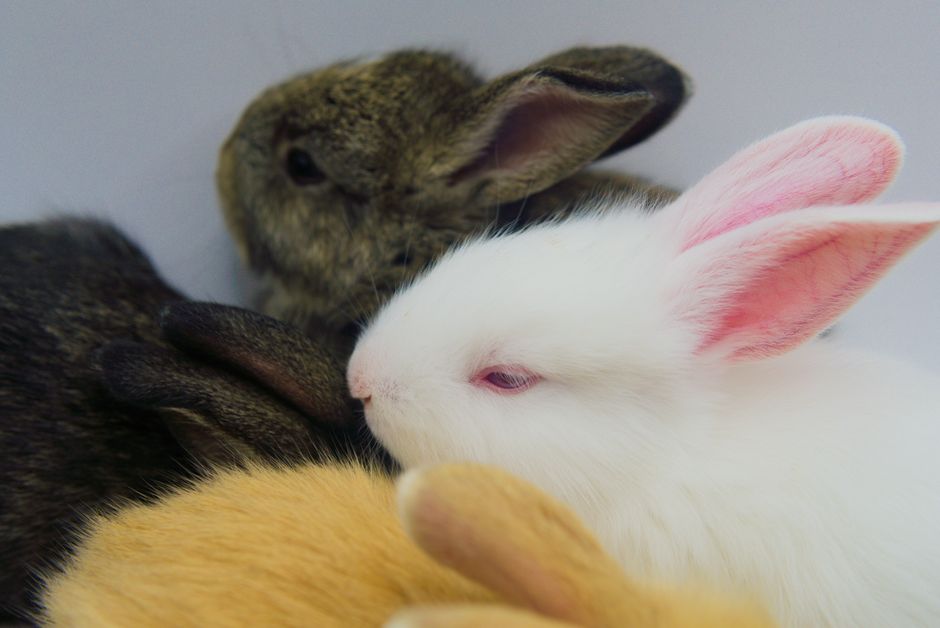
Yes, rabbits can sleep with their eyes open. As prey animals, they have evolved to stay alert even at rest, and their eyes often remain partly or fully open during lighter stages of sleep. A wild rabbit with closed eyes is a vulnerable rabbit, so the body keeps a built-in alarm system running.
That does not mean a rabbit never closes its eyes. During deep sleep, most rabbits do shut them. But the relaxed, open-eyed state you see most of the day is real rest, not just a rabbit staring into space.
Why Do Rabbits Sleep With Their Eyes Open?
Rabbits are a prey species, and nearly everything about their rest behavior reflects that. In the wild, a rabbit that fully shuts down becomes an easy meal. The open-eyed habit is one layer of a defense system that never fully switches off.
Their eyes sit on the sides of the head, which gives them a very wide field of view. A rabbit can see in almost every direction without turning its head, and that includes while it is lying still. Keeping the eyes open means that wide view stays active even during rest.
There is a second reason that is easy to miss. Rabbits are crepuscular, meaning they are most active at dawn and dusk. In the hours in between they rest in short bursts rather than one long sleep. These brief rest periods are often light sleep, and light sleep is exactly when the eyes tend to stay open.
This is not a sign of illness or fear in a healthy rabbit. It is normal biology.
Do Rabbits Ever Close Their Eyes When They Sleep?
Yes, rabbits close their eyes during deep sleep. The open-eyed state is most common during light rest, and as a rabbit settles into deeper sleep the eyelids usually come down.
You can often tell the difference by watching the rest of the body. A rabbit in deep sleep tends to look floppy and relaxed. The ears may droop, the body may flatten out, and the rabbit may twitch or make small movements during dreaming. Some rabbits even snore softly.
A rabbit resting with eyes open but body tense is in light rest. A rabbit with closed eyes and a loose, melted-looking posture is in deep sleep. Both are normal.
How Can You Tell If a Rabbit Is Actually Asleep?
Eye position alone will not tell you. You have to read the whole body. A sleeping rabbit shows a cluster of signs, and the more of them you see, the more likely the rabbit is in real sleep.
- The body looks loose and heavy rather than braced
- The ears relax and may droop to the sides
- Breathing becomes slow and steady
- The rabbit may twitch its nose, paws, or whiskers in sleep
- It does not react to small sounds the way it would when awake
- The eyes may be fully closed, half closed, or open
A rabbit that is awake but still will usually snap to attention fast. A truly sleeping rabbit takes a moment longer to respond. That delay is one of the clearest signs.




Is It Normal for a Rabbit to Sleep With Its Eyes Open All the Time?
Mostly yes, but there is a limit. A rabbit that never seems to close its eyes, even when the house is quiet and it feels safe, may simply be a light sleeper. Some rabbits are naturally more vigilant than others.
What matters more is the overall picture. A rabbit that rests openly but still eats well, moves normally, and seems comfortable is behaving like a healthy rabbit. A rabbit that seems unable to relax at all, or that stays rigid and watchful around the clock, is showing something different.
Constant vigilance can point to stress, pain, or an environment that does not feel safe. If a rabbit never settles, it is worth looking at its surroundings and talking to a veterinarian who treats rabbits.
What Does It Mean When a Rabbit Sleeps With Its Eyes Open and Body Tense?
A tense body changes the meaning of open eyes. Open eyes plus a loose body is normal light rest. Open eyes plus a rigid, braced body suggests the rabbit is on alert rather than truly resting.
Rabbits are good at hiding discomfort, so tension is a signal worth taking seriously. Watch for other changes alongside it. A rabbit in pain or under stress may eat less, sit hunched, grind its teeth, or avoid its usual spots.
Rabbits are also social animals, and a rabbit kept alone often rests less deeply. Company, a quiet space, and places to hide all help a rabbit feel safe enough to let its guard down. If tension persists, a rabbit-savvy veterinarian is the right person to assess it.
How Much Do Rabbits Sleep, and When?
Rabbits sleep in short stretches spread across the day and night rather than in one long block. Their total sleep is often described as roughly similar to people, but the pattern is very different. They are built for many brief naps, not one long night.
Because they are crepuscular, rabbits tend to be most active around dawn and dusk. The middle of the day and the middle of the night are common rest times. This is why a rabbit may seem to sleep through the afternoon and then be wide awake at odd hours.
This fragmented pattern is one reason the open-eyed habit is so common. A rabbit that naps many times a day spends a lot of that time in light sleep, and light sleep is when the eyes stay open.
Do Wild and Pet Rabbits Behave the Same Way?
The instinct is the same, but pet rabbits often relax more. A wild rabbit faces constant risk, so its rest stays shallow and its eyes stay open more often. A pet rabbit in a safe home can afford to close its eyes and sleep more deeply.
Even so, the prey-animal wiring does not disappear with domestication. A pet rabbit may still bolt awake at a sudden noise or sleep with one eye open in a new room. Give a new rabbit time to settle, and provide hiding spots where it feels secure. Many rabbits sleep more deeply once they have a familiar routine and a safe place to retreat.
When Should You Be Concerned?
Open-eyed sleep by itself is not a warning sign. The concern comes from changes in a rabbit’s normal pattern. A rabbit that suddenly stops resting, or that seems unable to relax at all, is worth a closer look.
Watch for these alongside any change in sleep:
- Eating or drinking less than usual
- Sitting hunched or pressing its belly to the floor
- Grinding its teeth, which can signal pain
- Breathing that looks fast, labored, or different from normal
- Withdrawing from its usual spaces or from people
- Eyes that look cloudy, swollen, or different from usual
Rabbits decline quickly when something is wrong, so do not wait if several of these appear together. A veterinarian who regularly treats rabbits is the best judge. Eye changes in particular should be checked, since a rabbit’s eyes are central to how it senses the world.
Frequently Asked Questions
Do rabbits sleep with their eyes open?
Yes, rabbits often sleep with their eyes open, especially during light sleep. They usually close their eyes during deep sleep.
Why do rabbits keep their eyes open when they rest?
Rabbits are prey animals, so staying alert even at rest helps them spot danger. Their wide side-set eyes let them watch for threats without moving their head.
How can you tell if a rabbit is asleep?
Look at the whole body, not just the eyes. A sleeping rabbit looks loose and relaxed, with drooping ears and slow steady breathing.
Is it bad if a rabbit never closes its eyes?
Not always, since some rabbits are naturally light sleepers. But a rabbit that never relaxes may be stressed or in pain and should be checked by a veterinarian.
