
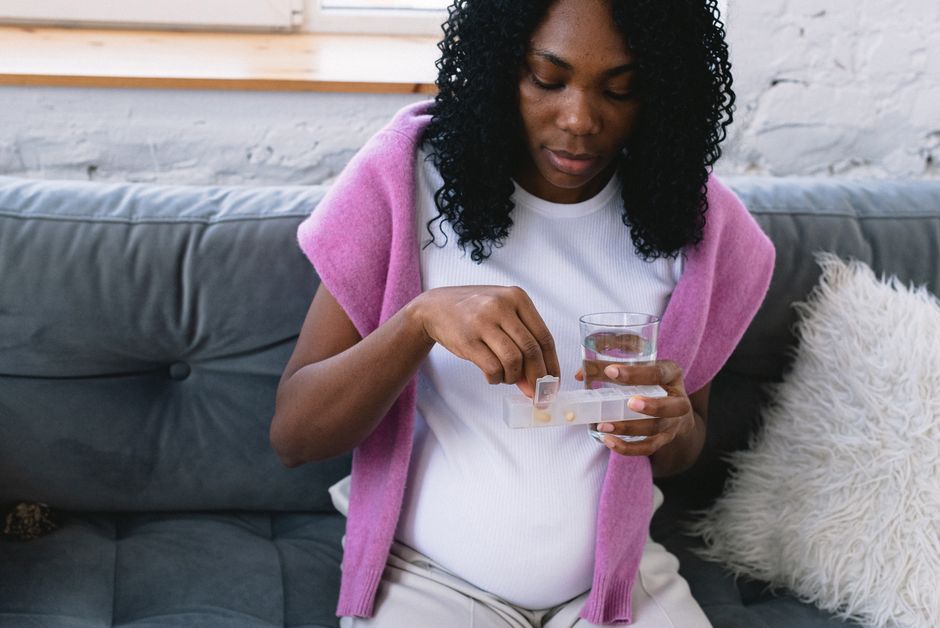
Most prenatal vitamins contain some vitamin D, but the amount varies widely by brand. Standard prenatal vitamins typically provide 400 to 800 IU per daily dose. Many experts now consider this amount too low for optimal pregnancy outcomes, and higher doses are often recommended based on individual blood levels.
Why Vitamin D Matters During Pregnancy
Vitamin D is not really a vitamin. It is a hormone your body makes from sunlight and gets from food. During pregnancy, it helps regulate calcium and phosphorus. These minerals build your baby’s bones and teeth.
Vitamin D also supports the immune system. Some research links low vitamin D levels in pregnancy to higher risks of gestational diabetes, preeclampsia, and preterm birth. The evidence is not uniform, but the pattern is consistent enough that most obstetricians take low levels seriously.
Your baby gets all of its vitamin D from you. If your levels are low, your baby’s levels will be low too. After birth, breast milk contains very little vitamin D. This is why the recommendation for breastfed infants includes a vitamin D supplement from birth.
What Most Prenatal Vitamins Actually Contain
Most prenatal vitamins contain 400 to 800 IU of vitamin D per daily serving. Some premium brands now include 1,000 to 2,000 IU. A few go higher, but they are less common.
The original purpose of prenatal vitamins was to prevent neural tube defects with folic acid and to support blood volume with iron. Vitamin D was added later as an afterthought. The doses reflect that history, not current research.
Current guidelines from major medical organizations recommend 600 IU daily for all pregnant women. Many experts believe this is the floor, not the target. The Endocrine Society suggests that pregnant women may need 1,500 to 2,000 IU daily to maintain adequate blood levels, though this is a clinical recommendation rather than a universal standard.
Here is what you typically find in prenatal vitamins:
- 400 IU — common in older or budget brands
- 600 IU — matches basic guideline amounts
- 800 IU — common in mid-range brands
- 1,000 to 2,000 IU — found in premium or “high-dose” formulations
- 4,000 IU — rare, usually only in dedicated vitamin D supplements
The key point: if you take a standard prenatal vitamin, you are getting the minimum amount, not necessarily the amount your body needs.
How Much Vitamin D Do Pregnant Women Actually Need?
The recommended daily allowance for vitamin D during pregnancy is 600 IU. This is the amount estimated to meet the needs of most healthy women. It assumes you start with adequate levels and get some sun exposure.
But many women do not start with adequate levels. Studies consistently show that a large portion of the population has insufficient vitamin D, especially in northern latitudes, during winter months, and in people with darker skin. Pregnancy increases demand, which can lower levels further.
Blood tests measure vitamin D status. A level of 30 ng/mL or higher is generally considered adequate. Levels between 20 and 29 ng/mL are insufficient. Levels below 20 ng/mL are deficient.
If your blood level is low, your doctor may recommend a separate vitamin D supplement on top of your prenatal vitamin. This is common clinical practice, even though the exact dose needed varies from person to person.
No universal dose works for everyone. Body weight, skin tone, sun exposure, and genetics all influence how much vitamin D you need. This is why testing matters if you have risk factors for deficiency.





Vitamin D3 vs. Vitamin D2 in Prenatal Vitamins
Vitamin D comes in two forms in supplements. Vitamin D3 (cholecalciferol) is the form your skin makes from sunlight. Vitamin D2 (ergocalciferol) comes from plant sources, usually yeast or mushrooms exposed to UV light.
Most research suggests vitamin D3 raises blood levels more effectively than D2 at the same dose. Some studies show D3 maintains levels longer. For this reason, most newer prenatal vitamins use D3.
Some prenatal vitamins still use D2, often because it is cheaper or because the brand markets itself as vegan. Vitamin D3 is usually derived from lanolin, which comes from sheep’s wool. Vegan D3 from lichen exists but is less common.
If you are choosing between two prenatal vitamins with the same vitamin D dose, D3 is generally the better choice. If you are vegan, look for a prenatal with vegan D3 or D2 and consider discussing your intake with your doctor.
Signs You Might Need More Vitamin D
Vitamin D deficiency does not always cause obvious symptoms. Many people have low levels and feel fine. When symptoms do appear, they are vague:
- Bone pain or achiness
- Muscle weakness
- Fatigue that does not improve with rest
- Low mood or depressive symptoms
- Frequent illnesses or slow healing
These symptoms overlap with normal pregnancy discomforts. That makes self-diagnosis unreliable. The only accurate way to know your vitamin D level is a blood test.
Some risk factors make deficiency more likely:
- Living far from the equator or in cloudy climates
- Spending most time indoors
- Using sunscreen consistently
- Having darker skin
- Carrying excess body weight
- Following a strict vegan diet without fortified foods
- Having conditions that affect fat absorption, such as celiac or Crohn’s disease
If you have any of these risk factors, ask your provider about testing. The test is simple and inexpensive. The result tells you whether your prenatal vitamin alone is enough.
Can You Take Too Much Vitamin D During Pregnancy?
Yes. Vitamin D is fat-soluble, meaning your body stores it. Taking extremely high doses over time can cause toxicity. This leads to dangerously high calcium levels in the blood, which can damage the kidneys and heart.
The upper limit for vitamin D during pregnancy is 4,000 IU daily. This is the amount considered safe without medical supervision. Doses above this require monitoring and a doctor’s order.
Vitamin D toxicity is rare. It usually comes from taking very high-dose supplements for months, not from prenatal vitamins. A standard prenatal vitamin will not cause toxicity, even if you take it with a separate vitamin D supplement at reasonable doses.
If you are taking a prenatal vitamin with 400 IU and add a 1,000 IU vitamin D supplement, you are at 1,400 IU total. That is well within safe limits. Even at 2,000 IU from a prenatal plus 2,000 IU from a supplement, you remain at the upper safe threshold.
What you should not do is stack multiple high-dose supplements without knowing your total intake. Read labels. Add up the vitamin D from every supplement you take.
What To Do If Your Prenatal Vitamin Is Low in Vitamin D
First, check the label. Look for the vitamin D amount in IU. Most labels list it clearly. If your prenatal has 400 IU, you have options.
You could switch to a prenatal vitamin with 1,000 IU or more. Many brands now offer higher-dose options. This is the simplest fix because it keeps you on one pill.
You could also add a separate vitamin D supplement. This gives you more control over your dose. A typical additional dose ranges from 600 to 2,000 IU daily, depending on your needs.
Talk to your doctor before adding anything. They can check your blood level and recommend a specific dose. This matters most if you have risk factors for deficiency or a history of low vitamin D.
Do not assume more is better. The goal is adequate levels, not maximum levels. Blood testing takes the guesswork out of this decision.
Food Sources That Can Help
Food alone rarely provides enough vitamin D, but it contributes. Good sources include:
- Fatty fish such as salmon, sardines, and mackerel
- Egg yolks
- Mushrooms exposed to UV light
- Fortified milk, orange juice, and cereals
- Cod liver oil, which is very high but should be taken cautiously in pregnancy due to vitamin A content
Sunlight is the most natural source. Exposing arms and legs for 10 to 30 minutes a few times per week can produce meaningful amounts, depending on latitude, season, and skin tone. Sunscreen blocks vitamin D production, but it also prevents skin cancer. The balance is individual.
Food and sun are not reliable enough alone during pregnancy. They are helpful additions to supplementation, not replacements for it.
Frequently Asked Questions
Do all prenatal vitamins contain vitamin D?
Most do, but not all. Check the label for vitamin D3 or D2 and the amount in IU. Some gummy prenatal vitamins contain little or no vitamin D.
Is 400 IU of vitamin D in a prenatal vitamin enough?
It meets the minimum for preventing severe deficiency but is below what many experts now recommend. Most pregnant women need more, especially if starting levels are low.
How much vitamin D should I take daily while pregnant?
The standard recommendation is 600 IU daily, but many clinicians recommend 1,000 to 2,000 IU based on blood levels. Ask your doctor for a blood test to determine your specific need.
Can I take extra vitamin D with my prenatal vitamin?
Yes, but keep your total daily intake below 4,000 IU unless your doctor advises otherwise. Add up the vitamin D in all supplements you take to track your total.
