

Parabens do not have any established link to lowered testosterone in humans. That is the honest bottom line from decades of research. Parabens are preservatives used in cosmetics, lotions, and some foods. They can weakly mimic estrogen in laboratory experiments. But “can bind to hormone receptors in a dish” is a long way from “lowers testosterone in a living person.” The human studies done so far have not shown that parabens reduce testosterone levels.
Do Parabens Lower Testosterone What Studies Show?
The studies do not show that parabens lower testosterone in people. What exists is a mix of lab experiments, animal studies, and observational human research — and these point in different directions.
In laboratory cell studies, some parabens can bind weakly to estrogen receptors and interfere with hormone signaling. That finding is real. It is also where most of the alarming headlines come from. Cells in a petri dish are not a human body with a liver, kidneys, and a functioning endocrine system that clears these compounds quickly.
Human observational studies have mostly looked at paraben levels in urine and compared them to hormone measurements. Results have been inconsistent. Some have reported small associations with certain reproductive hormones. Others have found none. None of these studies can prove cause and effect, because they measure exposure and hormones at the same time and cannot show which came first.
Here is the non-obvious point many articles miss. Observational studies that measure a chemical in urine and a hormone in blood at the same moment are almost always inconclusive on their own. They generate hypotheses. They do not settle questions about whether a common preservative is suppressing testosterone.
What Are Parabens and Why Are They Everywhere?
Parabens are a family of preservatives that stop bacteria and mold from growing in water-based products. You will see them on labels as methylparaben, ethylparaben, propylparaben, and butylparaben.
They are used in lotions, shampoos, makeup, shaving cream, and some processed foods. They are cheap, effective, and have a long safety record for preventing microbial growth — which matters, because contaminated cosmetics can cause real infections.
The reason they show up in so many people’s bodies is simple exposure. Most adults in the United States have measurable levels of parabens in their urine. That sounds alarming until you understand what it means. Parabens are absorbed and then cleared from the body quickly, usually within hours to a day. A detectable level reflects recent use, not a buildup.
How Do Parabens Interact With Hormones?
Parabens can produce weak estrogen-like activity in laboratory tests. The key word is weak. Their ability to activate estrogen receptors is far lower than the body’s own estrogen.
This is the mechanism that launched the concern. If a chemical can nudge estrogen signaling, the thinking goes, it might push testosterone down. That is a reasonable question to ask. It is not the same as a demonstrated effect.
Two things matter for whether a lab finding translates to a real person:
- Dose. Lab experiments often use concentrations far higher than what a person absorbs from a lotion.
- Metabolism. The human body breaks down and excretes parabens rapidly, limiting how long they can act on tissues.
Biological plausibility is not proof of harm. A chemical having a measurable effect in a dish tells us it is worth studying. It does not tell us it is lowering anyone’s testosterone.

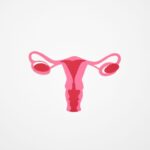



What Do Animal Studies Show About Parabens and Testosterone?
Some animal studies have reported effects on the male reproductive system after high-dose paraben exposure. These findings deserve attention and are part of why regulators keep reviewing the evidence.
The limits matter just as much. Many of these studies used doses or exposure routes that do not reflect typical human use. Animal results do not automatically carry over to people, and effects seen at high doses do not always appear at low ones.
Regulatory bodies in the United States and Europe have reviewed this body of research. Their general position has been that current use levels in cosmetics are not established to pose a hormonal risk to consumers, while continuing to monitor new data. That is a judgment based on the whole evidence picture, not a claim that parabens are proven harmless in every scenario.
What Do Human Studies Actually Show?
Human research on parabens and testosterone is limited and mostly observational. The evidence is mixed, and no study has demonstrated that typical paraben exposure lowers testosterone.
Several studies have measured paraben concentrations in urine alongside reproductive hormones in adults. Some reported associations with certain hormones. Others did not. The associations, where found, tended to be small and inconsistent across studies — a pattern that often signals noise or confounding rather than a true effect.
Confounding is a real problem here. People with higher paraben levels may differ in other ways — diet, body weight, use of other products — that also affect hormones. Observational studies try to account for this statistically, but they cannot fully separate the threads.
What would settle the question is a controlled trial measuring testosterone before and after controlled paraben exposure. That kind of study is difficult and expensive, and it has not been done in a way that gives a clear answer.
Are There Other Reasons to Limit Paraben Exposure?
Some people choose paraben-free products for reasons unrelated to testosterone. Skin sensitivity is one. A minority of people find certain parabens irritating, and fragrance or preservative allergies are well documented.
Environmental concerns are another reason some consumers avoid them, since parabens can be detected in wastewater. That is a separate conversation from personal hormone health.
It is worth being clear about what paraben-free does and does not mean. “Paraben-free” is a marketing label, not a safety guarantee. Products still need preservation, and the replacements used instead are not automatically better studied or safer. Some alternative preservatives have their own sensitization concerns.
If you want to reduce exposure, the practical step is to use fewer products overall rather than chasing specific labels. That said, there is no established health reason tied to testosterone that requires avoiding parabens.
What Actually Affects Testosterone?
The factors with the strongest evidence for influencing testosterone are well established, and parabens are not among them. This is where attention is better spent.
Body weight matters. Excess body fat is associated with lower testosterone in men, and weight loss tends to raise it. Sleep matters — testosterone production follows a daily rhythm, and chronic sleep restriction is linked to lower levels. Severe calorie restriction and overtraining can suppress the reproductive hormone axis. Certain medical conditions and medications affect testosterone directly.
If you are concerned about your testosterone, these established factors are where the evidence is solid. A preservative in your moisturizer is not where the strong signal is.
One clarification worth making: testosterone naturally declines with age in men, gradually and individually. A single low reading does not diagnose low testosterone. Clinicians typically confirm with repeat morning measurements and consider symptoms together with the numbers.
Should You Worry About Parabens and Testosterone?
Based on current evidence, there is no confirmed reason to worry that parabens are lowering your testosterone. The concern is plausible enough to keep studying but not strong enough to support a health claim either way.
Be skeptical of headlines that present a cell study or a single observational finding as proof of harm. Be equally skeptical of anyone who says the question is fully closed. Science rarely works that cleanly, and honest researchers will tell you the human data are thin.
If you have symptoms that suggest low testosterone — persistent fatigue, low sex drive, changes in mood or body composition — talk to a clinician. Those symptoms have many possible causes, and a hormone concern deserves proper evaluation rather than a guess based on what is in your shampoo.
Frequently Asked Questions
Do parabens lower testosterone in men?
No human study has shown that parabens lower testosterone in men. Some lab and animal research raises questions worth studying, but the human evidence does not confirm a testosterone-lowering effect.
Are parabens endocrine disruptors?
Parabens can show weak estrogen-like activity in laboratory tests, which is why they are sometimes called endocrine-active. Whether that activity produces meaningful hormonal effects in people at typical exposure levels is not established.
Should I switch to paraben-free products for hormone health?
There is no confirmed hormone-related reason to avoid parabens based on current evidence. Some people choose paraben-free products for skin sensitivity or personal preference, which is a separate consideration.
How can I tell if my testosterone is low?
Only a blood test ordered and interpreted by a clinician can confirm low testosterone, usually with repeat morning measurements. Symptoms like fatigue or low sex drive have many causes and are not specific to testosterone.
