
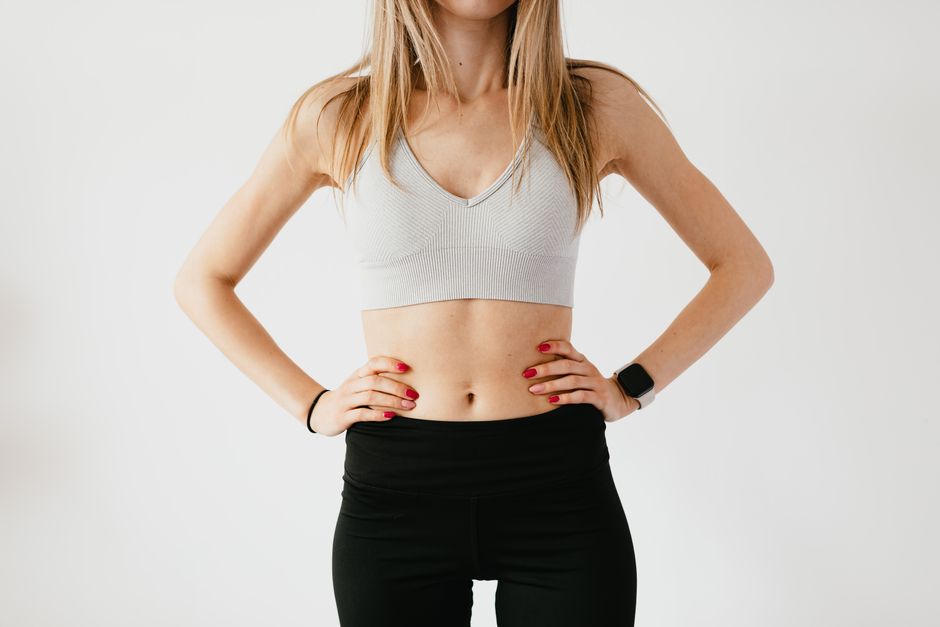
If you are checking the mirror every day for the first sign of abs, you have probably noticed something odd. The sides of your waist sometimes look more defined before the front of your stomach does. This is not your imagination, and it is not proof that you are getting leaner. Do obliques show before abs? In most people, the obliques do not truly “show” first because of fat loss order. What usually happens is that the shape of your torso changes as fat comes off, and the obliques sit in a spot where that change is easier to notice.
Body fat does not come off one area at a time. Your genes decide the order, and the belly is often one of the last places to lean out. The obliques are the muscles along the sides of your waist. They can look more visible early on for reasons that have more to do with anatomy and lighting than with real muscle definition.
What Are the Obliques and Where Are They?
The obliques are two pairs of muscles that wrap around the sides of your abdomen. You have the external obliques on the outside and the internal obliques underneath them. Together they help you twist your trunk, bend to the side, and brace your core when you lift something heavy.
They sit between your lower ribs and the top of your pelvis. Because they run along the side of your waist, they are close to the surface in many people. That matters for the question at hand. A muscle that sits closer to the skin can create a visible line or shadow with less fat loss than a muscle buried under more tissue.
The rectus abdominis, the muscle people call the “six-pack,” runs down the front of your belly. It is a single sheet divided by bands of connective tissue. Those bands create the blocky look. For that look to appear, the fat covering the front of your stomach has to drop low enough to reveal the divisions underneath.
Does Body Fat Come Off Your Obliques First?
No. Fat loss does not follow a menu where you pick the area. When you are in a calorie deficit, your body pulls energy from fat stores across your whole body. The order and the amount lost from each spot are set largely by genetics, sex, and hormones.
Research on fat distribution consistently shows that where you store fat and where you lose it first are strongly influenced by factors you do not control. For many men, the belly and lower back are stubborn areas that hold on longer. For many women, the hips, thighs, and lower belly tend to be stubborn. The obliques are often not the last place to lean out, but they are not reliably first either.
This is why “spot reduction” does not work. Doing side bends or twists will strengthen the obliques, but it will not burn the fat sitting on top of them. The muscle you train and the fat you lose are two separate things.
Why Do Obliques Look More Defined Before Abs?
The obliques often appear more visible early because of where they sit and how shadows fall. The side of your waist is a curved surface. Even a small change in fat there can create a line or a slight indentation that catches light and reads as definition.
The front of your stomach is a flatter surface. For the rectus abdominis to show, you generally need lower overall body fat, because the fat on the front of the belly tends to sit in a thicker layer. So the timeline is not “obliques first, then abs.” It is more that the obliques can create a visible shape sooner, while true six-pack definition usually requires getting leaner.
Two other things fool people:
- Lighting and posture. A slight twist or a shadow from overhead light can make the obliques pop even when body fat has not changed much.
- Bloating and water. The front of the belly changes size with digestion, salt, and hydration. The sides change less. So on a bloated day, the front looks softer while the sides look the same.
None of this means the obliques are actually “showing” in the sense of real muscle definition. It means the shape of your waist is changing, and that change is easier to see on the sides.


What Body Fat Level Do You Need to See Abs?
There is no single number that works for everyone. Visible abs depend on where you store fat, your muscle size, and your genetics. That said, general ranges are often cited in fitness and clinical settings.
For men, abdominal definition commonly becomes visible somewhere around 10 to 15 percent body fat, though some men see it higher and some need to go lower. For women, the range is usually higher, often around 18 to 24 percent, because women carry more essential fat for normal hormonal and reproductive function.
These are rough guides, not rules. A person with more muscle mass may show abs at a higher body fat percentage than someone with less muscle. A person who stores fat mostly in the belly may need to get leaner than a person who stores it elsewhere.
One point worth making: pushing body fat very low is not automatically healthier. Essential fat is the minimum your body needs for basic function. For men, essential fat is roughly 2 to 5 percent. For women, it is roughly 10 to 13 percent. Going below these levels is not sustainable and can harm hormone function, bone health, and overall health. Visible abs are not a medical goal.
Can You Target Oblique Fat With Exercise?
No. You cannot burn fat from a specific spot by training the muscle under it. This is one of the most repeated myths in fitness, and the evidence against it is solid. Studies that measured fat loss from a trained limb versus an untrained limb found no local fat loss advantage.
What training does is build and strengthen the muscle. If you train your obliques, they may get stronger and slightly larger. But the fat on top of them will only come off when you lose fat overall through a calorie deficit.
This matters because many people do hundreds of side bends or twists hoping to melt waist fat. That approach does not work for fat loss, and heavy loaded side bends can actually thicken the waist over time by building the obliques. If your goal is a narrower waist, endless weighted side bends may work against you.
If your goal is a stronger core, oblique training has real value. Twisting and bracing movements are part of how the trunk stabilizes under load. That is a performance and function benefit, separate from appearance.
Why Your Abs May Not Show Even at Low Body Fat
Some people get lean and still do not see a six-pack. There are a few honest reasons for this.
First, muscle size matters. If the rectus abdominis is not well developed, there is less to show even when fat is low. Second, genetics shape the connective tissue bands. Some people have deeper divisions that show easily. Others have shallower ones. Third, posture and rib position change how the abs look. A forward-leaning ribcage can make the front of the belly look flatter or rounder regardless of fat.
It is also possible to be lean and still hold a stubborn layer of fat on the lower belly. This is common and largely genetic. It does not mean you are doing something wrong.
What Actually Moves the Needle
If your goal is a leaner waist and more visible core, the levers are well established.
- Calorie deficit. Fat loss requires eating fewer calories than you burn. This is the foundation.
- Adequate protein. Protein helps preserve muscle while you lose fat.
- Resistance training. Training your whole body, including the core, helps keep muscle as you lean out.
- Patience. Fat loss is slow and not linear. The order fat comes off is not something you can control.
There is no shortcut that changes the order your body burns fat. The obliques looking more defined early is a normal visual effect, not a sign that you are ahead of schedule.
Frequently Asked Questions
Do obliques show before abs?
Usually the obliques do not truly show first, but they can appear more defined early because they sit on the curved side of your waist where small fat changes create visible shadows. Real six-pack definition on the front of the belly generally requires getting leaner than the sides do.
Can you lose fat from your obliques specifically?
No. Spot reduction does not work, and research has not found that training a muscle burns the fat directly over it. Fat comes off your whole body based on genetics and hormones, not on which muscle you exercise.
What body fat percentage do you need to see abs?
For men, abdominal definition often appears around 10 to 15 percent body fat, and for women around 18 to 24 percent, though this varies by genetics and muscle mass. These are rough guides, not fixed rules.
Why can I see my obliques but not my abs?
Your obliques sit closer to the surface on the curved side of your waist, so small fat changes there catch light and read as definition. The front of your belly usually holds a thicker fat layer, so it needs more overall fat loss before the abs show.
