
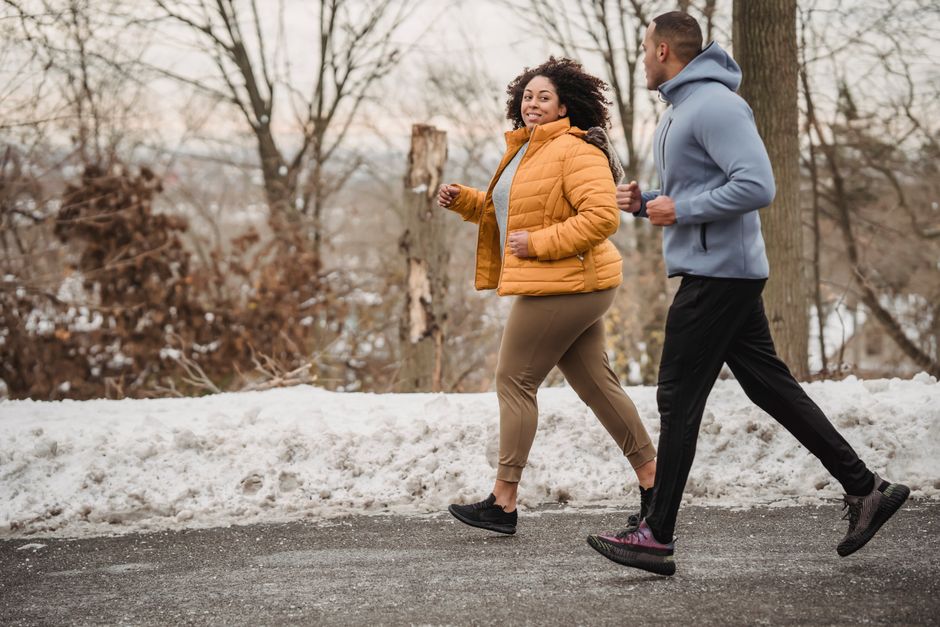
Walking burns fat, but only if you get the pace and the duration right. The body doesn’t switch to fat as a fuel the moment you start moving. Fat burning ramps up as your heart rate rises into a moderate zone and you keep it there long enough for fat to become the dominant fuel source. For most adults, that means a brisk pace where you can talk but not sing, sustained for at least 30 minutes, several days a week.
How To Walk Off Weight Burn Fat At The Right Pace
Pace determines which fuel your muscles prefer. At rest and during easy movement, your body runs mostly on fat. As intensity climbs, carbohydrate takes over because it delivers energy faster. The fat-burning sweet spot sits in the middle — hard enough to burn meaningful calories, easy enough that fat remains the primary fuel.
Exercise physiologists describe this as the crossover point, the intensity where your body shifts from burning mostly fat to mostly carbohydrate. Walking below this point burns a high percentage of fat but few total calories. Walking above it burns more calories per minute but a smaller fat percentage. The practical answer is to train near that middle zone.
A simple way to find it without a heart rate monitor is the talk test. If you can hold a conversation but not sing, you’re in the moderate range. If you’re too breathless to speak in full sentences, you’ve crossed into vigorous territory. Both burn fat. Moderate walking just burns a higher proportion of it.
What heart rate zone should you aim for?
Moderate-intensity walking generally falls between 64% and 76% of your maximum heart rate. A commonly used estimate for maximum heart rate is 220 minus your age, though this formula carries a margin of error of roughly 10 to 12 beats per minute for any individual. That means the number is a starting point, not a precise target.
For a 50-year-old, the estimate puts maximum heart rate near 170 bpm and the moderate zone roughly between 109 and 129 bpm. If you take a medication that slows heart rate, such as a beta blocker, the formula won’t apply to you. In that case, use the talk test or perceived effort instead.
The perceived effort scale runs from 6 (no effort) to 20 (maximum). Moderate walking sits around 12 to 14 — you feel warm and slightly breathless but not strained. This scale is well validated and often more useful than a heart rate number.
How long do you need to walk to burn fat?
Fat contributes a growing share of your fuel as a walk continues. In the first few minutes, your muscles rely more on stored carbohydrate. As the session extends, fat oxidation increases and becomes the larger fuel source. This is why duration matters as much as pace.
Current physical activity guidelines for US adults call for at least 150 minutes of moderate-intensity aerobic activity per week, or 75 minutes of vigorous activity, or a mix of both. That works out to about 30 minutes on five days. The guidelines also note that some activity is better than none, and that benefits accumulate with more.
You don’t have to do it in one block. Three 10-minute walks count the same as one 30-minute walk for meeting the weekly target. For fat loss specifically, longer continuous sessions may have an edge, but the difference is modest. Consistency across the week matters more than any single long walk.
If your goal is weight loss rather than general health, the weekly volume often needs to be higher. Some research suggests that beyond 150 minutes, additional walking continues to support weight management, though individual results vary widely based on diet, starting weight, and genetics.
Does walking actually burn enough calories to lose weight?
Walking burns calories, but the amount is smaller than most people expect. A rough estimate for brisk walking is about 0.04 to 0.06 calories per pound of body weight per minute, though this varies with pace, terrain, and fitness. For a 180-pound person, a brisk 30-minute walk might burn somewhere in the range of 150 to 200 calories.
That number matters less than it seems, because weight loss is driven by a sustained calorie deficit. Walking helps create that deficit, but it’s hard to out-walk a large surplus. A single fancy coffee drink can erase a 30-minute walk. This isn’t a reason to skip the walk. It’s a reason to treat walking as one part of a larger picture.
There’s also a compensation effect worth knowing about. Some people unconsciously move less after a workout or eat more, partly offsetting the calories burned. This is well documented in exercise research. Tracking your steps outside of formal walks can help you notice if this is happening.





Is walking better than running for fat loss?
Running burns more calories per minute. That part is straightforward. A 180-pound person running at a moderate pace burns roughly double what they’d burn walking the same duration. If the only variable were calories per minute, running would win.
But fat loss isn’t decided by one workout. It’s decided by what you can sustain week after week without injury or burnout. Walking has a lower injury rate, is easier to recover from, and fits into more schedules. For many people, that translates into more total minutes moved over a month or a year.
The evidence comparing walking and running for long-term weight loss is mixed. Some studies show similar results when total energy expenditure is matched. Others favor higher-intensity activity. What’s consistent is that adherence — actually doing it regularly — predicts outcomes better than the modality itself.
What mistakes slow down fat loss from walking?
Several common habits quietly undercut results. None of them mean walking doesn’t work. They mean the walking isn’t being used well.
- Walking too slowly. A leisurely stroll burns calories but rarely reaches the moderate zone. Pick up the pace until the talk test puts you at moderate effort.
- Stopping too soon. Walks under 10 minutes contribute little to fat oxidation. Aim for at least 20 to 30 minutes when you can.
- Ignoring diet. Walking alone rarely produces significant weight loss without some attention to calorie intake. The two work together.
- Doing the same route every day. Your body adapts to familiar effort. Adding hills, intervals, or a faster pace keeps the challenge real.
- Skipping days. Sporadic walking gives sporadic results. Frequency matters more than intensity for most beginners.
One non-obvious point: walking on an incline raises intensity without requiring speed. If joint pain or fitness limits how fast you can go, a slight hill can push you into the moderate zone at a comfortable pace.
How do you build up without burning out?
Start where you are. If 10 minutes feels hard, do 10 minutes. The goal in the first few weeks isn’t fat loss — it’s building the habit and letting your joints, tendons, and muscles adapt.
A reasonable progression is to add about 5 minutes per week to your longest walk until you reach 30 to 45 minutes, then add a day or increase pace. This isn’t a clinical prescription, just a common approach coaches use. Your own recovery tells you if you’re moving too fast.
Once you’re comfortable at 30 minutes, you can layer in variety. One or two walks a week at a faster pace, one on hills, and the rest at your steady moderate effort. This mix keeps your body adapting and reduces the boredom that ends most walking routines.
Warm up for the first few minutes at an easy pace. Cool down at the end. Stretching after, not before, is generally recommended for walking. If you have heart disease, joint problems, or you’re over 65 and haven’t exercised recently, check with a clinician before starting a new routine.
What role does diet play alongside walking?
Walking and eating are not competing strategies. They’re two levers on the same machine. Walking increases the calories you burn. Diet controls the calories you take in. Fat loss requires the second number to sit below the first.
You don’t need a perfect diet to see results from walking. Small, sustainable changes — more protein, fewer liquid calories, more vegetables — often matter more than dramatic overhauls. The combination of regular walking and modest dietary changes tends to outperform either one alone in weight loss research.
Protein deserves a mention. It supports muscle retention during weight loss, and muscle burns more calories at rest than fat. Walking alone won’t build much muscle, so adding resistance training a couple of days a week can help preserve lean mass while you lose fat.
Frequently Asked Questions
How many minutes a day should I walk to lose belly fat?
Aim for at least 30 minutes of brisk walking most days, which adds up to the 150 weekly minutes recommended for adults. Spot reduction isn’t possible, so belly fat comes off as part of overall fat loss, not from walking alone.
Is it better to walk in the morning or evening for fat loss?
Total daily calories burned and eaten matter more than the time of day. Some evidence suggests morning exercise may support consistency, but the difference in fat loss between morning and evening walking is not well established.
Can walking alone help me lose weight without dieting?
Walking alone can produce modest weight loss, especially in people who were previously inactive. For most people, meaningful weight loss requires combining walking with attention to calorie intake.
How fast should I walk to burn fat?
A brisk pace where you can talk but not sing puts most adults in the moderate-intensity zone where fat contributes a large share of fuel. If you can’t speak in short sentences, slow down slightly.
