
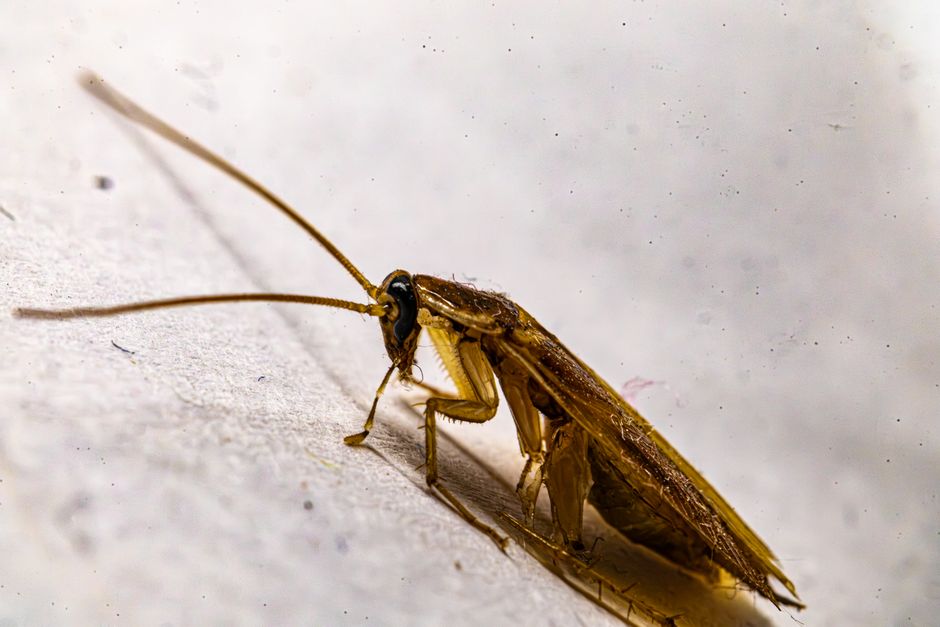
If you have bed bugs, you may have noticed cockroaches in the same home and wondered whether one pest takes care of the other. Cockroaches do eat bed bugs. They are opportunistic scavengers, and a bed bug — alive, injured, or dead — is a source of protein they will readily consume. But this is not good news, and it does not mean cockroaches will solve a bed bug problem.
The two pests can live in the same space without one wiping out the other. In most homes, cockroaches and bed bugs coexist, each feeding on what is easiest to reach. Understanding why cockroaches eat bed bugs — and why that fact rarely helps — starts with how each insect lives and feeds.
Do Cockroaches Actually Eat Bed Bugs?
Yes. Cockroaches are omnivores and scavengers. Their diet includes starches, sugars, grease, decaying organic matter, other insects, and insect eggs. A bed bug is a small, soft-bodied insect packed with protein, which makes it a perfectly acceptable meal.
This behavior has been observed in both laboratory settings and real infestations. Certain species are more likely to prey on other insects than others. The German cockroach, the most common indoor species in the United States, is a generalist feeder that will eat almost anything it can find. Larger species like the American cockroach and the Oriental cockroach also scavenge on insects and other arthropods.
The key word is opportunistic. A cockroach does not hunt bed bugs. It eats one when it happens to find one, especially a bed bug that is injured, dead, or still in its egg stage. A healthy adult bed bug is fast, flat, and hides in cracks where cockroaches rarely go.
Why Don’t Cockroaches Get Rid of Bed Bugs?
A cockroach eating a bed bug is a random event, not a control method. For cockroaches to meaningfully reduce a bed bug population, they would need to find and eat bed bugs faster than the bed bugs reproduce. That does not happen.
Several factors explain why:
- Bed bugs hide in tiny crevices — seams of mattresses, behind baseboards, inside furniture frames — where cockroaches seldom travel.
- Bed bugs are most active at night when they feed on sleeping people. Cockroaches are also nocturnal, but their paths rarely cross in the confined spaces where bed bugs rest.
- A single bed bug can lay hundreds of eggs over its lifetime. Even if cockroaches ate some adults, the eggs and nymphs hidden in cracks would survive.
- Cockroaches prefer easy food. Crumbs, grease, pet food, and garbage are more reliable than chasing live insects.
So while cockroaches eat bed bugs, they do not control them. Relying on cockroaches to fix a bed bug problem would be like relying on a house cat to eliminate a mouse infestation in a warehouse — technically it might catch one, but it will not solve the problem.
Do Bed Bugs Eat Cockroaches?
No. Bed bugs feed almost exclusively on blood. They do not eat other insects, dead or alive. Their mouthparts are built for piercing skin and sucking blood, not for chewing or scavenging.
This is an important distinction. Bed bugs are hematophagous, meaning blood-eating. They require a blood meal to grow and reproduce. Their preferred hosts are humans, though they will feed on other warm-blooded animals if humans are not available.
Cockroaches, by contrast, are omnivorous scavengers. They eat plant and animal matter, including other insects. The relationship is one-directional: cockroaches may eat bed bugs, but bed bugs never eat cockroaches.



Can Cockroaches and Bed Bugs Live Together?
Yes, and they often do. Both pests thrive in the same conditions: warm indoor environments, easy access to hiding spots, and plenty of cracks and crevices. A home with a bed bug problem can also have a cockroach problem, and the two do not cancel each other out.
In fact, the presence of one pest can make the other harder to detect. Cockroach droppings, shed skins, and egg cases can be mistaken for signs of bed bugs, and vice versa. Both leave behind debris that can confuse a visual inspection.
There is also a practical concern. Cockroaches can carry bacteria on their bodies and contaminate food and surfaces. Bed bugs do not transmit disease, but they bite and cause itching and allergic reactions in some people. Having both pests in a home creates two separate health and nuisance problems that each need their own solution.
Do Cockroaches Eat Bed Bug Eggs?
Cockroaches will eat bed bug eggs if they find them. Bed bug eggs are small, white, and glued to surfaces in hidden areas. They are a source of protein and moisture, and a scavenging cockroach would not pass one up.
But again, finding them is the problem. Bed bug eggs are typically laid in the same hidden crevices where the adults rest — mattress seams, behind headboards, inside electrical outlets, and along baseboards. These are not the open, accessible areas where cockroaches usually forage.
Even in a heavy cockroach infestation, enough bed bug eggs survive in protected spots to sustain the bed bug population. There is no evidence that cockroaches reduce bed bug numbers in a meaningful way.
What Actually Kills Bed Bugs?
Bed bugs are killed by heat, certain insecticides, and in some cases desiccant dusts that dry them out. Effective treatment usually involves a combination of methods, and it often requires patience and repeat applications.
Established approaches include:
- Heat treatment: Raising the temperature of a room or the entire home to a level that kills bed bugs and their eggs. This is typically done by professionals.
- Insecticides: Certain chemical treatments applied by licensed pest control operators. Bed bugs have developed resistance to some older insecticides, so product choice matters.
- Desiccant dusts: Products like diatomaceous earth can kill bed bugs by damaging their outer shell and causing them to dry out. These work slowly and are not a quick fix.
- Steam: High-temperature steam can kill bed bugs and eggs on contact in cracks and fabric seams.
- Professional inspection and follow-up: Because bed bugs hide so well, a single treatment rarely eliminates an infestation. Follow-up visits are usually needed.
No home remedy — including introducing or relying on cockroaches — has been shown to eliminate bed bugs. If you have a bed bug problem, a licensed pest control professional can assess the situation and recommend a treatment plan.
Can Cockroaches Carry Bed Bugs?
Cockroaches do not carry bed bugs the way a mosquito carries malaria. They do not host bed bugs, transport them intentionally, or spread them from home to home. A cockroach that eats a bed bug digests it. It does not become a carrier.
However, cockroaches can move through the same cracks and voids that bed bugs use. In an apartment building or shared wall, both pests can travel between units through plumbing lines, electrical conduits, and structural gaps. So while cockroaches do not carry bed bugs, the presence of cockroaches in a building can be a sign that the structure has the kind of openings bed bugs also exploit.
This is one reason bed bug problems in multi-unit buildings are so difficult to control. Treating one apartment without addressing the whole building often leads to reinfestation.
Should You Worry About Cockroaches Eating Bed Bugs?
No. The fact that cockroaches eat bed bugs does not change how you should handle either pest. If you have bed bugs, the priority is eliminating the bed bugs. If you have cockroaches, the priority is eliminating the cockroaches. One does not replace the other.
Both pests require different treatment strategies. Cockroach control focuses on removing food, water, and harborage, along with targeted insecticides or baits. Bed bug control focuses on inspection, heat or chemical treatment, and often professional help.
If you suspect either pest, act early. Both populations grow quickly, and the longer they are left alone, the harder they are to remove.
Frequently Asked Questions
Do cockroaches eat bed bugs?
Yes, cockroaches are opportunistic scavengers and will eat bed bugs, especially injured or dead ones. However, they do not hunt bed bugs actively and will not control an infestation.
Will cockroaches get rid of bed bugs in my house?
No. Cockroaches eat bed bugs randomly, not systematically, and cannot reduce a bed bug population fast enough to matter. Bed bugs hide in places cockroaches rarely reach, and their eggs survive in protected cracks.
Do bed bugs eat cockroaches?
No. Bed bugs feed only on blood and do not eat other insects. Their mouthparts are designed for piercing skin and sucking blood, not for chewing or scavenging.
Can cockroaches and bed bugs live in the same house?
Yes, they often do. Both pests prefer warm indoor environments with plenty of hiding spots, and the presence of one does not eliminate the other.
