
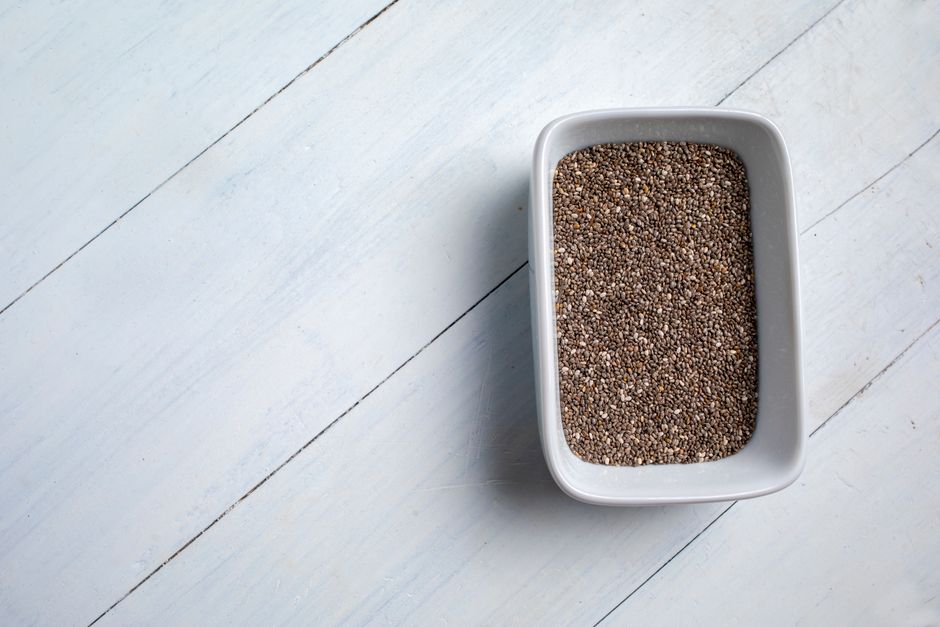
Chia seeds do not reliably help with bloating, and for some people they can make it worse. The seeds are rich in fiber, and fiber is a common trigger for gas and abdominal discomfort, especially when you add a lot of it quickly. There is no clinical evidence showing chia seeds relieve bloating. If bloating is a recurring problem for you, chia is not a treatment — it is a food that may help or hurt depending on your gut, your habits, and how much you eat.
What Happens When You Eat Chia Seeds?
Chia seeds absorb water and form a gel. That gel adds volume and moisture to stool, which is why chia is often used as a gentle bulking agent for constipation. The seeds also contain fiber, protein, and omega-3 fats.
A single ounce of chia seeds — about two tablespoons — provides roughly 10 grams of fiber. That is a substantial amount for one small serving. Most adults are advised to get somewhere in the range of 25 to 38 grams of fiber per day, depending on age and sex, so two tablespoons of chia can cover a large share of that target in one go.
That fiber is the key to understanding the bloating question. Fiber is not digested in the small intestine. It travels to the colon, where gut bacteria ferment it. Fermentation produces gas. For some people, that gas is unremarkable. For others, it causes pressure, distension, and the exact sensation of bloating they were hoping to avoid.
Why Does Fiber Cause Bloating in Some People?
Gas production is a normal part of fiber digestion. The question is why it bothers some people and not others.
The answer comes down to a few factors:
- Speed of introduction. Adding a large amount of fiber suddenly gives gut bacteria a big new food supply. Gas production rises before the gut adapts.
- Gut bacteria composition. Different people carry different bacterial populations. Some produce more gas from the same food.
- Underlying conditions. Irritable bowel syndrome, small intestinal bacterial overgrowth, and other gut disorders can make normal gas production feel painful or severe.
- Water intake. Chia needs water to form its gel. Eating dry chia or too little fluid alongside it can slow things down rather than move them along.
This is why the same food can be fine for one person and miserable for another. It is not a matter of willpower or tolerance. It is physiology.
Can Chia Seeds Actually Reduce Bloating?
There is no clinical evidence that chia seeds reduce bloating. No controlled human trials have shown chia to relieve abdominal distension or gas.
The idea that chia helps bloating usually comes from a chain of reasoning: chia contains fiber, fiber helps constipation, constipation can cause bloating, therefore chia helps bloating. That chain has a weak link. Fiber helps some cases of constipation. But the bloating that comes with constipation is not always resolved by adding more fiber, and in some people more fiber makes it worse.
Some studies suggest that soluble fiber can improve stool frequency and consistency in people with chronic constipation. Chia is a source of soluble fiber. But improving bowel movements and reducing bloating are not the same outcome, and the research does not treat them as interchangeable.
If your bloating is caused by constipation, addressing the constipation may help the bloating. Whether chia is the right tool for that depends on your gut and how your body responds.




Do Chia Seeds Help with Bloating or Make It Worse?
For many people, chia makes bloating worse — at least at first. That is the honest answer, and it is worth stating plainly because the marketing around chia often suggests the opposite.
The reasons chia can worsen bloating:
- It delivers a concentrated dose of fermentable fiber in a small volume.
- It is easy to overeat. Two tablespoons is a lot of fiber, and it is easy to add that to a diet that already contains plenty.
- It is often added to smoothies and other foods without adjusting the rest of the diet, pushing total fiber intake higher than the gut is ready for.
That does not mean chia is bad. It means chia is a high-fiber food, and high-fiber foods require some care. The same is true of beans, broccoli, and bran.
How to Eat Chia Without the Bloat
If you want to include chia in your diet and you are prone to bloating, the approach that makes physiological sense is to start small and go slowly.
Some practical steps:
- Start with a small amount — a teaspoon rather than two tablespoons — and see how your gut responds over several days.
- Increase gradually over weeks, not days.
- Drink enough water. Chia absorbs liquid, and without enough fluid it can slow digestion rather than support it.
- Soak chia before eating it. Letting it form its gel ahead of time is gentler than eating it dry.
- Do not stack multiple high-fiber additions at once. If you are adding chia, do not also add bran and beans in the same week.
These steps are not a treatment for bloating. They are a way to reduce the chance that a new high-fiber food causes the problem you are trying to solve.
When Bloating Is Not About Chia
Bloating is a symptom, not a diagnosis. Persistent or recurring bloating can have many causes, and chia is rarely the whole story.
Common contributors include:
- Constipation
- Irritable bowel syndrome
- Food intolerances, including lactose and certain fermentable carbohydrates
- Swallowed air from eating quickly, drinking through straws, or carbonated drinks
- Changes in gut bacteria
- In some cases, conditions that require medical evaluation
If bloating is persistent, painful, or accompanied by weight loss, blood in the stool, vomiting, or a change in bowel habits that does not resolve, that is a reason to see a doctor. Those symptoms are not something to manage with dietary tweaks alone.
For occasional bloating tied to a specific food or a recent diet change, adjusting what and how you eat is reasonable. For bloating that is frequent or unexplained, the cause matters more than the remedy.
Is Chia Worth Eating at All?
Yes, for most people. Chia is a legitimate source of fiber, plant-based omega-3 fats, and protein. It fits into a healthy diet. It is just not a bloating remedy.
The mistake is treating a nutritious food as a treatment for a symptom it was never shown to fix. Chia can support digestive health in the sense that fiber supports bowel regularity. It does not reliably reduce bloating, and it can increase it.
If your goal is less bloating, the more useful questions are about what is causing the bloating in the first place. Fiber intake, fluid intake, gut health, and underlying conditions all matter more than whether chia is on the menu.
Frequently Asked Questions
Do chia seeds help with bloating?
No. There is no clinical evidence that chia seeds reduce bloating, and their high fiber content can make bloating worse in some people.
Why do chia seeds make me bloated?
Chia is high in fermentable fiber, which gut bacteria break down and turn into gas. Eating a lot of it quickly, or without enough water, increases the chance of pressure and distension.
How much chia should I eat to avoid bloating?
There is no established amount that prevents bloating, but starting with about a teaspoon and increasing slowly over weeks is a reasonable approach for most people.
Can chia seeds help with constipation bloating?
Chia may support bowel regularity because of its fiber and water-absorbing properties, and relieving constipation can reduce bloating for some people. Whether it works for you depends on your gut and how your body responds.
