
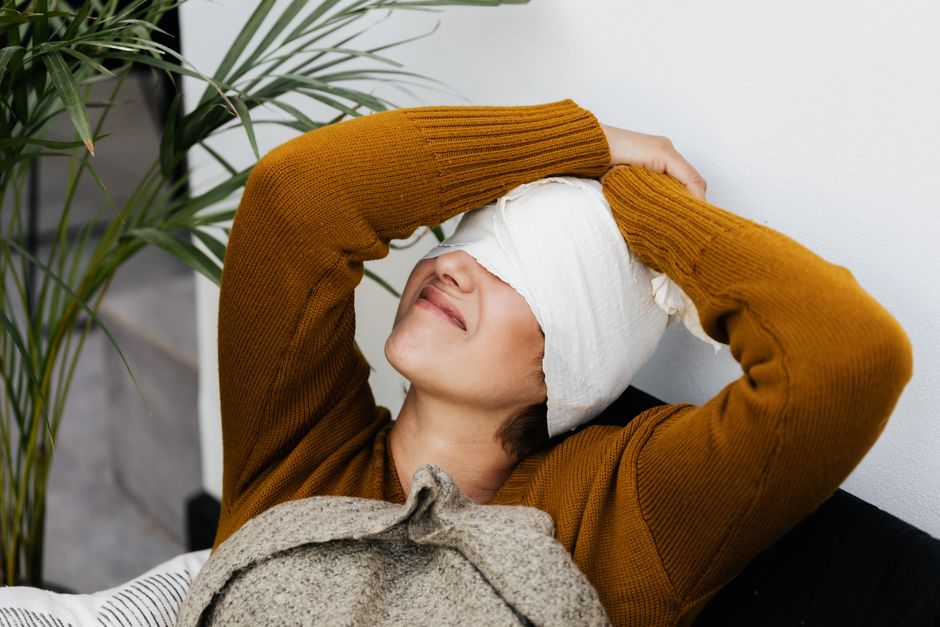
Most headaches ease with basic steps: water, a quiet dark room, a cold or warm compress, and an over-the-counter pain reliever taken early. That approach works for ordinary tension-type and migraine headaches. But the right treatment depends on what kind of headache you have, and some headaches need medical care rather than home soothing. This guide covers what actually helps, what the evidence says, and when to stop treating a headache at home and call a doctor.
What Is Actually Happening During a Headache?
A headache is not your brain hurting. Brain tissue itself has no pain receptors. The pain comes from structures around and inside the head that do sense pain: blood vessels, the membranes covering the brain (meninges), muscles of the scalp and neck, and certain nerves.
In a tension-type headache, the most common kind, the pain is often described as a tight band around the head. Muscle tension in the neck and scalp is part of the picture, though researchers still debate how much of the pain comes from those muscles versus the nervous system’s own pain processing.
Migraine is different. It involves changes in brain chemistry and blood flow, plus activation of the trigeminal nerve system. That is why migraine often brings nausea, light sensitivity, and throbbing pain, sometimes on one side.
Knowing which type you have matters, because the soothing strategies overlap but the treatment does not.
How To Soothe A Headache Right Now
For a mild to moderate headache, these steps are reasonable first moves. None of them require a prescription.
- Drink water. Dehydration is a common trigger. If you have not had much to drink, a glass of water is a sensible starting point.
- Rest in a dark, quiet room. This helps most with migraine, where light and sound make pain worse.
- Try a cold pack on the forehead for migraine-type pain, or a warm compress on the neck and shoulders for tension-type pain.
- Take a break from screens. Eye strain and prolonged screen focus can contribute to head pain.
- Sleep or nap if you can. For many people, sleep ends a migraine attack.
- Eat something if you have skipped meals. Low blood sugar can trigger headaches in some people.
If those steps do not work and the pain is more than mild, an over-the-counter pain reliever is the next reasonable step. The key word is early. Taken at the first sign of a headache, these medications tend to work better than when the pain has already built up.
Which Over-The-Counter Pain Reliever Should You Use?
The common options are acetaminophen, ibuprofen, naproxen, and aspirin. All are available without a prescription in the United States. They work differently, and which one is best depends on the person and the headache type.
Acetaminophen is generally easier on the stomach. Ibuprofen and naproxen are anti-inflammatory drugs, which can help when inflammation plays a role. Aspirin is also an anti-inflammatory, but it is not appropriate for children or teenagers recovering from certain viral illnesses because of the risk of Reye’s syndrome, a rare but serious condition.
Two important cautions apply to all of them:
- Follow the label dose. Do not take more than directed. Acetaminophen in particular can cause serious liver injury at high doses, and it is easy to double up accidentally because it appears in many combination cold and flu products.
- Do not use them more than a few days a week. Taking pain relievers frequently can cause medication-overuse headache, a condition where the medication itself starts triggering daily headaches. This is a real and well-documented problem, not a rare one.
If you find yourself reaching for pain relievers most days, that is a signal to talk to a clinician rather than a reason to keep taking them.





What Helps a Migraine Specifically?
Migraine responds to some things that do not help tension-type headaches, and vice versa. Two features set migraine apart: it often comes with nausea and sensitivity to light and sound, and it tends to be throbbing and moderate to severe.
Beyond rest and a dark room, some people find relief from:
- Caffeine in small amounts. Caffeine can narrow blood vessels and is included in some migraine medications. It can help, but it can also trigger headaches in people who take it daily and then skip it.
- Cold applied to the head or neck. Some people report this dulls migraine pain.
- Prescription medications. For moderate to severe migraine, prescription treatments, including a class of drugs called triptans, are often more effective than over-the-counter options. These require a clinician’s evaluation.
If migraines are frequent or disabling, preventive treatment is a separate conversation with a doctor. Soothing an attack and preventing attacks are two different jobs.
What Usually Does Not Work
Some popular remedies have little or no evidence behind them. It is worth knowing which is which.
There is no reliable evidence that pressing on specific “pressure points” or acupressure reliably stops a headache, though some people find it relaxing. That relaxation itself may help a tension headache, but the pressure-point mechanism is not well supported.
Essential oils and aromatherapy have weak and mixed evidence. Some small studies suggest peppermint or lavender oil may take the edge off tension headaches, but the research is limited and results vary. They are not a substitute for treating a serious headache.
There is no evidence that “detoxing” or special cleanses relieve headaches. Headaches are not caused by a buildup of toxins that a cleanse removes. That claim does not match how the body works.
When a Headache Needs Medical Attention
Most headaches are not dangerous. A small number are, and the difference matters. Seek emergency care for a headache that:
- Comes on suddenly and severely, like a thunderclap, reaching peak intensity within seconds to a minute
- Comes with fever, stiff neck, confusion, or a rash
- Follows a head injury
- Comes with weakness, numbness, trouble speaking, or vision loss
- Is new and severe after age 50
- Keeps getting worse over days or weeks
A thunderclap headache can be a sign of bleeding around the brain, which is a medical emergency. Do not wait to see if it passes.
See a doctor, not necessarily the emergency room, if headaches are becoming more frequent, are waking you from sleep, or are interfering with daily life. Frequent headaches are worth evaluating even when they are not emergencies.
Can You Prevent Headaches Before They Start?
Prevention is often more effective than soothing, especially for people who get headaches regularly. The most useful steps are about patterns, not products.
Common and well-recognized triggers include dehydration, skipped meals, irregular sleep, alcohol, and stress. For some people, specific foods trigger migraines, though food triggers are individual and often over-attributed. Keeping a simple headache diary for a few weeks can help you spot your own patterns rather than guessing.
Regular sleep and wake times, staying hydrated, eating at consistent times, and managing stress all have reasonable support for reducing headache frequency. None of these is a guaranteed fix, and what works varies from person to person.
If you get headaches often enough that prevention matters, talk to a clinician. There are prescription preventive treatments for migraine and for chronic headache, and they are a different category of care than anything you can do at home.
Frequently Asked Questions
How do you get rid of a headache fast?
Drink water, rest in a dark quiet room, and take an over-the-counter pain reliever early if the pain is more than mild. Taking medication at the first sign of a headache tends to work better than waiting.
What is the best thing to do for a headache without medicine?
Rest, hydration, a cold or warm compress, and sleep help many people, especially with tension-type headaches and migraines. If those do not work within a reasonable time, medication or a clinician’s advice is the next step.
When should I worry about a headache?
Worry when a headache comes on suddenly and severely, follows a head injury, or comes with fever, stiff neck, confusion, weakness, or vision changes. Those signs mean you should seek emergency care.
Can taking too much pain medicine cause headaches?
Yes. Using over-the-counter pain relievers more than a few days a week can cause medication-overuse headache, where the medication itself triggers daily headaches. If you are taking them most days, talk to a clinician.
