
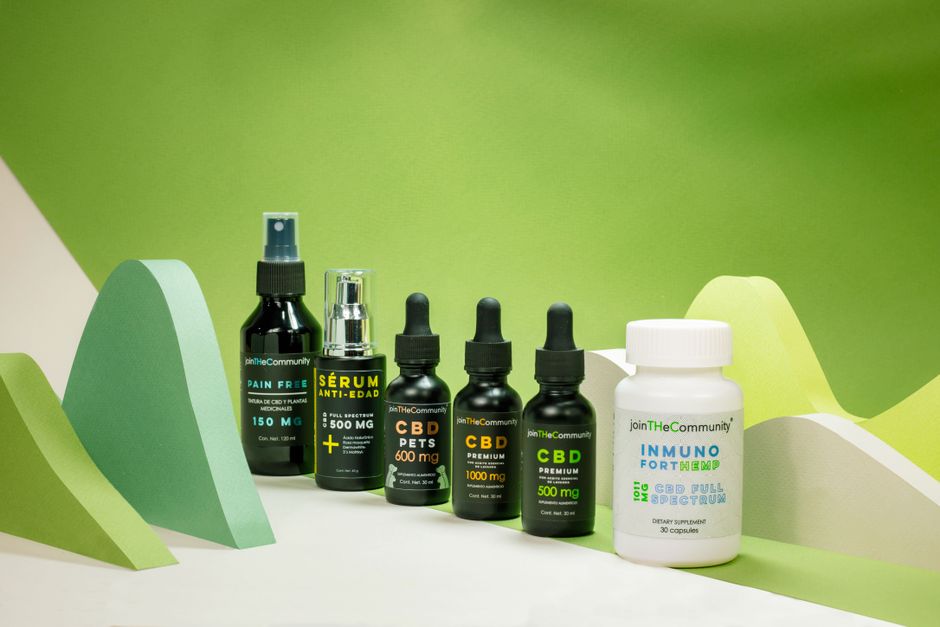
Inflammation is your body’s normal response to injury and infection. It becomes a problem when it stays switched on, which is the case in conditions like arthritis, inflammatory bowel disease, and many others. Cannabinoids — compounds found in the cannabis plant and also made naturally by your body — do interact with the immune system. The question is whether that interaction translates into real relief for people. The short answer: the biology is real, the human evidence is still limited, and most of what you see marketed online goes further than the science supports.
What Are Cannabinoids and How Do They Work?
Cannabinoids are chemical compounds that interact with the endocannabinoid system, a signaling network found throughout your body. This system helps regulate immune response, pain perception, appetite, mood, and sleep.
There are three broad categories. Endocannabinoids are made by your body. Phytocannabinoids come from plants, mainly cannabis. Synthetic cannabinoids are made in a lab for medical use.
The two best-known plant cannabinoids are THC (tetrahydrocannabinol) and CBD (cannabidiol). THC is the compound that causes the “high.” CBD does not produce that effect.
Both interact with receptors called CB1 and CB2. CB1 receptors are concentrated in the brain and nervous system. CB2 receptors are found mostly on immune cells. That CB2 connection is why researchers became interested in cannabinoids for inflammation in the first place.
But receptor activity is not the same as clinical benefit. A compound can bind to a receptor, trigger a measurable immune change in a lab dish, and still fail to produce meaningful symptom relief in a real person. This gap between mechanism and outcome runs through most of the cannabinoid research.
Do Cannabinoids Actually Reduce Inflammation in Humans?
The honest answer is that we do not yet have strong evidence that cannabinoids reduce inflammation in humans in a way that changes disease outcomes. Some studies show signals. Many do not.
What we know comes mostly from three areas:
- Lab studies: CBD and THC have shown anti-inflammatory effects on isolated cells and in animal models. These findings are consistent but do not automatically transfer to people.
- Small human trials: A limited number of small studies have looked at CBD or cannabis in conditions like arthritis and inflammatory bowel disease. Results have been mixed, and most trials were too small or too short to draw firm conclusions.
- Observational data: Surveys of people who use cannabis for chronic pain often report symptom improvement. But self-reported relief can reflect many things, including the placebo effect, and does not prove that inflammation itself was reduced.
One important distinction: reducing pain and reducing inflammation are not the same thing. THC can alter how the brain perceives pain through CB1 receptors. That can make someone feel better without changing the underlying inflammatory process at all.
Some research suggests CBD may influence certain inflammatory markers in humans, but the studies are small and the findings have not been consistently replicated. No large, well-controlled human trial has confirmed that CBD reduces inflammation in a clinically meaningful way for any specific inflammatory disease.
What Does the Research Say About CBD and THC Specifically?
CBD and THC behave differently, and lumping them together leads to confusion.
CBD has been studied more widely for its anti-inflammatory potential. In laboratory settings, it interacts with several receptors and enzymes involved in immune signaling. It also inhibits the breakdown of anandamide, a natural endocannabinoid that may play a role in immune regulation.
In humans, the strongest evidence for CBD is not for inflammation at all. It is for certain rare forms of childhood epilepsy, where specific CBD formulations have been shown in controlled trials to reduce seizure frequency. That is a real, established use. It does not tell us anything about whether CBD works for arthritis or colitis.
THC has stronger evidence for some types of chronic pain and for nausea related to chemotherapy. Its anti-inflammatory effects in humans are less well established. THC also carries risks that CBD does not, including impairment, dependence, and psychiatric effects in susceptible people.
A common misconception is that because CBD is legal in many states, it must be safe and effective. Legality and medical evidence are separate questions. The FDA has not approved CBD for any inflammatory condition.
-
 Does Red Light Therapy Reduce Inflammation? Here’s What to Know
 -
What Can I Do to Reduce Inflammation in My Body? What to Know
-
How Much Green Tea to Reduce Inflammation? A Closer Look
-
How to Reduce Bladder Inflammation Naturally? Simple Steps That Help
-
Joint Genesis Reviews 2025. Does Biodynamix Supplement Work





Can Cannabinoids Help With Conditions Like Arthritis or IBD?
Arthritis and inflammatory bowel disease (IBD) are two areas where cannabinoids have been studied most. The results are not strong enough to support them as primary treatments.
In arthritis, some small studies and patient surveys report reduced pain and improved sleep with cannabis or CBD use. But pain reduction does not necessarily mean the joint damage or inflammation is being controlled. No study has shown that cannabinoids slow joint destruction in rheumatoid arthritis.
In IBD, the picture is similar. Some patients report symptom relief. Small trials have not consistently shown reduced intestinal inflammation on endoscopy or biopsy. Gastroenterologists generally do not recommend cannabinoids as a treatment for IBD, though some patients use them alongside standard therapy.
This is where the difference between management and treatment matters. Cannabinoids may help some people feel better day to day. They have not been shown to change the course of these diseases. Standard treatments — disease-modifying drugs for arthritis, biologics and immunomodulators for IBD — have evidence behind them that cannabinoids currently do not.
Anyone considering cannabinoids should talk to their doctor first, especially because cannabinoids can interact with other medications. CBD, in particular, can affect how the liver breaks down certain drugs, including some blood thinners and anti-seizure medications.
What Forms Do Cannabinoids Come In and Does That Matter?
How a cannabinoid enters your body affects how much reaches your bloodstream and how long it lasts. This matters more than most people realize.
- Oral (capsules, edibles): Slow onset, typically 30 minutes to 2 hours. Effects last longer. Absorption is inconsistent and depends on food in the stomach.
- Sublingual (tinctures under the tongue): Faster onset than edibles, usually 15 to 30 minutes. Avoids some of the first-pass metabolism in the liver.
- Inhaled (smoking, vaping): Fastest onset, within minutes. Effects are shorter. Smoking carries lung risks that other methods do not.
- Topical (creams, patches): Minimal absorption into the bloodstream. Any effect is likely local, and evidence for topical cannabinoids is very limited.
Dosing is a genuine problem. There are no established clinical guidelines for cannabinoid dosing for inflammation. Products vary widely in actual cannabinoid content, and labeling is not always accurate. Some analyses have found that CBD products often contain different amounts than what the label states.
This is not a reason to avoid all products. It is a reason to be skeptical of specific dosing claims and to look for products with independent lab testing.
What Are the Risks and Limits of the Evidence?
The evidence for cannabinoids and inflammation is genuinely limited. That is not a dismissal — it is the current state of the science.
Most human studies are small, short, and use different products, doses, and delivery methods. That makes them hard to compare and hard to combine. Many rely on self-reported outcomes rather than objective measures of inflammation like blood markers or tissue samples.
There are also real risks to weigh:
- CBD can interact with prescription medications by affecting liver enzymes.
- THC can cause impairment, anxiety, and in some people, psychosis, particularly with high doses or regular use.
- Smoking cannabis carries respiratory risks.
- Product quality and labeling are inconsistent in the unregulated market.
None of this means cannabinoids are useless. It means the evidence has not caught up with the enthusiasm. For some people, particularly those with chronic pain who have not found relief elsewhere, cannabinoids may be worth discussing with a doctor as part of a broader plan. They are not a replacement for treatments with proven track records.
If you are dealing with a chronic inflammatory condition, the most reliable steps remain the ones with decades of evidence: working with a rheumatologist or gastroenterologist, staying on proven medications, and addressing lifestyle factors like sleep, diet, and physical activity that influence inflammation over time.
Frequently Asked Questions
Do cannabinoids reduce inflammation?
Cannabinoids interact with the immune system and show anti-inflammatory effects in lab studies, but human evidence that they reduce inflammation in a meaningful way is still limited. No large controlled trial has confirmed this for any specific inflammatory disease.
Is CBD good for inflammation?
CBD has shown anti-inflammatory activity in laboratory research, but human trials are small and results have been mixed. The FDA has not approved CBD for any inflammatory condition.
Can CBD replace arthritis medication?
No. No study has shown that CBD slows joint damage or controls inflammation in arthritis the way disease-modifying medications do. Some people report pain relief, but that is different from treating the disease.
How much CBD should I take for inflammation?
No clinical guidelines currently exist for CBD dosing for inflammation. Products vary widely in content, and labels are not always accurate.
