
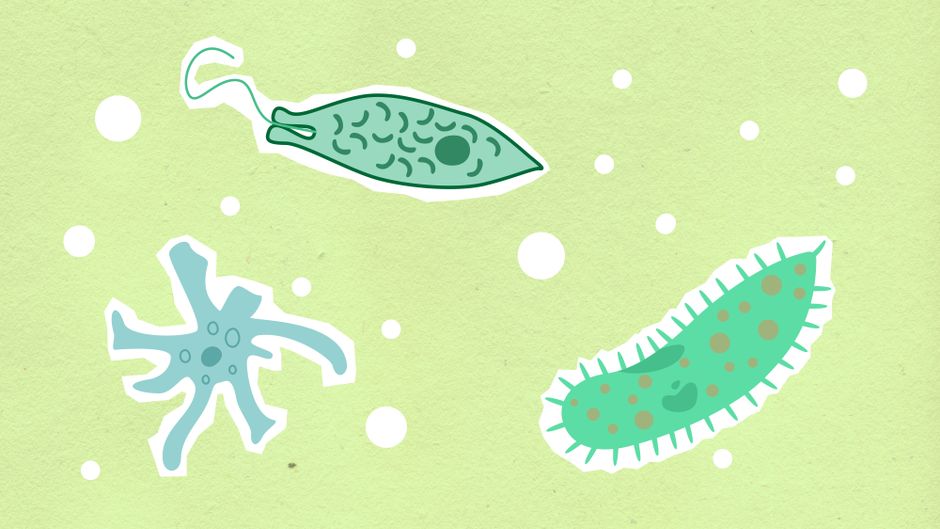
Bacteria are single-celled organisms, but their cells are built differently from human cells. The short answer is no: bacteria do not have a nucleus. Instead of a membrane-bound nucleus, their genetic material floats freely in the cell’s interior. This structural difference is one of the most important distinctions in all of biology.
What Is a Nucleus and Why Does It Matter?
The nucleus is a membrane-bound compartment found in the cells of plants, animals, fungi, and other complex organisms. It holds the cell’s DNA and acts as a control center. The nuclear membrane protects the DNA and separates the processes of copying DNA from the processes of building proteins.
Cells with a nucleus are called eukaryotic cells. Humans, animals, plants, and fungi are all made of eukaryotic cells. The word “eukaryote” comes from Greek roots meaning “true nucleus.”
Cells without a nucleus are called prokaryotic cells. Bacteria are prokaryotes. So are archaea, a separate group of single-celled organisms that often live in extreme environments.
Where Is Bacterial DNA Located?
Bacterial DNA is not scattered randomly. It sits in a region of the cell called the nucleoid. The nucleoid is not enclosed by a membrane. It is simply the area where the bacterial chromosome is concentrated.
Most bacteria have a single, circular chromosome. This chromosome contains the majority of the bacterium’s genetic information. Unlike human chromosomes, which are linear and paired, bacterial chromosomes are circular and present in a single copy during most of the cell cycle.
Bacteria can also carry smaller loops of DNA called plasmids. Plasmids replicate independently of the main chromosome. They often carry genes for antibiotic resistance or other survival traits.
What Does the Lack of a Nucleus Mean for Bacterial Function?
Because bacteria lack a nuclear membrane, transcription and translation happen simultaneously. Transcription is the process of copying DNA into RNA. Translation is the process of building proteins from that RNA. In human cells, these two processes are separated — transcription happens inside the nucleus, and translation happens outside.
In bacteria, both processes occur in the same cellular space. This allows bacteria to respond quickly to environmental changes. When a bacterium needs a new protein, it can start making it almost immediately.
This speed is one reason bacteria can adapt so quickly to antibiotics. They can rapidly produce enzymes that break down drugs or pump them out of the cell.





Are There Any Bacteria With a Nucleus?
No. No known bacterium has a true membrane-bound nucleus. If an organism has a nucleus, it is by definition not a bacterium.
However, there is one fascinating exception worth mentioning. A group of bacteria called Planctomycetes has a membrane surrounding its genetic material. Some researchers have debated whether this counts as a nucleus. The membrane is not identical to the nuclear membrane of eukaryotic cells, and the structure does not function the same way. Most biologists still classify Planctomycetes as bacteria without a true nucleus.
This example shows that the boundary between cell types is not always perfectly clean. But for practical purposes, the rule holds: bacteria lack a nucleus.
Why Do People Confuse Bacteria With Other Microorganisms?
Many people assume all microscopic organisms are bacteria. This is not accurate. Fungi, protozoa, and some algae are all microscopic, but they are eukaryotes. Their cells contain nuclei.
Yeast, for example, is a single-celled fungus. It has a nucleus. When someone gets a yeast infection, the organism causing it is eukaryotic, not bacterial. This matters for treatment. Antibiotics that target bacteria do not work on fungi because the two cell types are fundamentally different.
Similarly, malaria is caused by a protozoan parasite. That parasite has a nucleus. Antimalarial drugs work differently from antibacterial drugs for this reason.
Understanding the difference between prokaryotes and eukaryotes is not just a biology class detail. It explains why certain medications work on certain infections and not others.
How Does This Relate to Antibiotic Resistance?
Many antibiotics work by exploiting the structural differences between bacterial and human cells. For example, some antibiotics target the bacterial cell wall. Human cells do not have a cell wall, so the drug harms the bacteria without damaging human cells.
Other antibiotics target bacterial ribosomes. Ribosomes are the structures that build proteins. Bacterial ribosomes are slightly different from human ribosomes. Drugs that bind to bacterial ribosomes can stop bacterial protein production while leaving human cells largely unaffected.
The absence of a nucleus also plays a role in how bacteria develop resistance. Because bacterial DNA is not protected inside a nucleus, it is more exposed to mutations. Bacteria also reproduce quickly, sometimes dividing every 20 minutes under ideal conditions. Fast reproduction combined with frequent mutations means resistance can emerge rapidly.
Plasmids add another layer. Bacteria can share plasmids with each other through a process called conjugation. This allows resistance genes to spread between different species of bacteria. A resistance gene that appears in one bacterium can move to another bacterium entirely.
What Are the Practical Takeaways?
The distinction between cells with and without a nucleus is one of the most fundamental in biology. It separates all living things into two major groups: prokaryotes and eukaryotes.
Here is a quick summary of the differences:
- Nucleus: Present in eukaryotic cells, absent in bacteria.
- DNA structure: Bacteria typically have one circular chromosome; eukaryotes have multiple linear chromosomes.
- Protein production: Bacteria couple transcription and translation; eukaryotes keep them separated.
- Cell size: Bacterial cells are generally much smaller than eukaryotic cells.
- Organelles: Bacteria lack membrane-bound organelles like mitochondria and the endoplasmic reticulum.
These differences are not minor. They shape how organisms grow, reproduce, and respond to drugs. They also explain why treating a bacterial infection requires different medications than treating a fungal or parasitic infection.
Do Bacteria Have a Nucleus in Any Form?
Bacteria do not have a nucleus, but they do have organized genetic material. The nucleoid region is not random chaos. The bacterial chromosome is tightly packed and organized into loops. Proteins help maintain this structure, similar to how histones organize DNA in eukaryotic cells.
Some bacteria also have specialized structures called magnetosomes. These are membrane-bound compartments containing magnetic crystals. They act like a compass needle, helping the bacterium orient itself in a magnetic field. But these structures are not related to the nucleus. They serve entirely different functions.
In short, bacteria have evolved efficient ways to manage their DNA without a nucleus. The arrangement works well for them. Bacteria are among the most successful organisms on Earth, found in soil, water, the human body, and even in extreme environments like hot springs and deep-sea vents.
Why Does This Matter for Everyday Health Decisions?
When a doctor prescribes an antibiotic, the drug is designed to target bacterial cells specifically. The drug’s effectiveness depends on the structural differences between bacterial cells and human cells. The absence of a nucleus is part of that difference.
When someone takes antibiotics for a viral infection, the drug does nothing because viruses are not bacteria. The same logic applies to antifungal and antiparasitic medications. Each class of drug targets a specific type of organism.
Understanding that bacteria lack a nucleus helps explain why antibiotics work, why they are selective, and why they do not work on every infection. It also clarifies why misuse of antibiotics leads to resistance. The more bacteria are exposed to drugs, the more opportunities they have to develop and share resistance genes.
For anyone making health decisions, this knowledge is practical. It explains why completing a full course of antibiotics matters, why antibiotics should not be shared, and why they should never be used for viral infections.
Frequently Asked Questions
Do bacteria have a nucleus?
No. Bacteria are prokaryotes, meaning they lack a membrane-bound nucleus. Their DNA is located in a region called the nucleoid instead.
What is the difference between prokaryotic and eukaryotic cells?
Prokaryotic cells like bacteria lack a nucleus and membrane-bound organelles. Eukaryotic cells like human cells have a nucleus and various membrane-bound structures.
Can antibiotics kill viruses?
No. Antibiotics target bacterial structures like the cell wall or ribosomes. Viruses are not bacteria and are not affected by antibacterial drugs.
Do all bacteria have plasmids?
No. Plasmids are common but not universal. Many bacteria carry them, but some species do not have any plasmids.
