
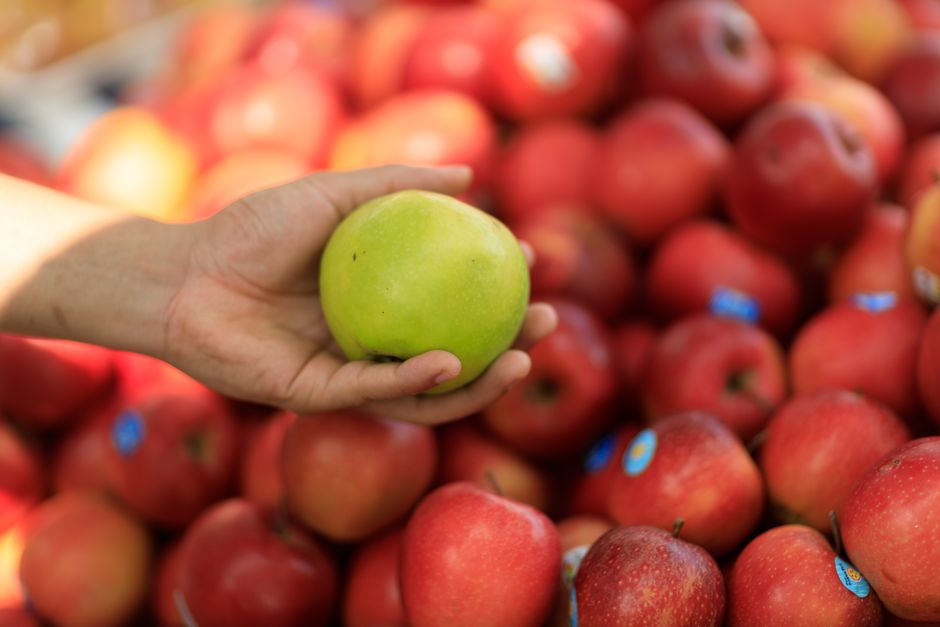
Apples can absolutely make you bloated, and it is one of the most common reasons people feel uncomfortable after eating one. The bloating is not a sign that something is wrong with you or the fruit; it is a direct result of the apple’s natural sugar and fiber content interacting with your digestive system. For most people, this is a harmless, temporary reaction, but for others, it can point to a specific food intolerance that is worth understanding.
Why Do Apples Cause Gas and Bloating?
Apples contain two main ingredients that produce gas in the digestive tract: fiber and fructose. Both are healthy, but they are also known fermentable carbohydrates.
The average medium apple contains about 4 grams of fiber, which is roughly 15% of your daily needs. Your body cannot break down this fiber in the small intestine. Instead, it travels to the large intestine, where gut bacteria ferment it. This fermentation process naturally produces gas as a byproduct. That gas is what causes the pressure, distension, and bloating you feel.
Fructose is a naturally occurring sugar in fruit. In apples, fructose is present in higher amounts than glucose. Your body absorbs fructose through a specific transporter in the small intestine. When that transporter is overwhelmed, or when you eat the apple on an empty stomach, some fructose passes undigested into the colon. There, bacteria ferment it too, adding more gas to the mix.
Are Some Apples Worse Than Others?
Yes, the variety of apple changes how much gas it produces. The difference comes down to the ratio of sugars and the amount of fiber in each type.
Generally, sweeter apples contain more total sugar, which means more fructose. Varieties like Fuji, Gala, and Honeycrisp are on the higher end of the sugar spectrum. Tart apples like Granny Smith contain less sugar and slightly more fiber, which can make them easier on the stomach for some people.
However, the fiber difference is small. The bigger factor is often how much you eat. A single apple is usually fine. Eating two or three apples in one sitting dramatically increases the fermentable load in your gut, and bloating becomes much more likely regardless of the variety.
Is It an Apple Allergy or Just Bloating?
Bloating alone is not an allergy. A true apple allergy involves the immune system and produces symptoms like itching in the mouth, hives, or swelling of the lips and throat. These symptoms usually appear within minutes of eating the fruit.
What you are experiencing is more likely a digestive intolerance. This is often related to a condition called fructose malabsorption. In this condition, the small intestine does not absorb fructose efficiently, so more of it reaches the colon. This is not an allergy and is not dangerous, but it does cause significant gas, bloating, and sometimes diarrhea.
There is also a condition called Oral Allergy Syndrome, where proteins in raw apples cross-react with pollen allergens. People with birch pollen allergies may experience an itchy mouth or throat after eating a raw apple. Interestingly, cooking the apple breaks down these proteins, so baked apples or applesauce often do not cause this reaction. Bloating, however, is not a typical symptom of Oral Allergy Syndrome.





Does Cooking Apples Reduce Bloating?
Cooking apples changes their structure in ways that can reduce bloating for some people. When you bake, stew, or simmer apples, the heat breaks down some of the pectin fiber. This makes the fiber easier to digest, meaning less of it reaches the colon intact for fermentation.
However, cooking does not remove fructose. The sugar content remains the same. So if your bloating is primarily driven by fructose malabsorption, cooked apples may still cause gas, just potentially less of it.
Applesauce and baked apples are the most common cooked forms. If you notice that a raw apple gives you significant bloating but applesauce does not, the fiber breakdown is likely the reason. It is worth testing this at home to understand which part of the apple is your trigger.
What Is the Best Way to Eat Apples Without Bloating?
There is no guaranteed method to prevent bloating entirely, but several strategies can reduce the severity. These are practical adjustments, not medical treatments.
- Start small. Eat half an apple instead of a whole one. Give your gut time to adjust to the fiber and sugar load.
- Chew thoroughly. Digestion begins in the mouth. Chewing breaks down the cell walls of the apple, making it easier for your stomach and small intestine to process. Poorly chewed apple pieces travel to the colon largely intact.
- Eat apples with a meal. Eating an apple on an empty stomach delivers the fructose quickly to the small intestine. Having it with protein or fat slows digestion and gives your body more time to absorb the sugars.
- Peel the apple. The skin contains a large portion of the insoluble fiber. Removing the skin reduces the fiber load that reaches the colon.
- Try cooked apples. As mentioned, heat softens the fiber, which can be easier on the gut.
These strategies do not eliminate the issue for everyone. If you have significant fructose malabsorption, even a peeled apple may cause symptoms. The key is to find the amount and preparation that your body tolerates.
When Should You See a Doctor About Apple Bloating?
Occasional bloating after eating an apple is normal and not a cause for concern. But bloating can also be a symptom of underlying digestive conditions that deserve medical attention.
You should talk to a doctor if the bloating is severe, happens after almost every meal, or is accompanied by other symptoms. These include persistent diarrhea, constipation, unintentional weight loss, blood in the stool, or pain that does not go away after passing gas.
Bloating that occurs with other foods, not just apples, could point to Irritable Bowel Syndrome (IBS) or Small Intestinal Bacterial Overgrowth (SIBO). In these conditions, the gut is hypersensitive to gas, and even normal amounts of fermentation cause significant discomfort. Apples are high in FODMAPs, a group of fermentable carbohydrates that are common triggers for people with IBS.
A doctor can help determine whether your bloating is a simple response to fiber or a sign of a broader digestive issue. They may recommend a low-FODMAP elimination diet or refer you to a gastroenterologist. Do not self-diagnose. Persistent digestive symptoms always warrant professional evaluation.
Frequently Asked Questions
Do apples make you bloated more than other fruits?
Yes, apples are higher in both fiber and fructose than many other common fruits like bananas, berries, and oranges. This combination makes them more likely to cause gas and bloating in sensitive individuals.
Does drinking water after eating an apple help with bloating?
Drinking water can help move fiber through your digestive tract, but it will not stop the fermentation process that causes gas. Staying hydrated overall is good for digestion, but it is not a reliable remedy for apple-induced bloating.
Are organic apples less likely to cause bloating?
No. Organic and conventionally grown apples contain the same types and amounts of fiber and natural sugars. The growing method does not change the carbohydrate content, so bloating risk is the same for both.
Can eating apples every day cause chronic bloating?
Eating apples daily can cause daily bloating if you are sensitive to their fiber or fructose content. This is not harmful, but if it is uncomfortable, reducing your intake or switching to lower-sugar fruits can help.
